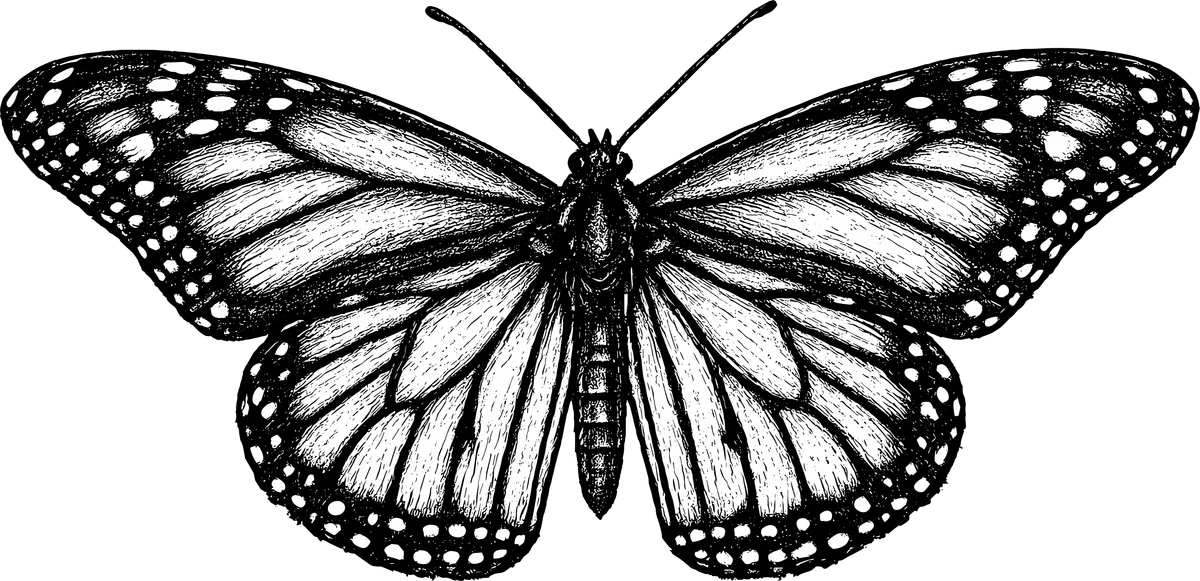
Monarch Butterfly
Danaus plexippus
Orange wings veined in black, a four-generation migration, and a chemical defense built from milkweed sap. The monarch is one of the strangest animals in North America.
Browse the Woodcut Wild shop →Habitat
Monarchs need milkweed — the only plant their caterpillars will eat. Adults visit a wide range of flowers for nectar, from prairie wildflowers to suburban gardens. Overwintering colonies cluster on oyamel fir trees in central Mexico and on Pacific coast eucalyptus and pine.
Behavior
The fall generation makes the southward migration of up to 3,000 miles to mexico, where they form dense clusters that bend tree branches under their weight. Spring migration is shared across four shorter-lived generations that move north, each laying eggs and dying along the way.
Marginalia
- No individual monarch makes the full round-trip migration — it takes four generations.
- Milkweed cardenolides make monarchs toxic to most predators, including birds.
- Eastern monarch populations have declined more than 80% since the 1990s.
- Their navigation uses a sun compass combined with a magnetic backup, and they correct for time of day.
Common questions
How long do monarch butterflies live?
It depends entirely on which monarch. The summer generations live only two to six weeks, just long enough to breed and die. But the special fall generation — the one that flies to Mexico — postpones breeding and lives eight or nine months, surviving the whole winter and the journey home in spring.
What is the difference between a monarch and a viceroy butterfly?
Look for a single black line. The viceroy is a near-perfect mimic of the monarch but slightly smaller and crossed by a black band running across its hind wings, which the monarch lacks. The resemblance is no accident — the viceroy is also unpalatable to birds, and the two species reinforce each other's warning coloring.
How can I attract monarch butterflies to my garden?
Plant milkweed, and plant it native to your region. Milkweed is the only thing monarch caterpillars can eat, so a patch of it is an open invitation to lay eggs; add late-season nectar flowers for the migrating adults and skip the pesticides. Avoid tropical milkweed in warm climates, where it can disrupt migration timing and harbor disease.
What does a monarch chrysalis look like?
A small jade-green case studded with a band of metallic gold dots — one of the most striking objects in any garden. It hangs from a single silk button for one to two weeks, slowly turning transparent as the orange-and-black wings show through in the day before the adult emerges.
Are monarch butterflies poisonous to humans or pets?
Not to people, and not dangerously to pets. The milkweed toxins monarchs carry are aimed at birds, which vomit after eating one and learn to leave them alone. A curious dog or cat that eats a monarch may drool or vomit but is in no real danger; humans handle them with no ill effect at all.