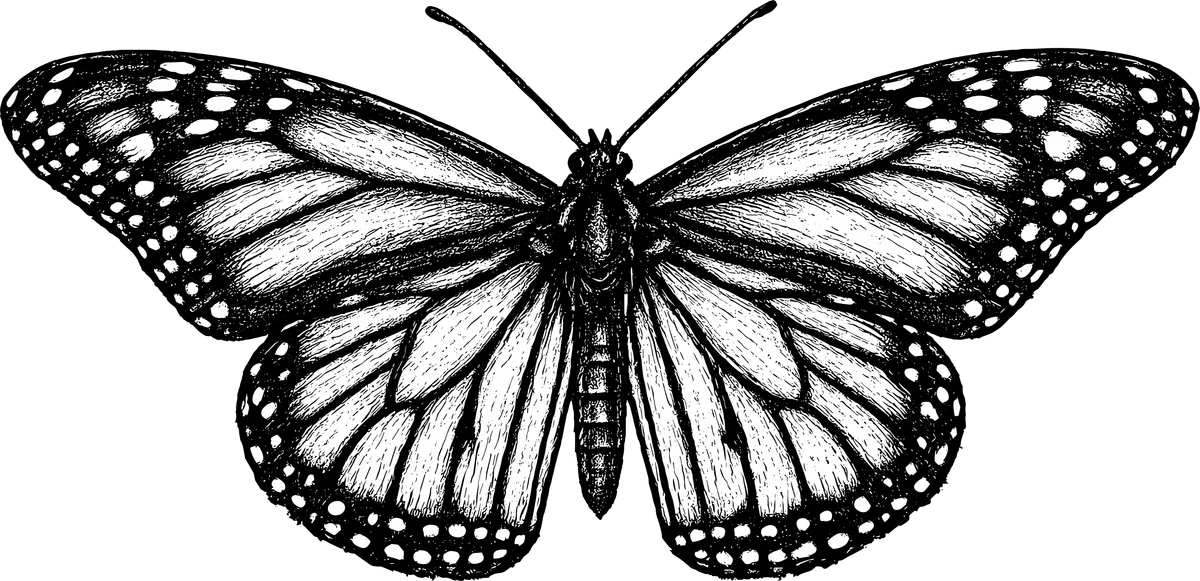
Monarch Butterfly
Danaus plexippus
Orange wings veined in black, a four-generation migration, and a chemical defense built from milkweed sap. The monarch is one of the strangest animals in North America.
Browse the Woodcut Wild shop →Habitat
Monarchs need milkweed — the only plant their caterpillars will eat. Adults visit a wide range of flowers for nectar, from prairie wildflowers to suburban gardens. Overwintering colonies cluster on oyamel fir trees in central Mexico and on Pacific coast eucalyptus and pine.
Behavior
The fall generation makes the southward migration of up to 3,000 miles to mexico, where they form dense clusters that bend tree branches under their weight. Spring migration is shared across four shorter-lived generations that move north, each laying eggs and dying along the way.
Marginalia
- No individual monarch makes the full round-trip migration — it takes four generations.
- Milkweed cardenolides make monarchs toxic to most predators, including birds.
- Eastern monarch populations have declined more than 80% since the 1990s.
- Their navigation uses a sun compass combined with a magnetic backup, and they correct for time of day.