Triceratops
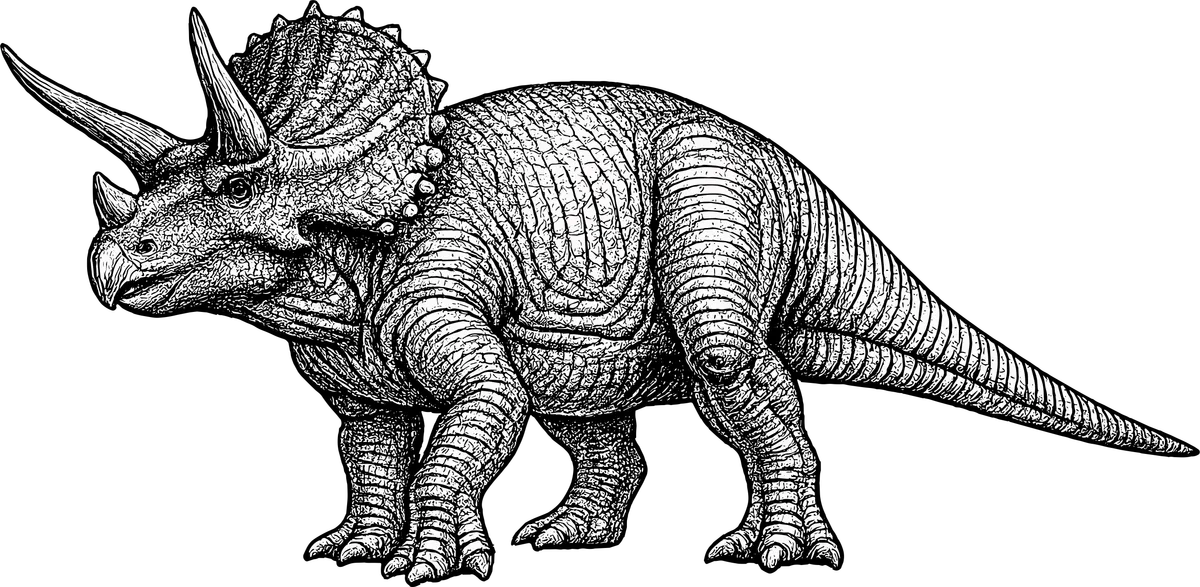
Triceratops horridus
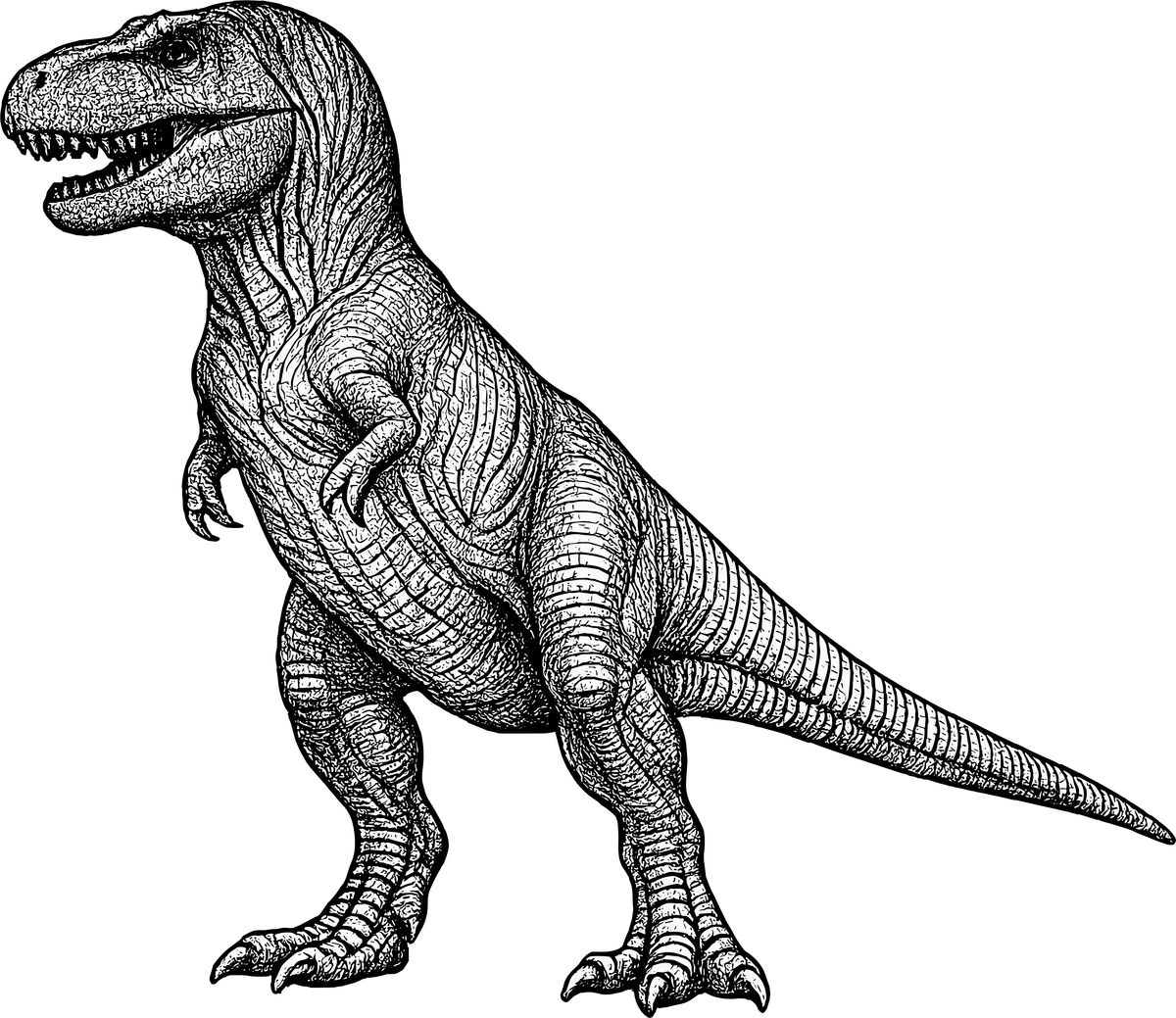
Thirty feet long, twelve tons, with a five-foot bony frill and three horns built for combat. The most abundant large herbivore of the latest Cretaceous and the textbook prey species — and occasional victor — in fights with Tyrannosaurus rex.
Browse the Woodcut Wild shop →Habitat
Triceratops shared the floodplain, forest, and river-valley ecosystems of latest-Cretaceous western North America with Tyrannosaurus rex. The two species are recovered from the same fossil formations — Hell Creek, Lance, Frenchman, Scollard — and the same individual rock layers, meaning they were demonstrably contemporaries on the same landscape. The country was warm-temperate to subtropical, dominated by cycads, ferns, palms, conifers, and early flowering plants — the diet that Triceratops's beak and tooth-batteries were designed to process.
Behavior
Triceratops was a low-browsing herbivore that cropped tough vegetation with a sharp, horn-covered beak and then sheared it with hundreds of teeth arranged in continuously-replaced batteries. Whether the species was solitary or herding remains debated — most Triceratops fossils are found alone, unusual among ceratopsians, but a few small bonebeds suggest at least loose social grouping. The brow horns (up to 4 feet long), nose horn, and massive solid frill served a combination of functions: defense against Tyrannosaurus (puncture wounds matching T. rex tooth spacing have been found in Triceratops frills, some of which healed — these animals survived encounters), intraspecific combat between bulls (interlocking horn-injury patterns), and visual display. Healed bite marks indicate Triceratops was not always the loser in T. rex encounters.
Marginalia
- The name Triceratops is Greek for 'three-horned face'. The two long brow horns reached 4 ft each on large individuals; the shorter nose horn was about 1 ft.
- Triceratops had between 432 and 800 teeth at any one time, arranged in continuously-shed and replaced 'batteries'. Each tooth was used briefly, worn down, and pushed out by the next one beneath it.
- Healed T. rex bite marks on Triceratops frills and shoulder bones prove the two species fought regularly and that Triceratops sometimes won. One specimen at the Natural History Museum of Los Angeles preserves a Triceratops brow horn that was bitten off by a T. rex and then partly regrew.
- The Triceratops skull is the largest of any known land animal — fossil or living. Adult skulls reach 8 feet long, roughly a third of the animal's total body length.
- Triceratops is the official state fossil of South Dakota, the state dinosaur of Wyoming, and one of the most fossil-abundant large dinosaurs in the world — over 50 partial or complete adult skulls have been recovered.