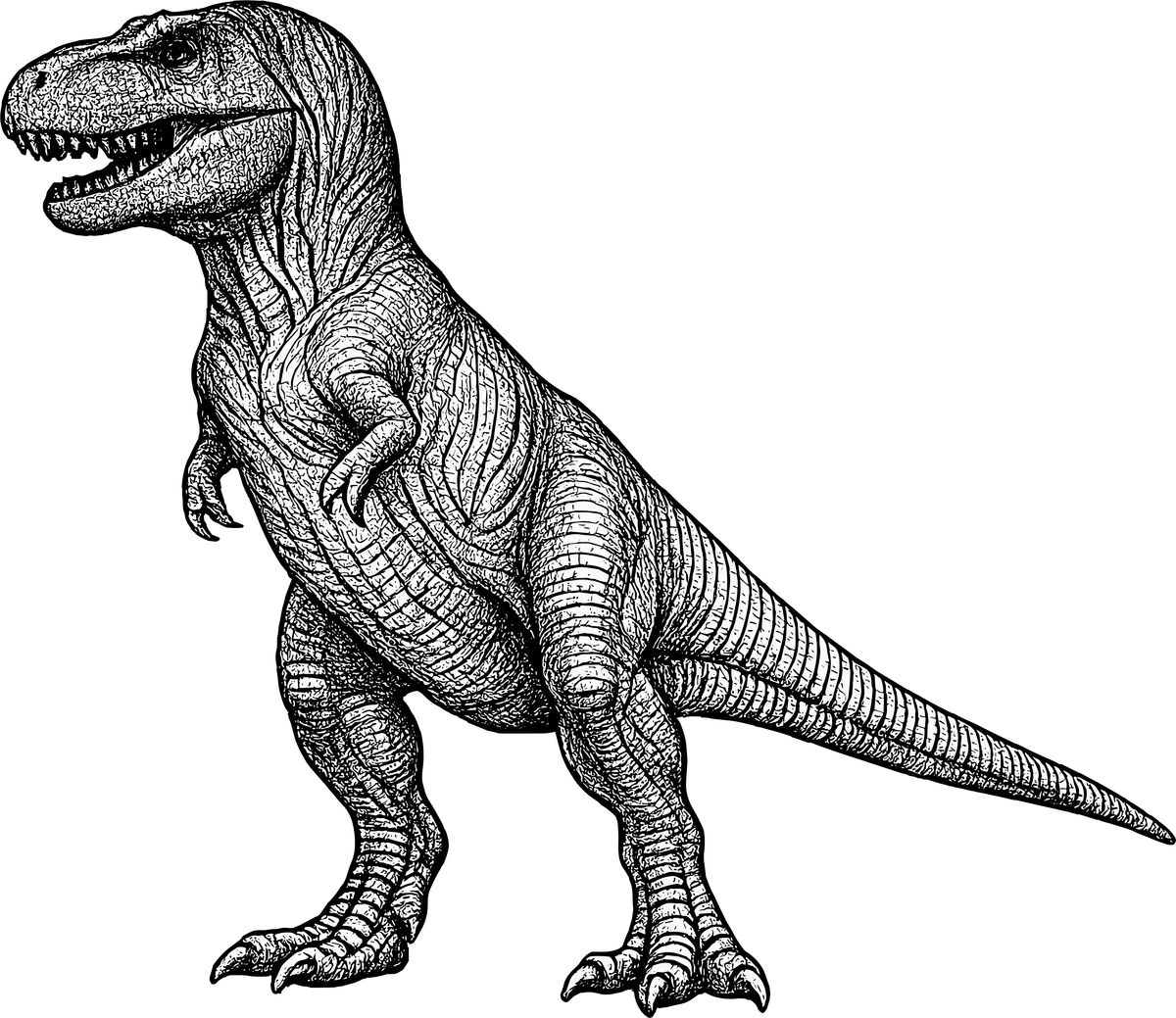
Tyrannosaurus rex
Tyrannosaurus rex
Forty feet long, nine tons, with the strongest bite force of any land animal in the fossil or living record. The apex predator of the last two million years of the Cretaceous, and the most famous extinct animal on Earth.
Browse the Woodcut Wild shop →Habitat
Tyrannosaurus rex inhabited the floodplains, river valleys, and coastal lowlands of western North America during the latest Cretaceous (Maastrichtian, roughly 68 to 66 million years ago). The landmass was Laramidia — a long, narrow continent created by the Western Interior Seaway that then divided North America in two. Forests of cycads, conifers, palms, and early flowering trees lined wide meandering rivers; the climate was warm-temperate to subtropical, with strong wet-dry seasonality. Specimens are most abundant in the Hell Creek (Montana, North and South Dakota), Lance (Wyoming), Frenchman (Saskatchewan), and Scollard (Alberta) formations.
Behavior
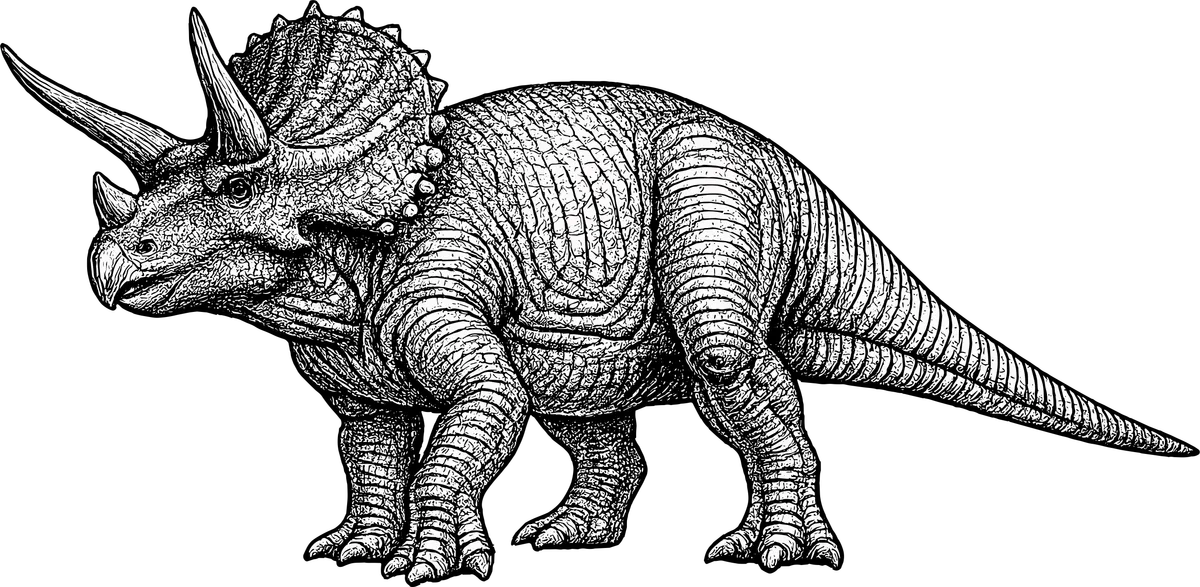
Adult T. rex was the apex predator of its ecosystem, with no functional competitor at adult size. Hunting strategy is reconstructed from a combination of bite trauma in prey bones (especially Triceratops and Edmontosaurus), tooth-puncture patterns matching specific T. rex tooth morphology, and biomechanical modeling. The species had binocular vision comparable to a modern hawk, an olfactory bulb proportionally similar to a turkey vulture, and a bite force estimated at over 12,800 pounds — sufficient to bite through Triceratops bone. Recent biomechanical studies suggest adults walked at 3–5 mph and were physically incapable of sustained running speeds above ~12 mph due to the stresses such speeds would place on the leg bones; juveniles were faster and likely filled a different predatory niche. Whether T. rex was a pure hunter, a pure scavenger, or both has been debated for over a century; the current consensus is opportunistic apex predator that took prey when available and scavenged when not, like a modern lion.
Marginalia
- Tyrannosaurus rex lived closer in time to humans than to Stegosaurus. Stegosaurus went extinct around 150 million years ago — 84 million years before T. rex first appeared. T. rex died out 66 million years ago — only 66 million years before us.
- The closest living relatives of T. rex are birds. Modern chickens share more DNA with Tyrannosaurus than alligators do. All birds — every sparrow, eagle, and hummingbird — are surviving theropod dinosaurs in the same lineage.
- The famous 'tiny arms' (about 3 feet long on a 40-foot animal) were not vestigial. Surface texture, muscle scars, and biomechanical models suggest they could lift roughly 400 pounds each and were probably used to grip struggling prey during a head-down kill.
- Sue, the most complete T. rex specimen ever found, was discovered in 1990 in South Dakota and is now at Chicago's Field Museum. The specimen is 90% complete by bone volume and is the basis for much of what is currently known about T. rex anatomy.
- T. rex skulls show extensive bite marks from other T. rex. The patterns indicate face-biting was common between adults, possibly during territorial disputes, mating-season fights, or — controversially — cannibalism on the dying or recently dead.