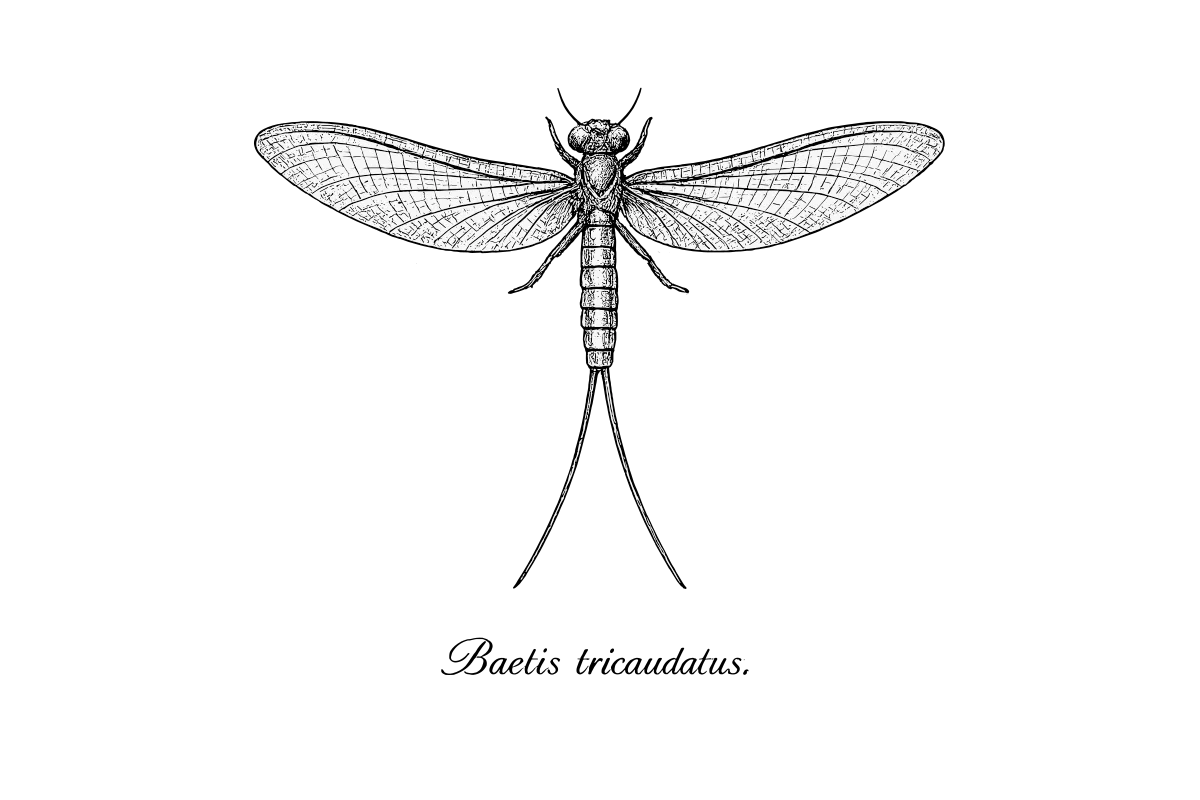
Baetis Mayfly
Baetis tricaudatus
A tiny mayfly that hatches in cold, gray weather and turns picky trout into eager ones. Anglers know it as the western Blue-Winged Olive — same insect, different lifestage.
Browse the Woodcut Wild shop →Habitat
Baetis tricaudatus is the most widespread mayfly in North America, found in cold, clean rivers and streams from Alaska to Mexico. The nymphs cling to rocks and submerged vegetation in moderate current; they prefer well-oxygenated riffles and runs. The species tolerates a wide range of conditions and is often the only mayfly hatching in cold weather.
Behavior
Nymphs feed by scraping algae and diatoms off rocks. They are strong swimmers, darting in short bursts. Hatches are triggered by cold, overcast, drizzly weather — the kind of day anglers call a Blue-Winged Olive day — when the adults emerge by drifting up through the water column, breaking the surface film, and standing briefly on the water before flying off. The species is multivoltine: it produces two or three generations a year, which is why the hatches can happen in spring, fall, and even winter on the right rivers.
Marginalia
- Mayflies in the order Ephemeroptera get their name from the Greek for 'short-lived' — adults often live less than 48 hours and don't have functional mouthparts.
- Anglers fish Baetis imitations in sizes 18 through 24 — among the smallest commonly tied flies.
- The species can survive winter as a nymph under the ice in slow-flowing pools.
- A trout selectively feeding on emerging Baetis will refuse a dry fly that floats too high — the trick is to fish a film-clinging emerger pattern.
Kin & neighbors
Common questions
Why is it called a Blue-Winged Olive?
Because that is what the freshly hatched adult looks like on the water — a small olive-bodied mayfly with dusky, slate-blue wings held upright like tiny sails. Anglers shorten it to BWO, and the name covers several look-alike olive mayflies, of which Baetis is the most common.
Do mayflies bite?
No. They cannot. The adult has no working mouth at all — it does not feed and lives only long enough to mate — so it has nothing to bite with. The nymph spends its whole underwater life grazing algae off rocks and is equally harmless.
What is the best time of day to fish a Baetis hatch?
Late morning into early afternoon, on the worst-looking days of the year. The bugs come off heaviest under low gray cloud, cold drizzle, and even falling snow, with the peak usually clustered around the warmest hour of an otherwise raw day. Bright sun shuts the hatch down.
Are mayflies a sign of clean water?
Yes — they are one of the classic indicators biologists use. Mayfly nymphs need cold, well-oxygenated water and disappear quickly under pollution or warming, so a river with a strong Baetis population is telling you something good about its health. Their absence is a warning sign.
Why do mayflies all hatch at once?
Survival by sheer numbers. An adult mayfly lives barely a day or two and cannot defend itself, so the species floods the air all at once — far more bugs than the trout, birds, and bats can eat — guaranteeing that enough survive the few hours they need to mate and lay eggs before dying.