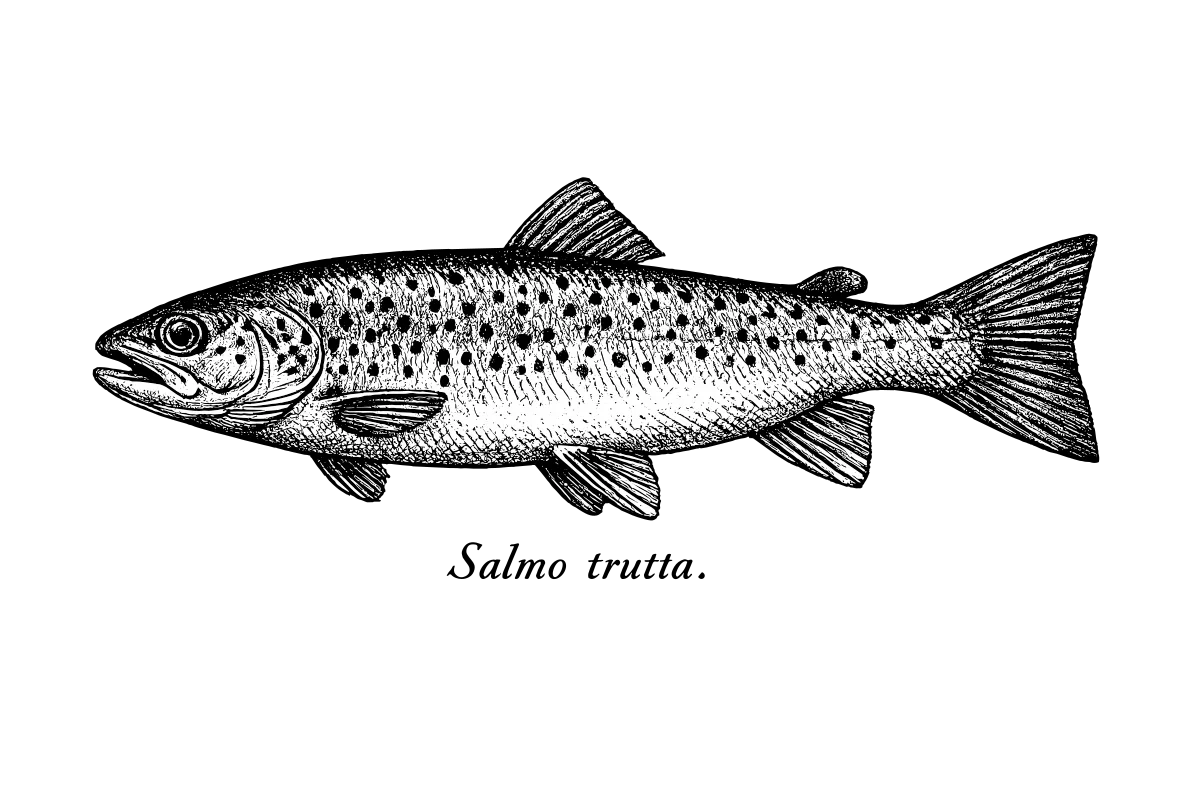
Brown Trout
Salmo trutta
A patient, predatory trout with a halo of red and black spots — the ghost of cold European rivers, now haunting cold rivers everywhere.
Browse the Woodcut Wild shop →Habitat
Brown trout favor cold, well-oxygenated rivers and lakes between roughly 50 and 65 degrees Fahrenheit. They hold near structure — undercut banks, sunken logs, seams behind boulders — and move into riffles at dawn and dusk to feed. Native to Europe and western Asia, they have been introduced to nearly every cold-water fishery on the planet.
Behavior
Adults are ambush predators, holding in deep water and slow seams during the day and venturing into shallower water to feed at low light. They eat aquatic insects, baitfish, crayfish, and the occasional mouse or vole that mistimes a swim. Large brown trout become almost entirely piscivorous and are notoriously selective and wary.
Marginalia
- The largest brown trout ever recorded weighed over 44 pounds, caught in New Zealand in 2020.
- Brown trout can live 20 years in the right water — long-lived by fish standards.
- The red spots are surrounded by pale halos that act like camouflage in dappled river light.
- Sea-run brown trout (sea trout) are the same species but spend part of their life in saltwater.
Kin & neighbors
Common questions
How do you catch a brown trout?
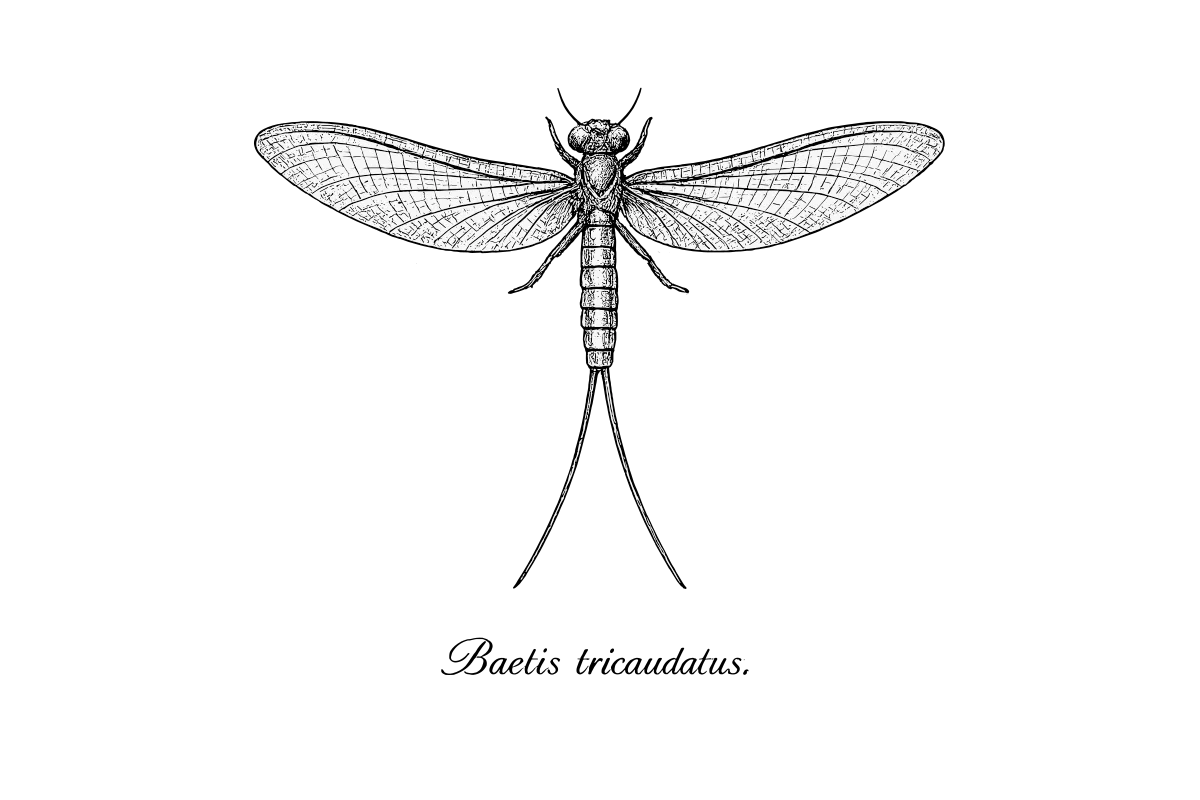
Quietly, and at the edges of the day. Browns are the warier of the common trout, so the standard approach is a stealthy one — long fine leaders, a careful approach, and fishing dawn, dusk, or after dark when the big ones leave cover to hunt. Match the hatch with dry flies and emergers when insects are up; swing or strip streamers that imitate baitfish or a swimming mouse for the largest, most predatory fish.
Is brown trout good to eat?
Yes — firm, pink-to-orange flesh with a flavor that tracks its diet, milder in insect-eaters and richer in the big fish-eaters. Most serious anglers release the large old browns, which are rare and slow to grow, and keep only smaller stocked fish for the table where regulations allow.
What is the difference between a brown trout and a rainbow trout?
Spots and stripe. A brown trout is buttery brown to gold with scattered black and red spots ringed by pale halos, and no stripe; a rainbow is silvery-green with a dense scatter of small black spots over the whole body and tail and a pink-to-red band down the side. Browns also run warier and more nocturnal, which is why they tend to grow old and large where rainbows do not.
When do brown trout spawn?
In fall, typically October into December as the water cools — later than the spring-spawning rainbow. Males turn dark and develop a hooked lower jaw called a kype, and pairs cut gravel nests, or redds, in clean shallow riffles. Many fisheries protect spawning reaches in those months so the fish are not disturbed.
What is the best time of year to fish for brown trout?
Spring and fall, for different reasons. Cool spring water brings steady insect hatches and active fish; autumn drives the big browns aggressive and territorial ahead of the spawn, which is when many of the largest are caught. Midsummer fishing is best at first and last light, before the water warms.