Baetis Mayfly
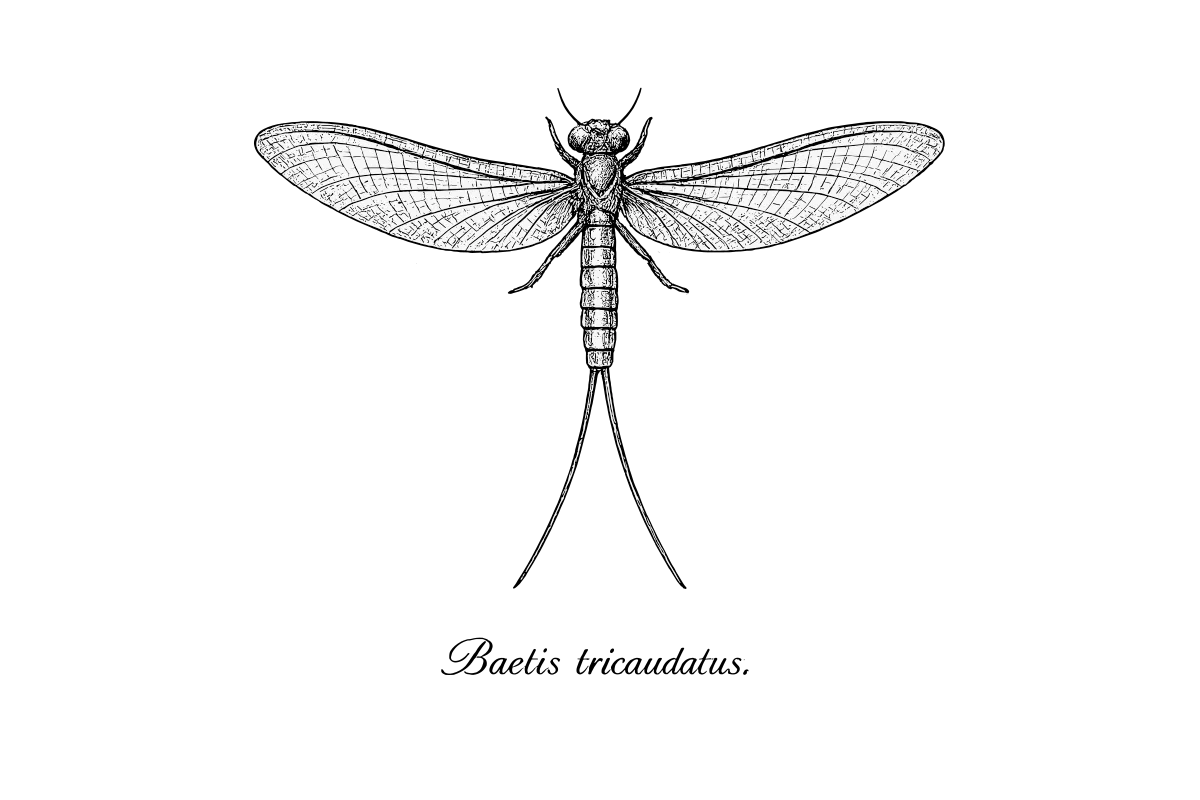
Baetis tricaudatus
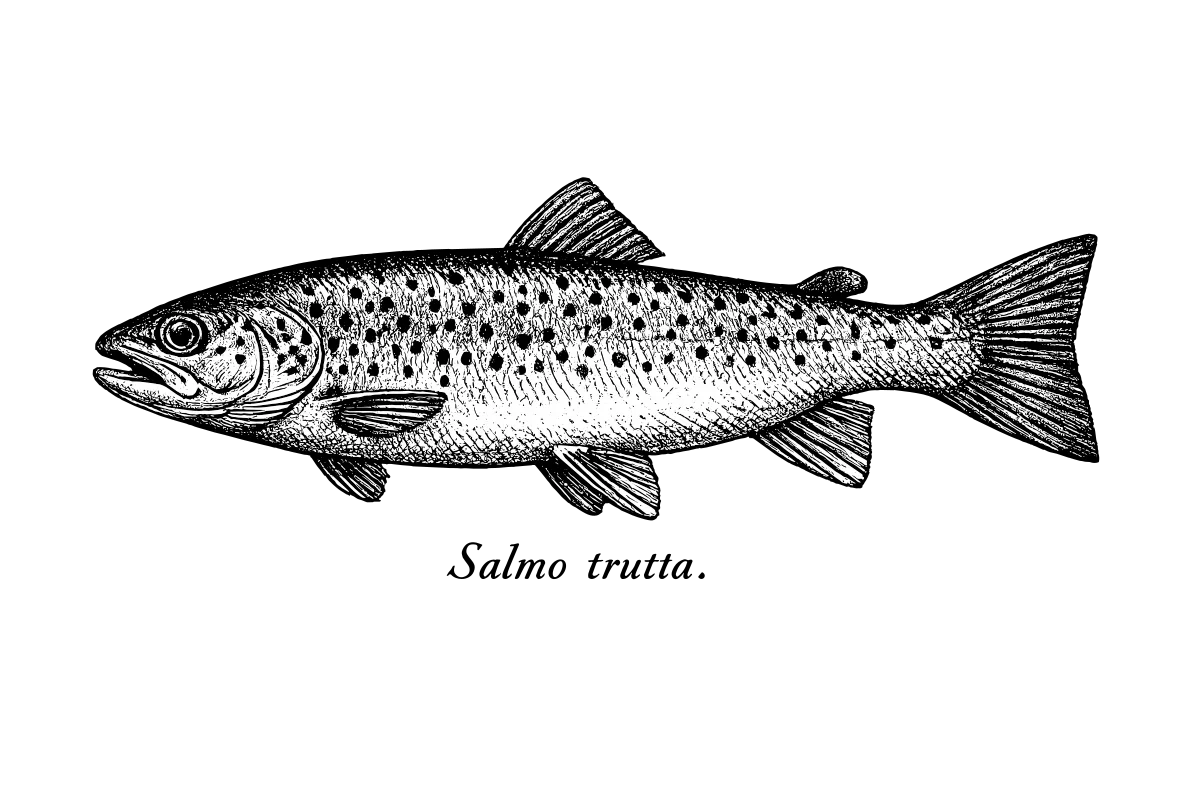
A tiny mayfly that hatches in cold, gray weather and turns picky trout into eager ones. Anglers know it as the western Blue-Winged Olive — same insect, different lifestage.
Browse the Woodcut Wild shop →Habitat
Baetis tricaudatus is the most widespread mayfly in North America, found in cold, clean rivers and streams from Alaska to Mexico. The nymphs cling to rocks and submerged vegetation in moderate current; they prefer well-oxygenated riffles and runs. The species tolerates a wide range of conditions and is often the only mayfly hatching in cold weather.
Behavior
Nymphs feed by scraping algae and diatoms off rocks. They are strong swimmers, darting in short bursts. Hatches are triggered by cold, overcast, drizzly weather — the kind of day anglers call a Blue-Winged Olive day — when the adults emerge by drifting up through the water column, breaking the surface film, and standing briefly on the water before flying off. The species is multivoltine: it produces two or three generations a year, which is why the hatches can happen in spring, fall, and even winter on the right rivers.
Marginalia
- Mayflies in the order Ephemeroptera get their name from the Greek for 'short-lived' — adults often live less than 48 hours and don't have functional mouthparts.
- Anglers fish Baetis imitations in sizes 18 through 24 — among the smallest commonly tied flies.
- The species can survive winter as a nymph under the ice in slow-flowing pools.
- A trout selectively feeding on emerging Baetis will refuse a dry fly that floats too high — the trick is to fish a film-clinging emerger pattern.