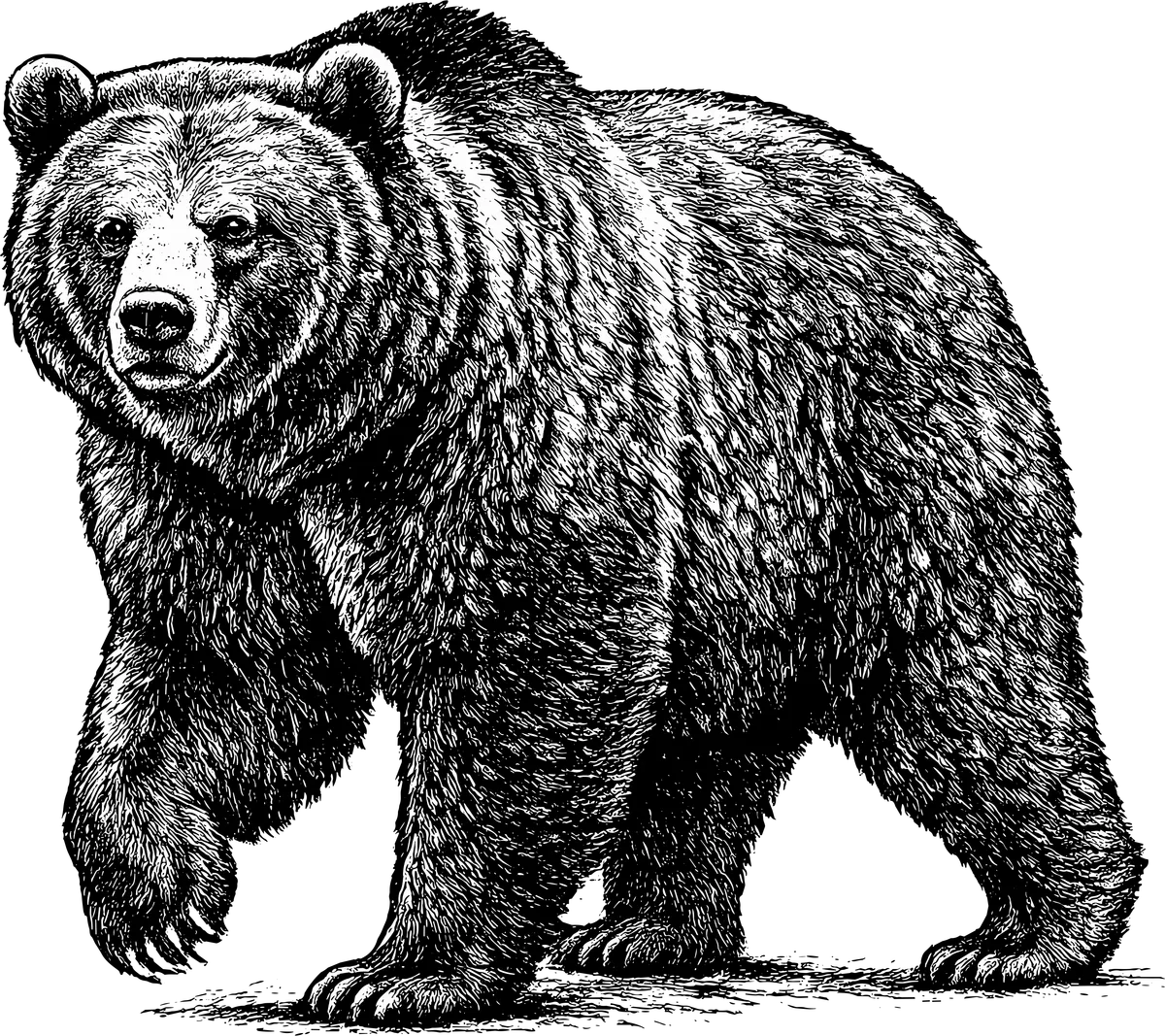
Grizzly Bear
Ursus arctos horribilis
A shoulder hump like a boulder under fur. The grizzly is the North American subspecies of the brown bear — a slow-walking, fast-charging keystone of the western wild.
Browse the Woodcut Wild shop →Habitat
Grizzlies range across high meadows, river valleys, coastal estuaries, and subalpine forests. They follow seasonal food: roots and shoots in spring, salmon runs in summer, berries and whitebark pine in fall. A single bear's home range can cover hundreds of square miles.
Behavior
Despite their size, grizzlies are surprisingly fast — capable of 35 mph in short bursts — and excellent swimmers. They are omnivores, feeding on roots, tubers, berries, insects, fish, and ungulates. Adults are usually solitary outside of mother-cub groups and the seasonal salmon-river gatherings in Alaska.
Marginalia
- The shoulder hump is pure muscle that powers their digging — they can move boulders and excavate deep dens.
- A grizzly's sense of smell is roughly seven times stronger than a bloodhound's.
- Cubs spend two to three years with their mother before being chased off to establish their own range.
- During hibernation, grizzlies don't urinate or defecate for up to six months and emerge with most of their muscle mass intact.