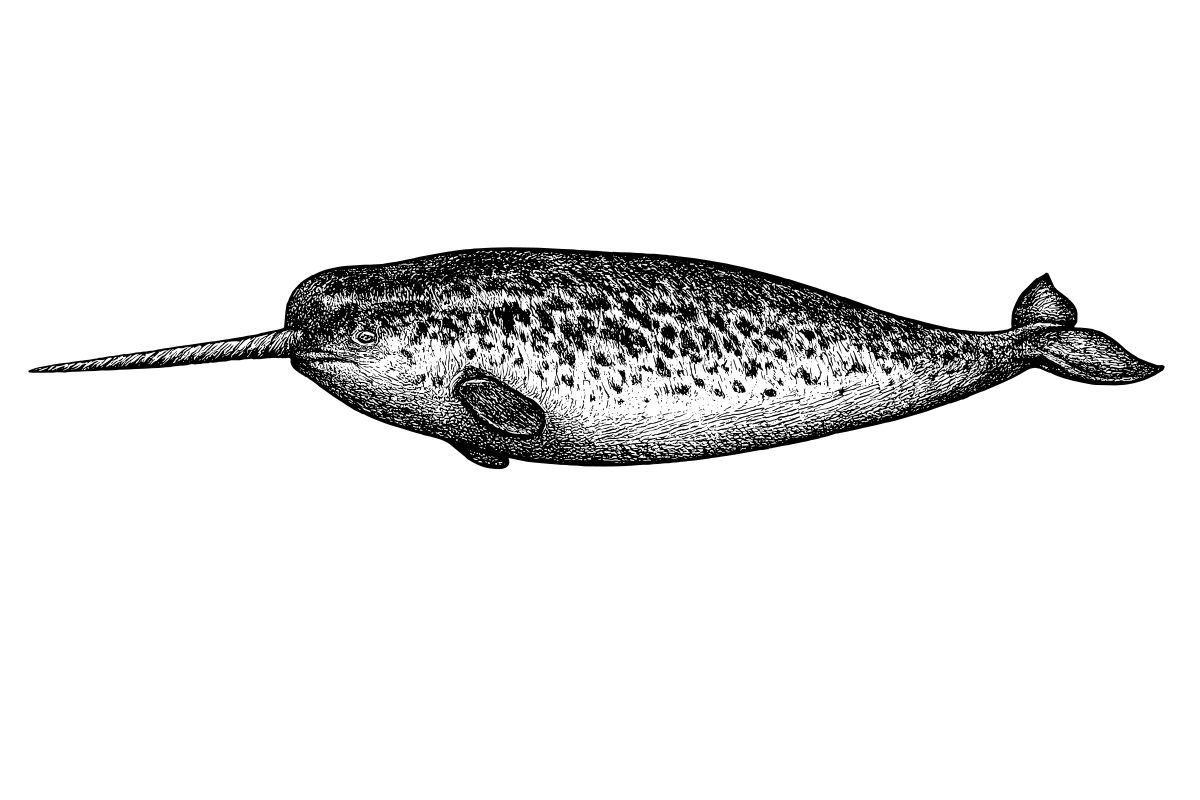
Narwhal
Monodon monoceros
The unicorn of the sea. A small Arctic whale with a single spiraled tusk — actually an elongated canine tooth — that can grow longer than a tall man. Lives under sea ice, hunts squid in total darkness, and barely tolerates change.
Browse the Woodcut Wild shop →Habitat
Narwhals live exclusively in the Arctic — primarily in the deep fjords and offshore waters around Greenland, Canada's eastern Arctic, and Svalbard. They make extraordinary deep dives (over 5,000 feet) and spend much of the year under or alongside the sea ice.
Behavior
Narwhals travel in pods of 5 to 20, occasionally aggregating into superpods of hundreds during summer migrations. They feed largely on Greenland halibut, Arctic cod, and squid, hunting in the lightless winter under thick ice. The tusk, present primarily in males, is now understood to be a sensory organ — it contains millions of nerve endings that may help detect water salinity, temperature, and pressure changes. Tusks are also used in 'tusking' displays between males.
Marginalia
- The narwhal tusk is a left canine tooth that grows through the upper lip in a counter-clockwise spiral. About 15% of females also grow one.
- Narwhals can hold their breath for over 25 minutes — among the longest of any marine mammal.
- They are critically dependent on sea ice for shelter and feeding. Climate change makes them one of the most climate-vulnerable whales.
- Their closest relative is the beluga whale; the two have been documented producing hybrid offspring called 'narlugas.'
Kin & neighbors
Common questions
How long do narwhals live?
Remarkably long — commonly fifty years, and some individuals are estimated past ninety. Their age is read from layers in waxy ear plugs and from a chemical clock in the eye lens, the same technique that has aged the related bowhead whale well past two centuries.
Are narwhal tusks real?
Entirely real, and that is the point. For most of the Middle Ages the spiraled tusks were sold across Europe as unicorn horns, worth many times their weight in gold and credited with the power to detect or neutralize poison. Buyers had no idea they came from an Arctic whale; the trade is why the unicorn was imagined with a straight, twisting horn at all.
What eats a narwhal?
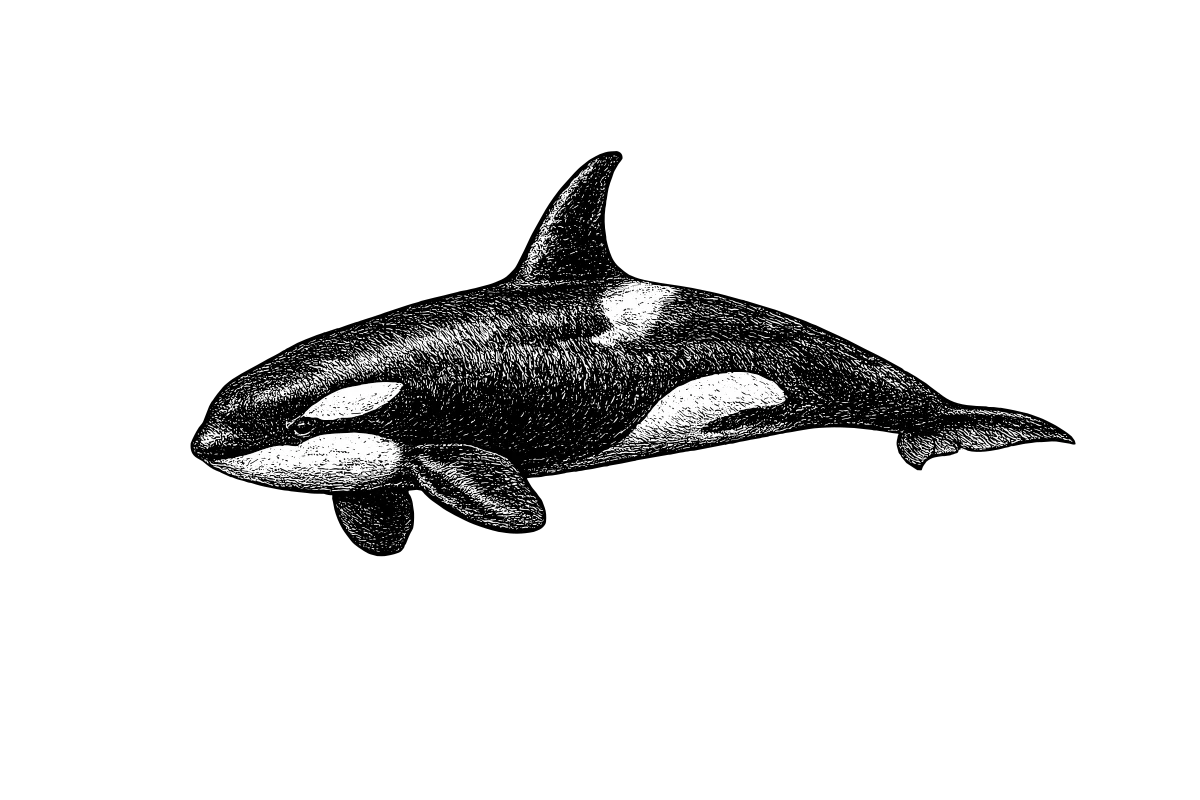
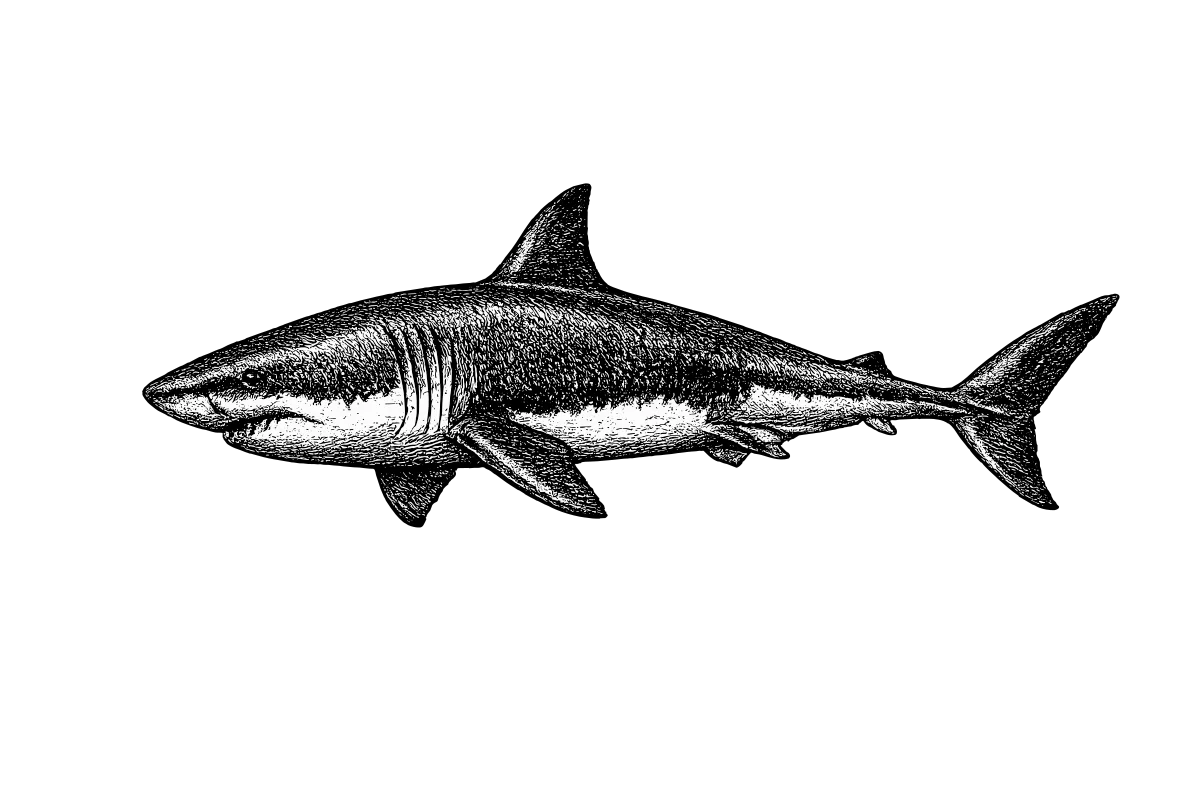
Two predators, essentially. Orcas pick off narwhals in open water, which is part of why the whales crowd into shallow, ice-choked bays where killer whales are reluctant to follow. Polar bears and, less often, Greenland sharks take narwhals trapped at breathing holes when the ice closes in around them.
What is the difference between a narwhal and a beluga?
The tusk and the color. Belugas are pure white and tuskless with a flexible, expressive neck; narwhals are mottled gray and the males carry the long spiraled tooth. They are close cousins in the same small family and share the Arctic, but only the narwhal grew the horn.
Do narwhals use their tusks to fight?
Not the way the word 'tusk' suggests. Males cross and rub tusks in displays called 'tusking,' which appear to assess rank and possibly clean or sharpen the surface rather than wound an opponent. There is also footage of narwhals using the tusk to stun fish with a sharp tap before eating them — a hunting use only recently documented.