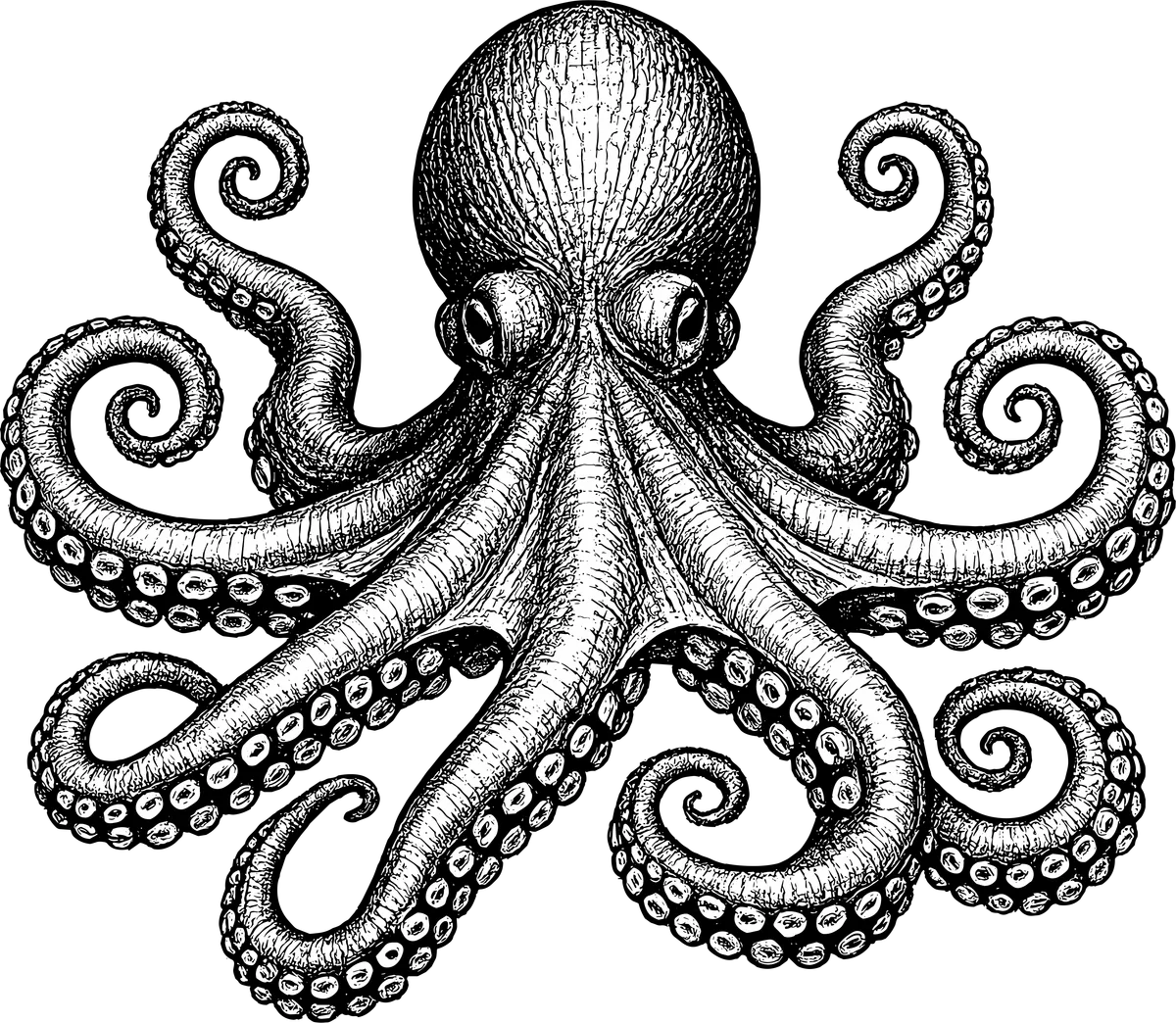
Giant Pacific Octopus
Enteroctopus dofleini
An animal that solves puzzles, recognizes faces, and tastes everything it touches. The largest octopus species on earth.
Browse the Woodcut Wild shop →Habitat
Giant Pacific octopuses live in cold coastal waters from intertidal rocks to depths of 6,500 feet. They occupy dens in rock crevices and shipwrecks, leaving piles of cracked shells outside — a tell-tale "garden" that gives them away.
Behavior
Nocturnal hunters that ambush crabs, clams, and small fish, then return to their den to eat. They can squeeze through any opening larger than their beak — the only hard part of their body. Females guard a single clutch of eggs for six months without eating, then die shortly after the eggs hatch.
Marginalia
- Two-thirds of an octopus's neurons live in its arms, not its central brain.
- Each sucker can taste — chemoreceptors let them recognize prey by touch alone.
- They can change skin color and texture in less than a second.
- Despite the intelligence, their lifespan is only three to five years.
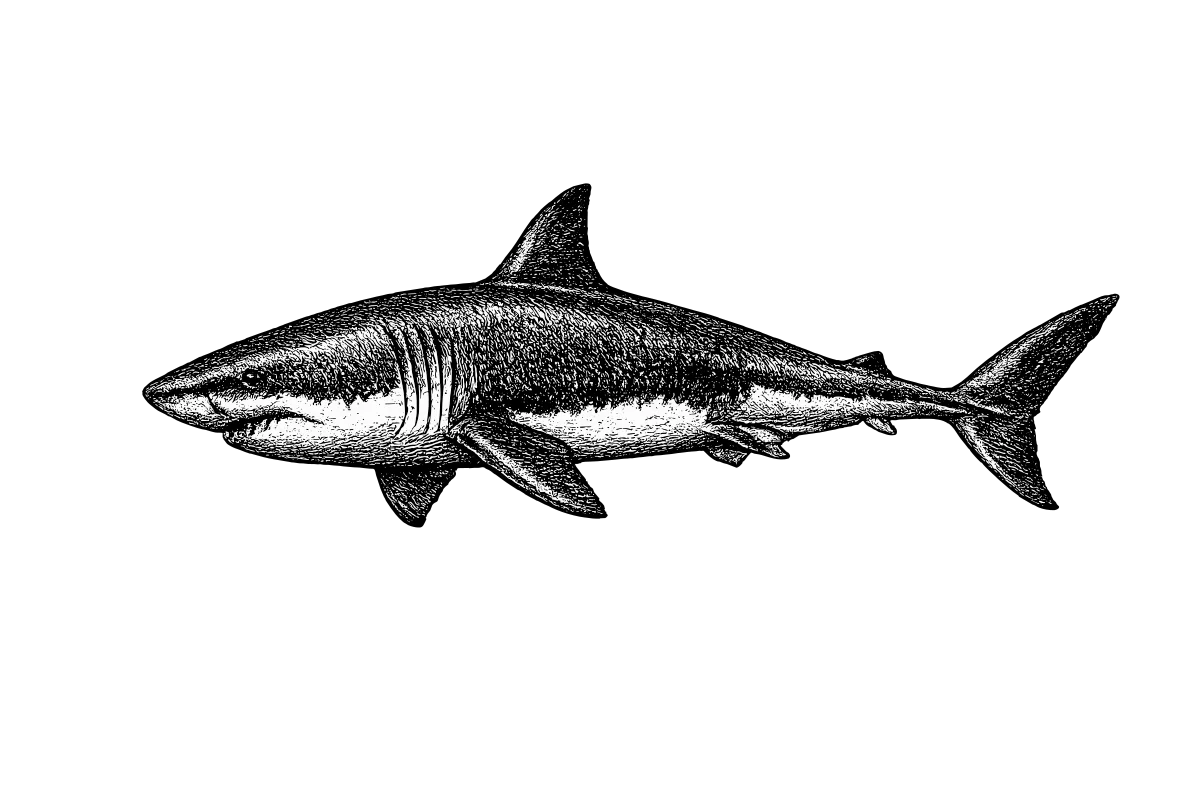
Kin & neighbors

Common questions
How many hearts does an octopus have?
Three. Two branchial hearts pump blood through the gills, and a third systemic heart drives it to the rest of the body. The systemic heart stops beating when the animal swims, which is part of why octopuses prefer crawling — swimming literally tires them out.
Is octopus blood blue?
Yes, genuinely blue. They carry oxygen on a copper-based protein called hemocyanin rather than the iron-based hemoglobin that makes our blood red. Copper turns it blue, and it moves oxygen more efficiently in cold, low-oxygen deep water — exactly the conditions this species lives in.
Are giant Pacific octopuses dangerous to humans?
Not meaningfully. They are shy and would rather flee or hide than confront a diver, and a large one is strong enough to hold a grip but has no interest in doing harm. The bite carries a mild venom, as all octopus bites do, but it is nothing like the lethal blue-ringed octopus — handling one is a matter of respect, not danger.
What is the difference between an octopus's arms and a squid's tentacles?
Octopuses have eight arms and no tentacles; squid have eight arms plus two longer feeding tentacles, ten limbs in all. The arms are lined with suckers their whole length, while a squid's two tentacles bear suckers only on the club at the tip. The blanket term 'tentacle' for an octopus is a popular misuse.
How strong is a giant Pacific octopus?
Strong enough that aquariums build escape-proof lids. The largest suckers can each grip with tens of pounds of force, and the animal can lift many times its own weight, pry open clams, and unscrew jar lids from the inside. With no bones to limit it, that strength applies through a body that can pour through any gap wider than its beak.