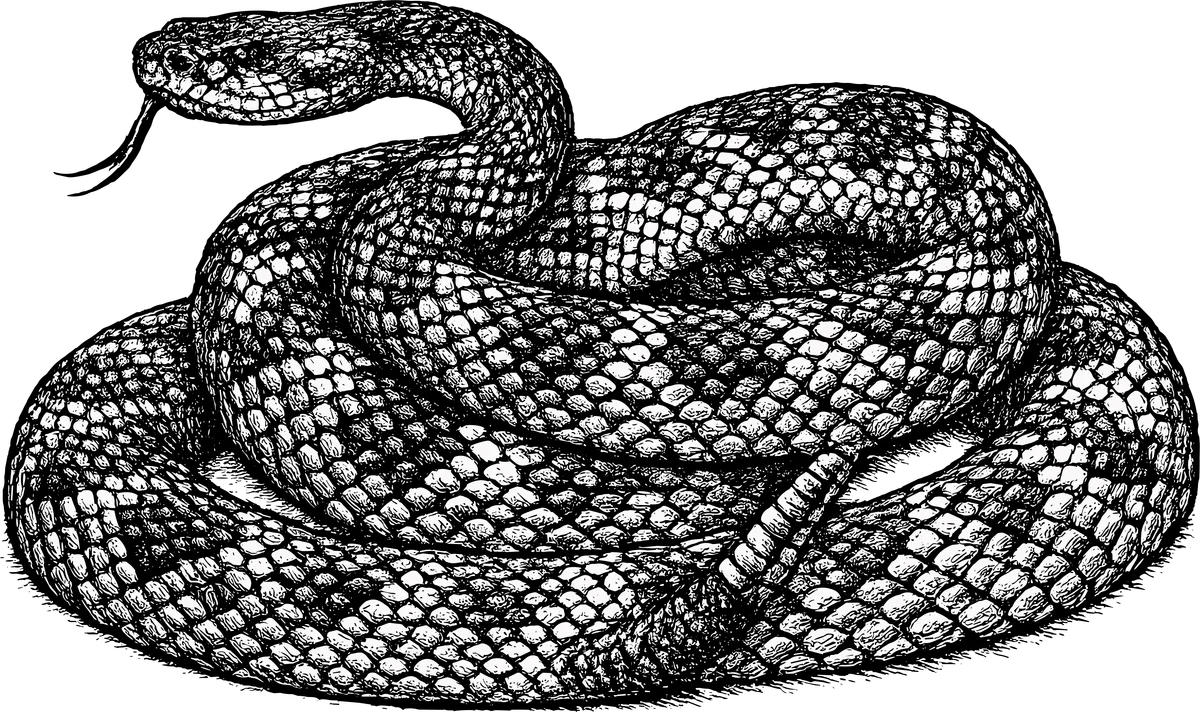
Western Diamondback Rattlesnake
Crotalus atrox
Heavy-bodied, diamond-patterned, and equipped with a warning system at the end of its tail. The most widespread rattlesnake in the American Southwest.
Browse the Woodcut Wild shop →Habitat
Western diamondbacks live across desert flats, rocky canyons, mesquite grasslands, and pine-oak woodlands. They den communally in winter — sometimes dozens of snakes in a single rock crevice — and disperse to hunt in spring.
Behavior
Ambush hunters that strike from cover and follow scent trails to find struck prey. They eat rodents, lizards, and birds. The rattle is a warning, not an attack — a worn-out segment count gives no reliable age, since segments are added with each shed and frequently break off.
Marginalia
- Rattlesnakes have heat-sensing pits between their eyes and nostrils that detect a mouse's body heat in total darkness.
- The "rattle" is made of interlocking keratin segments — the same protein in human hair.
- Newborn rattlesnakes are venomous from the moment they leave the egg sac.
- Diamondbacks account for more snakebite fatalities in the U.S. than any other species.
Kin & neighbors

Common questions
What should you do if a rattlesnake bites you?
Get to a hospital for antivenom — that is the whole answer. Keep the limb still and below heart level, remove rings and watches before swelling sets in, and stay calm to slow your heart rate. Skip the folklore: do not cut, suck, ice, or apply a tourniquet, and never try to capture the snake. Most U.S. rattlesnake bites are survivable with prompt treatment.
How long do rattlesnakes live?
Longer than most people expect — wild western diamondbacks commonly reach the high teens, and captive snakes have lived past twenty. Their slow metabolism means a healthy adult can go weeks between meals and may eat only a dozen or so times a year.
Do rattlesnakes lay eggs?
No. Rattlesnakes give birth to live young, carrying the eggs internally until they hatch. A female produces a litter of roughly four to twenty-five neonates in late summer, often staying near them for the first week or so until their first shed.
Do rattlesnakes always rattle before they strike?
No — and counting on it will get you bitten. A rattlesnake may strike with no warning at all if it is surprised or stepped on, and many learn to stay silent where rattling has drawn human attention. The rattle is a bluff to be left alone, not a courtesy.
What animals eat rattlesnakes?
More than hold still for it. Kingsnakes, which are immune to the venom, hunt and eat rattlers; so do roadrunners, hawks, eagles, and coyotes. Even hogs and deer will trample them. Most of a young rattlesnake's danger comes in its first year, before it grows too large for casual predators.