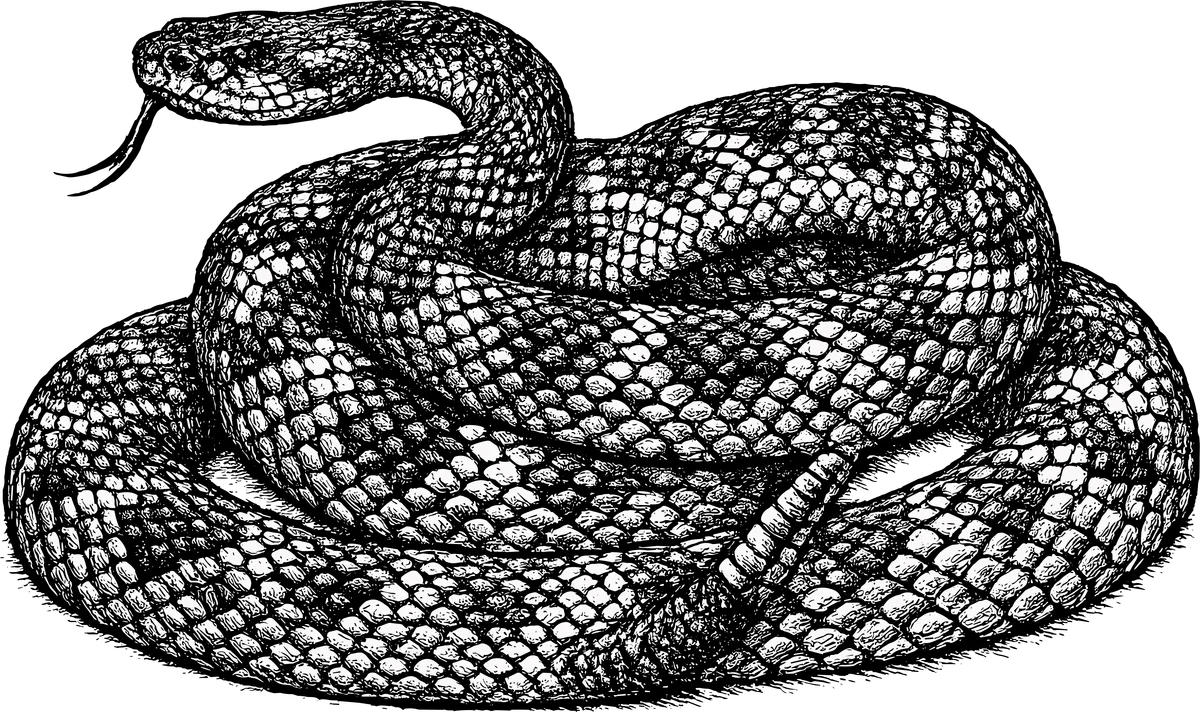
Western Diamondback Rattlesnake
Crotalus atrox
Heavy-bodied, diamond-patterned, and equipped with a warning system at the end of its tail. The most widespread rattlesnake in the American Southwest.
Browse the Woodcut Wild shop →Habitat
Western diamondbacks live across desert flats, rocky canyons, mesquite grasslands, and pine-oak woodlands. They den communally in winter — sometimes dozens of snakes in a single rock crevice — and disperse to hunt in spring.
Behavior
Ambush hunters that strike from cover and follow scent trails to find struck prey. They eat rodents, lizards, and birds. The rattle is a warning, not an attack — a worn-out segment count gives no reliable age, since segments are added with each shed and frequently break off.
Marginalia
- Rattlesnakes have heat-sensing pits between their eyes and nostrils that detect a mouse's body heat in total darkness.
- The "rattle" is made of interlocking keratin segments — the same protein in human hair.
- Newborn rattlesnakes are venomous from the moment they leave the egg sac.
- Diamondbacks account for more snakebite fatalities in the U.S. than any other species.