Tasmanian Tiger
Thylacinus cynocephalus
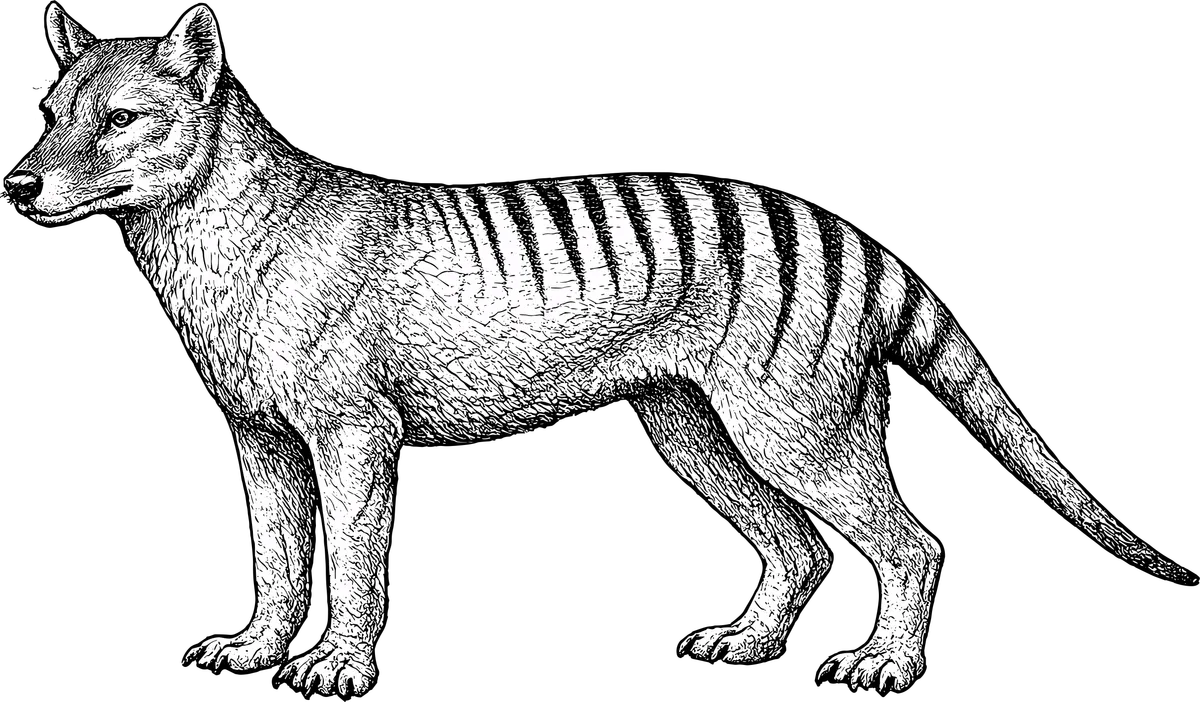
A wolf-shaped marsupial with sixteen tiger stripes across its back — the largest carnivorous marsupial of modern times, hunted to extinction inside a single human lifetime. Also called the thylacine.
Browse the Woodcut Wild shop →Habitat
Thylacines were once widespread across the Australian mainland but were extinct there by roughly 3,000 years ago, likely outcompeted by dingoes. Historical thylacines survived only on Tasmania, where dingoes never arrived. They occupied a wide range of habitats — eucalypt forest, wet sclerophyll, coastal scrub, open grassland — and hunted at the edges of dense cover.
Behavior
The thylacine was a nocturnal pursuit predator, hunting wallabies, kangaroos, and smaller marsupials. It moved with a strange, stiff trot and could open its jaws to nearly 90 degrees — an unusually wide gape for a carnivore. Both males and females carried young in pouches; the male pouch was a partial scrotal pouch that protected the testes during running through scrub. The species was the last surviving member of an ancient family whose other members went extinct millions of years earlier; the thylacine itself is the result of one of the most striking cases of convergent evolution in the mammalian record, having independently evolved a wolf-like body plan from a marsupial ancestor.
Marginalia
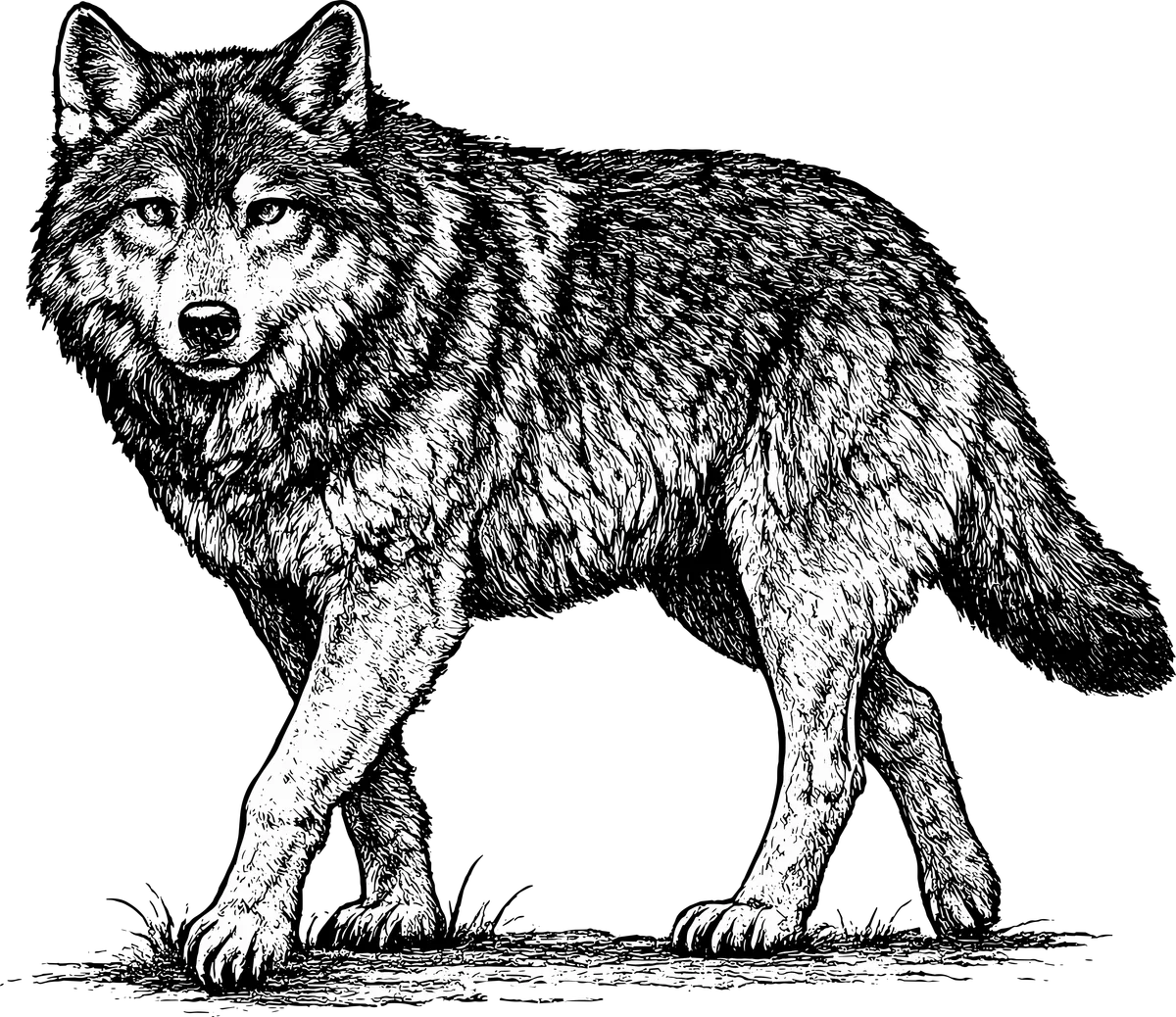
- The thylacine is a marsupial that looks like a striped dog — a textbook case of convergent evolution. It is more closely related to a kangaroo than to a wolf.
- The last known thylacine, a male nicknamed Benjamin, died of exposure at Hobart Zoo on the night of 7 September 1936 — the same year the species was finally granted legal protection in Tasmania, fifty-nine days too late.
- 7 September is now Australia's National Threatened Species Day, the anniversary of Benjamin's death.
- The Tasmanian government paid a bounty on thylacines from 1888 to 1909 (£1 per adult). Over 2,000 bounties were claimed in that period, accelerating the species toward extinction.
- Footage of Benjamin pacing his enclosure is the only known film of a living thylacine. A reconstructed color version was released in 2021; the original 1933 film is 80 seconds long and one of the most-watched extinction videos on the internet.
- Multiple de-extinction projects are now underway. Colossal Biosciences has announced an effort to bring the species back using preserved Tasmanian-tiger DNA and the closely-related fat-tailed dunnart as a surrogate, though scientific consensus remains divided on whether the effort can succeed.