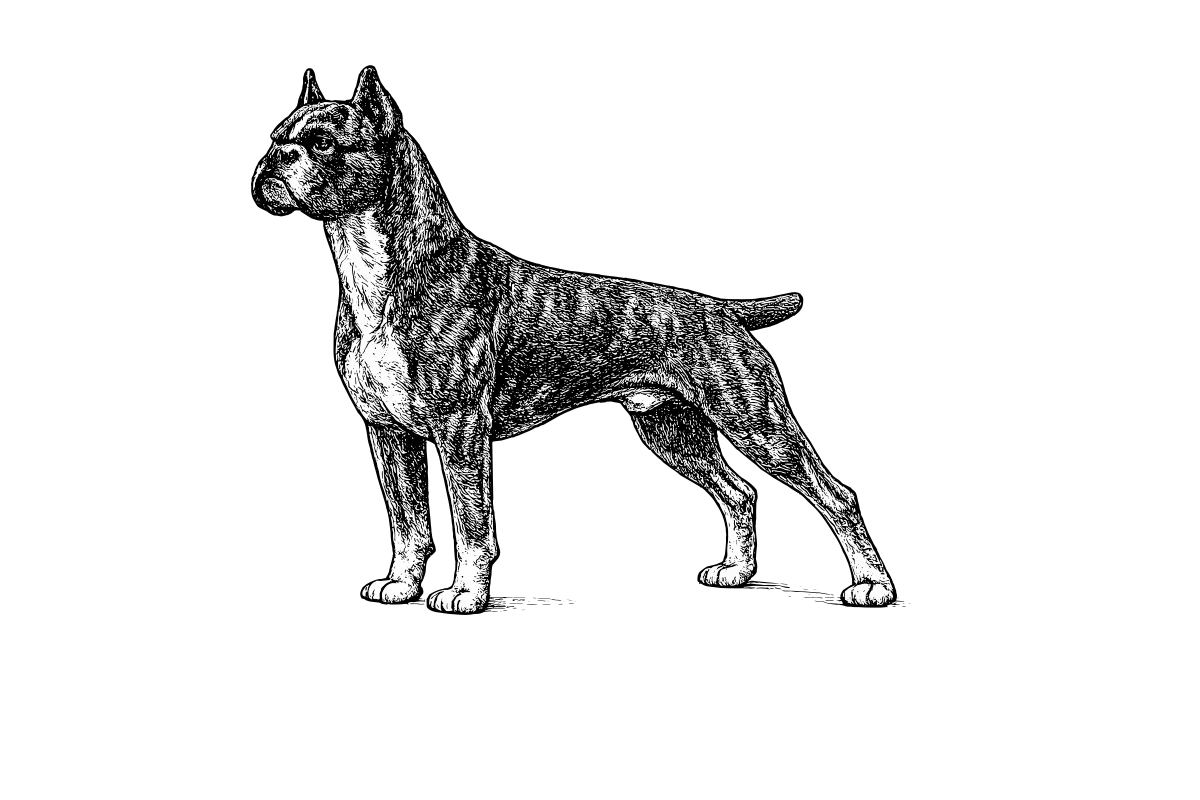
Boxer
Working group · Germany, late 19th century (descended from the Bullenbeisser)
A working dog built around its jaw. The Boxer descends from a now-extinct German hunting breed used to grip the muzzle of large quarry and not let go; the modern Boxer keeps the underbite, the chest, and the relentless physical insistence on engagement.
Browse the Woodcut Wild shop →Origin & history
The Boxer was developed in Munich in the 1880s from the Bullenbeisser ('bull-biter'), an extinct German hunting mastiff used since medieval times to seize and hold large game. The Bullenbeisser became obsolete when European nobility lost the lands and game it had been bred to hunt; German breeders crossed the remaining stock with imported English Bulldogs to produce a smaller, more biddable working dog. The breed was formally recognized in Germany in 1895 and was widely used as a military messenger, sentry, and pack animal in both World Wars — many of the breed's modern bloodlines trace through dogs that served on the Western Front.
Temperament & behavior
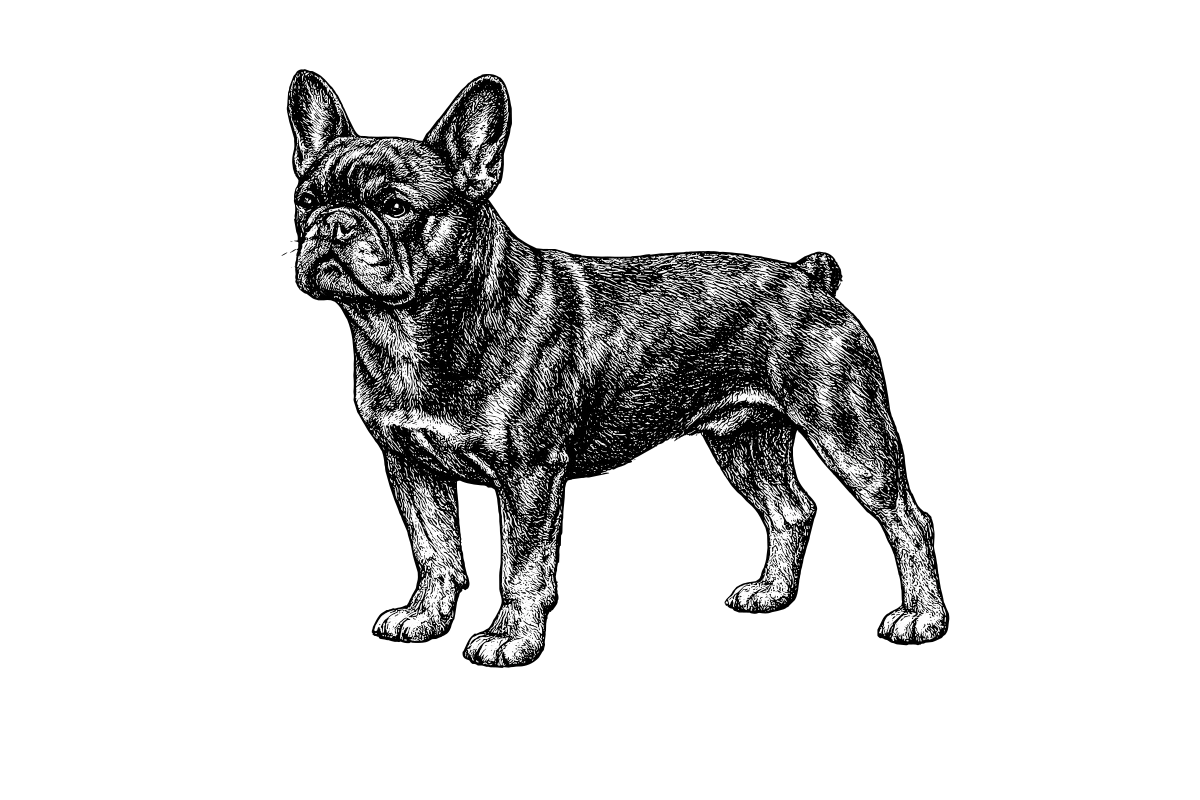
Boxers retain juvenile behavior unusually late — three to four years is normal for a Boxer to 'settle.' The breed boxes with its front paws (the source of the name), bounces on stiff legs when excited, and produces a wide range of grunts, snorts, and the famous 'kidney bean' twist when pleased. They bond hard to a primary family and are physically demonstrative to a degree most other working breeds aren't. The flattened face is mildly brachycephalic — not as compromised as a French Bulldog, but they overheat fast and snore.
Originally bred for
Holding large game — boar, bear, bison — by the snout until the hunter arrived.
Marginalia
- The Boxer's underbite is functional, not cosmetic — it was bred so the dog could grip game and still breathe through its nose while holding on.
- Boxers have one of the highest rates of cancer of any breed, particularly mast cell tumors and lymphoma.
- A Boxer named Punch is the only dog known to have been awarded a Dickin Medal — the UK's animal Victoria Cross — for service in WWII.
- The breed is genetically very close to extinction in the early 20th century; almost every modern Boxer descends from a single dog, Meta von der Passage, born in 1898.
Related breeds
Common questions
Do Boxers shed?
Moderately and year-round, despite the short coat. The fine hairs are constant and weave into fabric, though a weekly rubber-brush grooming keeps it manageable. Low grooming effort, but not a low-shedding dog.
Are Boxers good with kids and other pets?
Very good with kids — it is one of the breed's signatures. Boxers are patient, playful, and protective with their family's children, and the long adolescence keeps them eager to roughhouse for years; the only real risk is collisions, since a bouncing 70-pound dog can knock a toddler flat by accident. With other animals they are usually fine when raised together, though same-sex dog aggression and a moderate prey drive mean introductions deserve care.
What health problems are Boxers prone to?
Cancer, first and foremost — the breed has one of the highest rates of any dog, particularly mast cell tumors and lymphoma. Boxers are also prone to several heart conditions, notably boxer cardiomyopathy and aortic stenosis, plus hip dysplasia and the mild brachycephalic breathing issues of the flat face. Buy from breeders who screen hearts and hips.
How much exercise do Boxers need?
A lot, and consistently. Plan on an hour or more of vigorous activity daily — running, fetch, play — to burn off the breed's relentless energy. An under-exercised Boxer becomes destructive and hyper indoors. Just avoid hard exertion in heat, since the flattish face limits cooling.
Are Boxers good for first-time owners?
Yes, for active ones. The breed is affectionate, eager to please, and tolerant of beginner mistakes, but the years-long adolescence brings a stubborn, distractible streak and a need for real daily exercise. Early, consistent, reward-based training is the key; harsh correction backfires, as the breed is sensitive under the bravado.