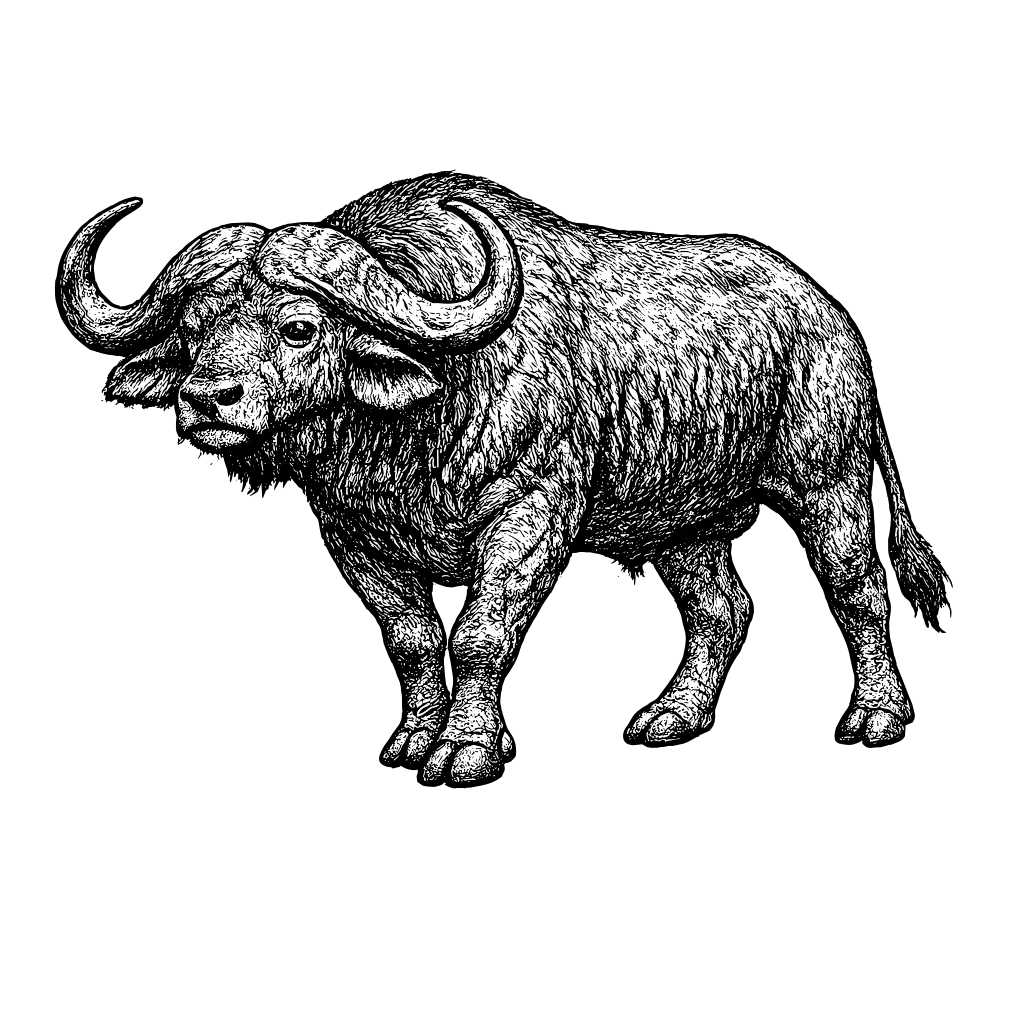
Cape Buffalo
Syncerus caffer
The most feared of Africa's Big Five. A 1500-pound bovid with a fused boss of horn across the forehead, a long memory for grievances, and the habit of circling back to ambush whatever hurt it.
Browse the Woodcut Wild shop →Habitat
Cape buffalo occupy savanna, grassland, and open woodland across sub-Saharan Africa wherever there is reliable water — they need to drink daily and graze close to it. Mixed herds of cows, calves, and young bulls range freely, while old bulls (the 'dagga boys') retire to small bachelor groups in dense bush along rivers.
Behavior
Buffalo are obligate grazers, mowing through tall grasses with a wide muzzle better suited to bulk than selectivity. Herds of a few hundred are typical, with the largest exceeding a thousand. They move and decide as a unit — recent work shows resting cows 'vote' on the direction of the next move by orienting their bodies, with the herd taking the average bearing. When threatened they form defensive rings around calves and have been observed actively rescuing herd members from lion attacks. A wounded buffalo is the most dangerous animal in Africa for a person on foot.
Marginalia
- The horn boss of a mature bull fuses into a single shield of bone across the skull that even a heavy rifle round can struggle to penetrate.
- Buffalo dung beetles and oxpecker birds form a small ecosystem riding on every herd — oxpeckers clean ticks from the buffalo's skin and act as living alarm calls when predators approach.
- Resting cows in a herd 'vote' on the next direction of travel by the way they orient their bodies; when the herd rises, it moves on the averaged bearing.
- A wounded buffalo will circle back and lie in wait for its pursuer, a behavior so consistent that hunters have a name for it: 'going on the spoor.'
Kin & neighbors
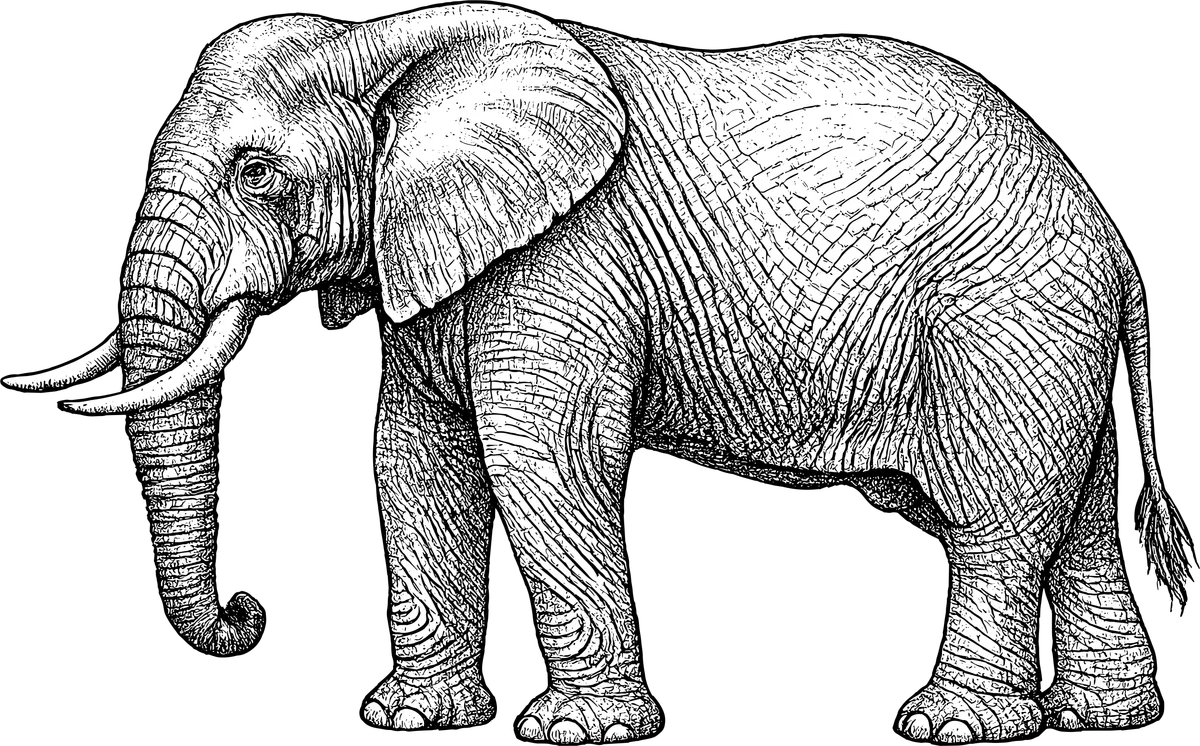
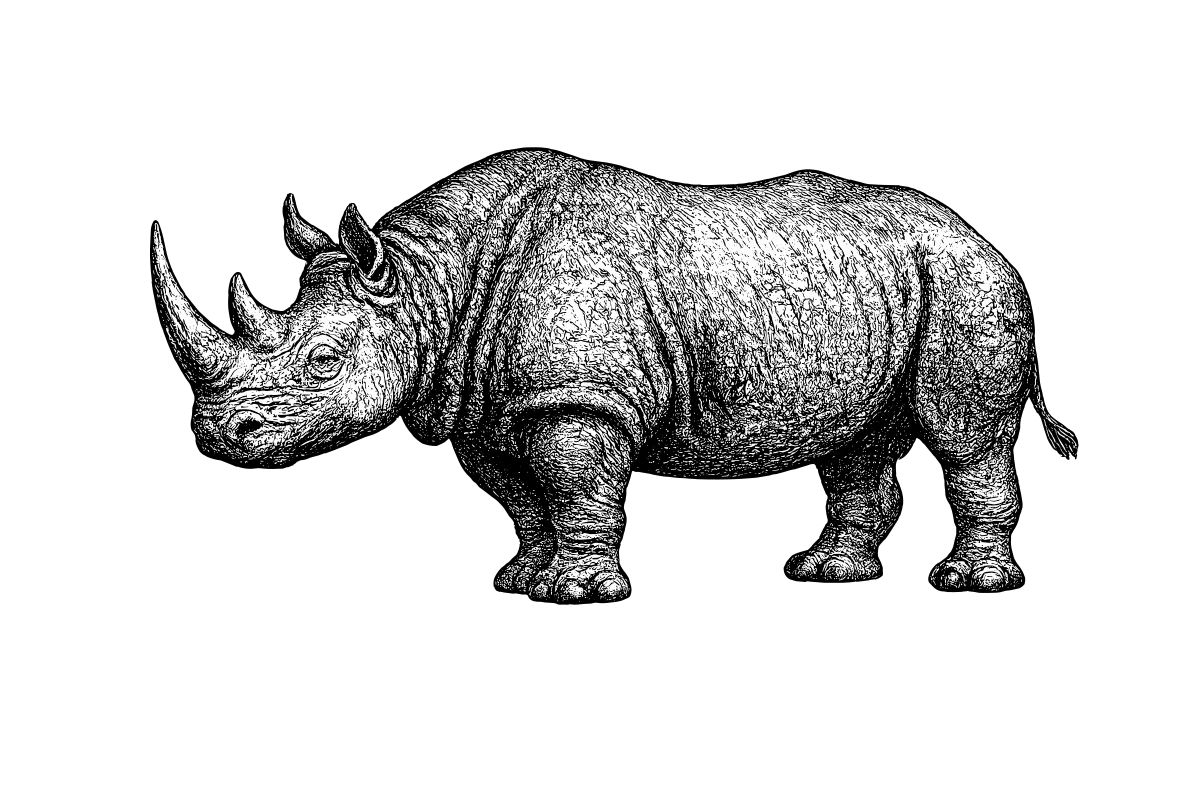
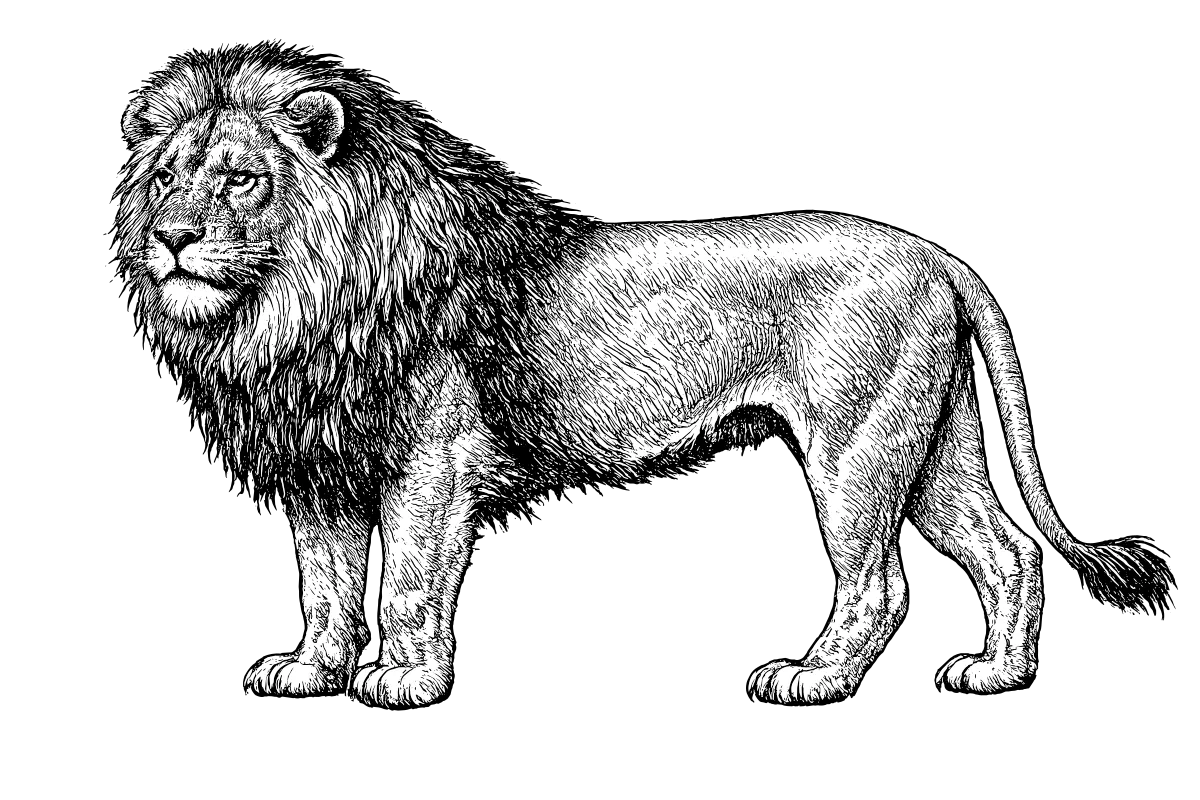
Common questions
Why is the Cape buffalo called 'the Black Death'?
Because of how it kills hunters. A buffalo gored or shot but not put down has a habit of circling back through cover and ambushing the pursuer head-on, often after the hunt has moved past the spot. The combination of a memory for the threat, the willingness to charge silently from dense bush, and a frontal horn boss that no rifle can penetrate has earned the buffalo a reputation among professional hunters for being responsible for more fatalities than any other African big-game species.
What is the difference between a Cape buffalo and a water buffalo?
Different animals on different continents. The Cape buffalo is African, wild, and undomesticated; the water buffalo is Asian (*Bubalus bubalis*) and has been a domesticated draft animal for thousands of years. The two are not close enough to interbreed. Many attempts to domesticate Cape buffalo have failed — the species cannot be reliably tamed even when raised from a calf, which is part of why African pastoralism developed around cattle instead.
Are Cape buffalo dangerous?
Yes, and not only when wounded. Buffalo regularly kill villagers who surprise them at a drinking site, tourists who walk too close on safari, and farmers protecting crops. Estimates put the annual death toll across Africa in the low hundreds, more than lions and leopards combined. The herd is generally placid; a lone bull in thick brush is the situation to avoid.
Do Cape buffalo really fight off lions?
Often, yes. A pride of lions will target buffalo for the protein, but a tight herd can drive lions off a kill or even kill them — buffalo have been filmed tossing lions on their horns and trampling them. A famous BBC clip, 'Battle at Kruger,' shows a buffalo herd recovering a calf already in a lion's mouth, then driving the entire pride into the bush. It takes a coordinated pride of five or more to bring down a healthy adult buffalo.
Are Cape buffalo endangered?
Listed Near Threatened across the species, with the trajectory poor. The total wild population is probably around 400,000 and declining outside of protected areas, pressured by hunting, habitat loss, and competition with cattle. The bovine diseases buffalo carry — rinderpest historically, brucellosis and foot-and-mouth currently — also keep them at odds with ranchers and constrain where they're allowed to roam.