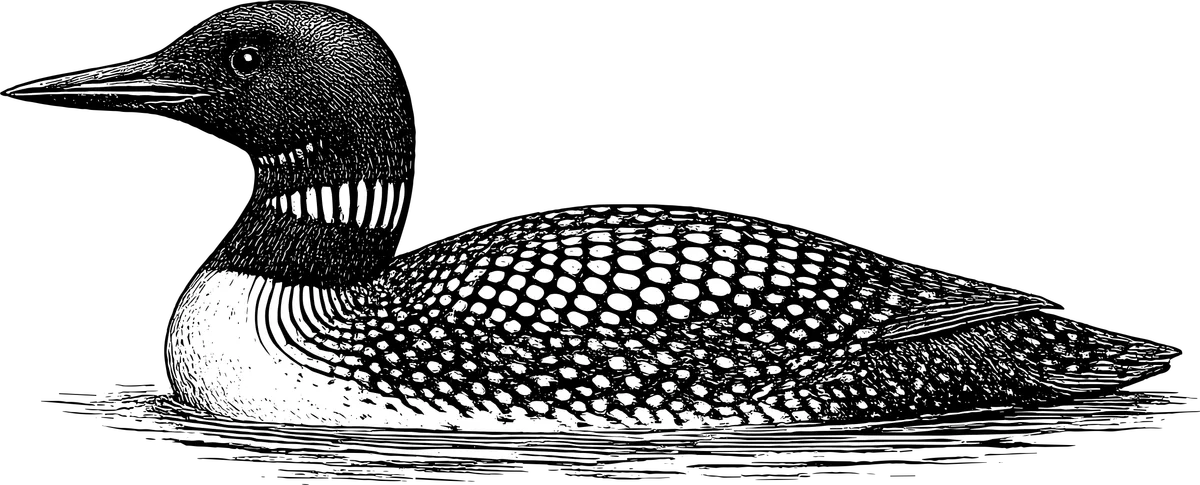
Common Loon
Gavia immer
The black-and-white waterbird of every northern lake — checkerboarded back, dagger bill, ruby eye. Built for diving, not flying, and capable of one of the most haunting voices in North American wildlife.
Browse the Woodcut Wild shop →Habitat
Common loons breed on clear, cold, deep northern lakes — they need the underwater visibility to chase fish and enough open water for a long takeoff run. In winter they shift to coastal saltwater bays and estuaries, trading the chess-piece breeding plumage for plain grey. They almost never come ashore except to nest, since their legs are set so far back on the body that walking is awkward.
Behavior
Loons hunt by sight, diving from the surface and propelling themselves with strong feet to depths of up to 200 feet and stay submerged for over three minutes. They are wary, territorial breeders — a mated pair typically claims an entire lake or a defended cove, performing penguin-dance displays and chasing off rivals. Calls are the signature: a quavering tremolo for alarm, a long mournful wail for contact, the wild yodel of a defending male, and the soft hoot between mates and chicks.
Marginalia
- Loons have solid bones — unusual among birds, which mostly have hollow bones — which lets them dive deeper but makes takeoff laborious, requiring a long water runway.
- Their eyes turn ruby red in breeding plumage; the color likely helps with underwater vision in deep water where red wavelengths are filtered out.
- Chicks ride on a parent's back in the first weeks of life, hiding in the feathers and dropping off only to feed.
- The voice catalog includes four distinct calls — wail, tremolo, yodel, and hoot — each used in a different context. The yodel is unique to defending males and is individually identifiable.
- Despite the name 'common', loons need clear, undeveloped lakes and disappear quickly when shoreline development, motorboat traffic, or water-quality decline reaches a certain point.