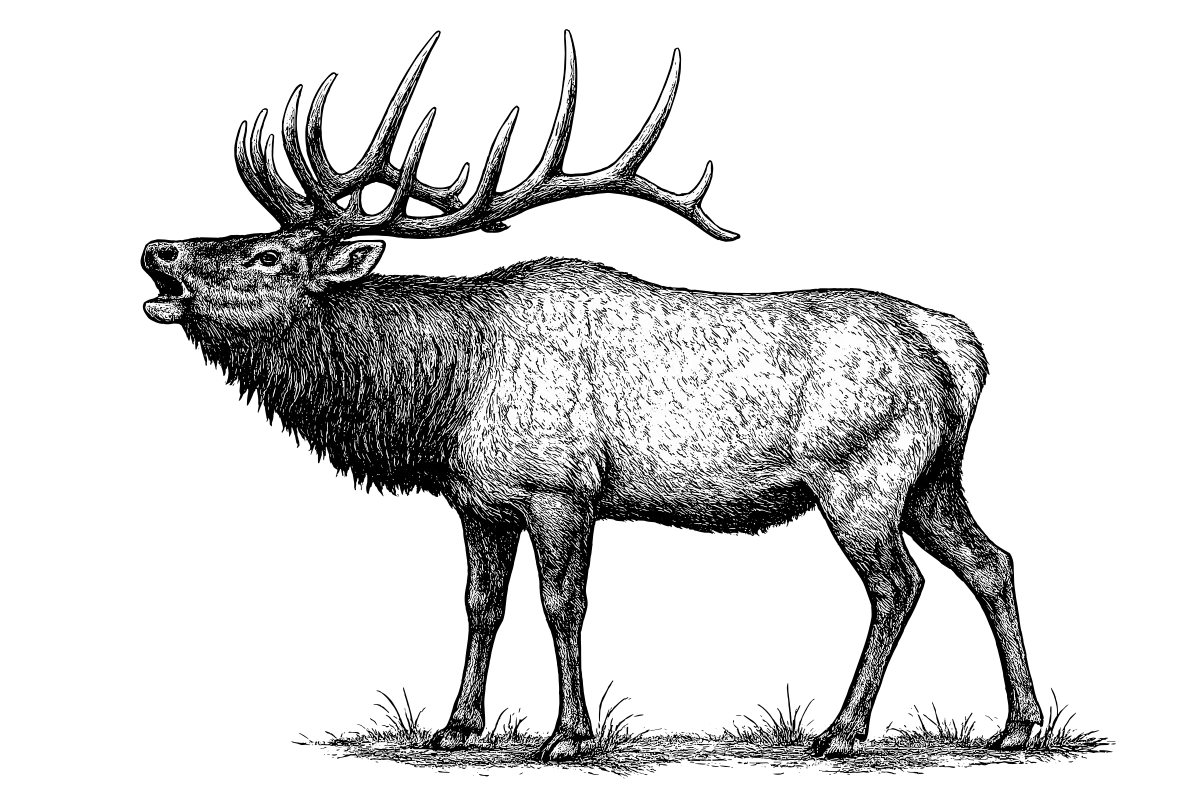
Elk
Cervus canadensis
A bugle on a frozen September morning is the unmistakable sound of a bull elk. The second-largest deer in the world and one of North America's great recovery stories.
Browse the Woodcut Wild shop →Habitat
Elk live in mountain meadows, aspen parkland, and forested foothills. They summer high in alpine basins and migrate to lower valleys when snow drives them down. Open edges between forest and meadow are prime habitat.
Behavior
Elk are gregarious, forming large herds for much of the year. During the September rut, dominant bulls collect harems and bugle to challenge rivals — a high keening scream that carries for miles. Cows give birth in late spring and hide newborn calves in tall grass for the first week.
Marginalia
- A mature bull's antlers can weigh 40 pounds and are shed and regrown every year.
- Elk were once nearly extinct in the eastern U.S. and have been reintroduced to Kentucky, Pennsylvania, and beyond.
- The bugle includes a low roar, a high scream, and a series of grunts — a uniquely complex vocalization for a deer.
- Indigenous people called them wapiti, a Shawnee word for "white rump."
Kin & neighbors
Common questions
What is the difference between an elk and a moose?
Size and shape settle it. A moose is bigger, darker, and ungainly, with a long droopy snout, a dangling throat flap called a bell, and broad palmate antlers like flattened hands. An elk is tan with a pale rump, carries tall branching tine-style antlers, and travels in herds — moose are loners. A bull elk bugles; a moose grunts.
What is the difference between an elk and a caribou?
Several things, but the easy ones are antlers and company. Only male elk grow antlers, while both sexes of caribou (reindeer) do. Caribou are smaller, woolier, and live farther north on the open tundra in vast migrating herds; elk are larger and keep to mountain forest and meadow edges. Caribou hooves splay wide for snow and bog — elk hooves don't.
What do elk eat?
Grass for much of the year, browse for the rest. In spring and summer they graze meadow grasses and forbs; in winter, when snow buries the grass, they switch to shrubs, tree bark, and twigs. A single elk can put away around twenty pounds of forage a day, which is why winter range and migration corridors matter so much to their survival.
Are elk dangerous?
They can be, and they're underestimated because they look placid. A rutting bull in autumn will charge anything it reads as a rival, and a cow guarding a hidden calf in spring will strike with her front hooves. In places like the national parks, habituated elk injure more visitors than bears do — usually people who got too close for a photograph.
How long do elk live?
Up to about 20 years, though wild elk rarely get there. Predation, hunting, and hard winters take most of them earlier, so a typical wild lifespan runs closer to 10 to 13 years. Cows tend to outlive bulls, which are worn down by the demands of the rut.