Elk
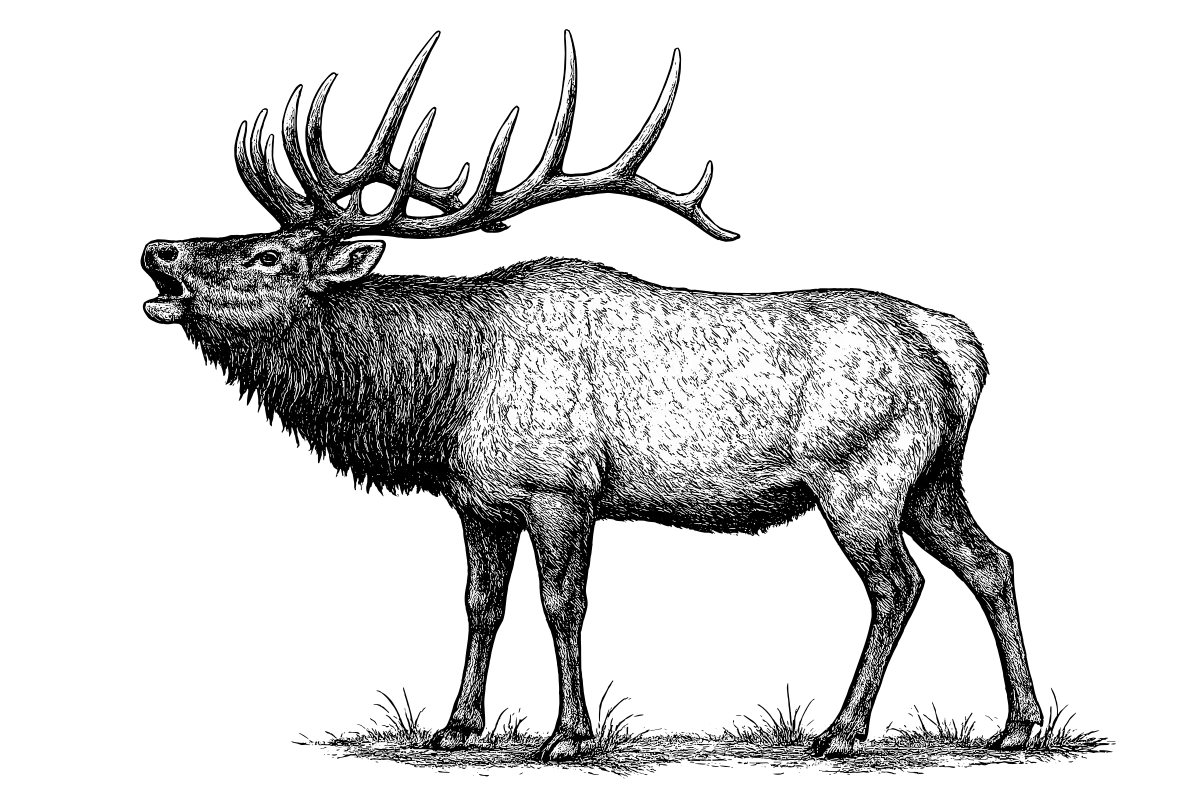
Cervus canadensis
A bugle on a frozen September morning is the unmistakable sound of a bull elk. The second-largest deer in the world and one of North America's great recovery stories.
Browse the Woodcut Wild shop →Habitat
Elk live in mountain meadows, aspen parkland, and forested foothills. They summer high in alpine basins and migrate to lower valleys when snow drives them down. Open edges between forest and meadow are prime habitat.
Behavior
Elk are gregarious, forming large herds for much of the year. During the September rut, dominant bulls collect harems and bugle to challenge rivals — a high keening scream that carries for miles. Cows give birth in late spring and hide newborn calves in tall grass for the first week.
Marginalia
- A mature bull's antlers can weigh 40 pounds and are shed and regrown every year.
- Elk were once nearly extinct in the eastern U.S. and have been reintroduced to Kentucky, Pennsylvania, and beyond.
- The bugle includes a low roar, a high scream, and a series of grunts — a uniquely complex vocalization for a deer.
- Indigenous people called them wapiti, a Shawnee word for "white rump."