Orca
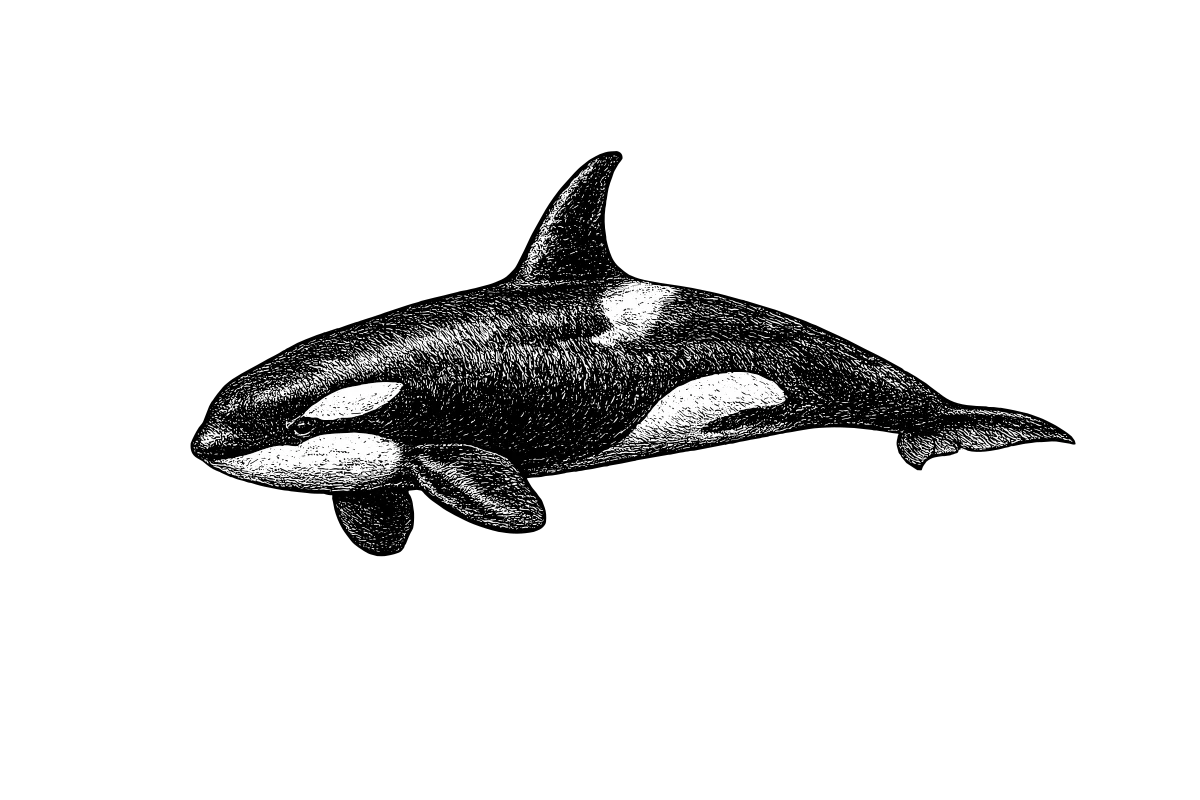
Orcinus orca
The ocean's apex predator — bigger than great whites, smarter than most mammals on earth, and divided into distinct cultures that hunt different prey and refuse to interbreed. A killer whale is a dolphin, just enormous.
Browse the Woodcut Wild shop →Habitat
Orcas live in every ocean on the planet, from the polar ice to the tropics — among the most widely distributed mammals on earth. Different populations occupy distinct ecological niches: Pacific Northwest residents specialize in salmon; transients hunt marine mammals; offshore ecotypes prey on sharks; Antarctic types target seals from ice floes.
Behavior
Orcas live in stable matrilineal pods — the matriarch's family stays with her for life. Each pod has its own dialect of calls, hunting techniques, and prey preferences, passed down across generations. Researchers describe this as culture in the proper sense: traits inherited socially rather than genetically. They hunt cooperatively, sometimes with extraordinary sophistication — beaching themselves intentionally to grab seals, generating waves to wash prey off ice floes, drowning whales by holding them underwater.
Marginalia
- Orcas have the second-largest brain of any animal — and the most folded cerebral cortex relative to body size of any mammal.
- Different ecotypes haven't interbred for hundreds of thousands of years; they may be functionally separate species.
- An orca named Granny was estimated at over 100 years old when she was last seen in 2016.
- Despite the name 'killer whale,' there is no recorded fatal attack on a human by a wild orca.