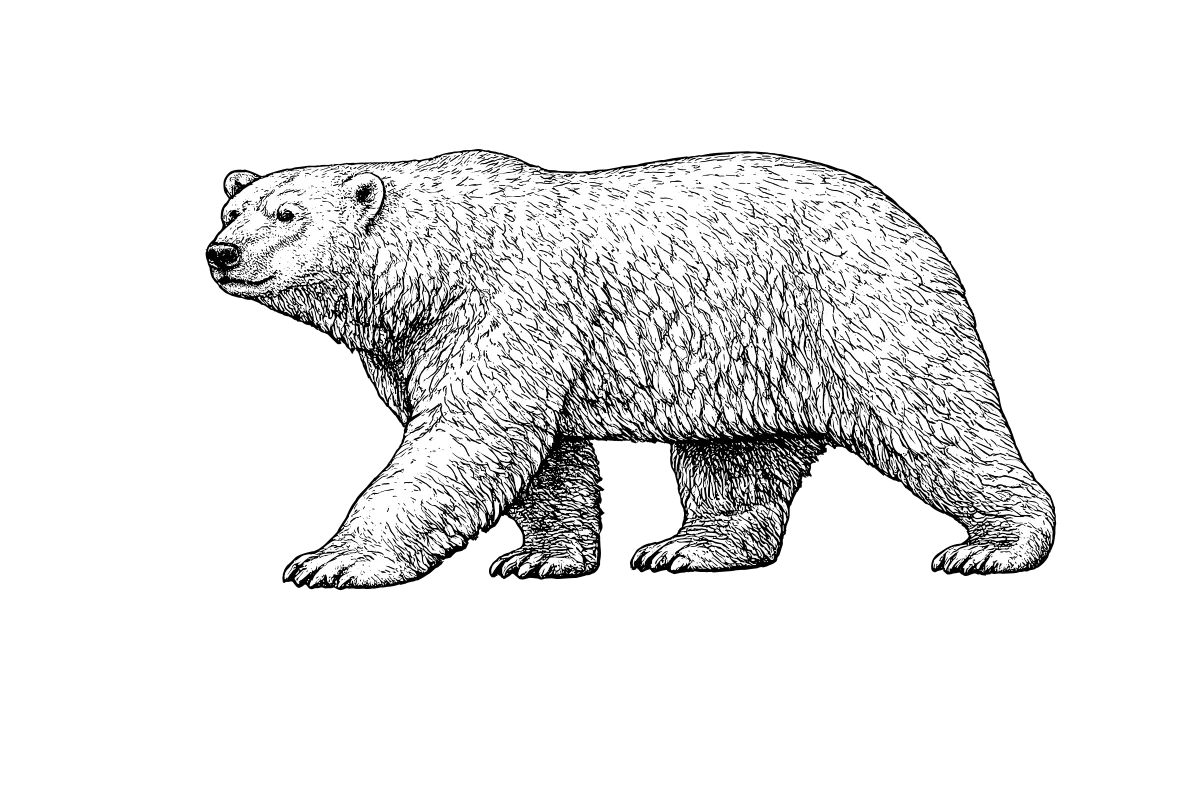
Polar Bear
Ursus maritimus
The largest land carnivore on Earth, and the only bear classified as a marine mammal. The polar bear is a grizzly that went to sea roughly half a million years ago and re-engineered itself for a life on drifting ice and the seals beneath it.
Browse the Woodcut Wild shop →Habitat
Polar bears live on the sea ice of the circumpolar Arctic, ranging across the territorial waters of five nations. They are tied to the ice because it is the platform from which they hunt seals; when the ice retreats in summer, many bears are stranded on land and effectively fast until it returns.
Behavior
Polar bears are specialized seal hunters. They wait motionless beside a seal's breathing hole for hours, then haul the animal out in a single explosive strike, or stalk seals hauled out on the ice. Outside of mothers with cubs, they are solitary and range enormous distances — individuals have been tracked swimming hundreds of miles across open water. They do not defend territory; the ice moves too much for territory to mean anything.
Marginalia
- Polar bear fur is not white — each hair is hollow and transparent, scattering light, and the skin underneath is black to absorb heat.
- They are so well insulated that they overheat easily and show up nearly invisible on infrared cameras; the only consistent heat signature a polar bear gives off is its breath.
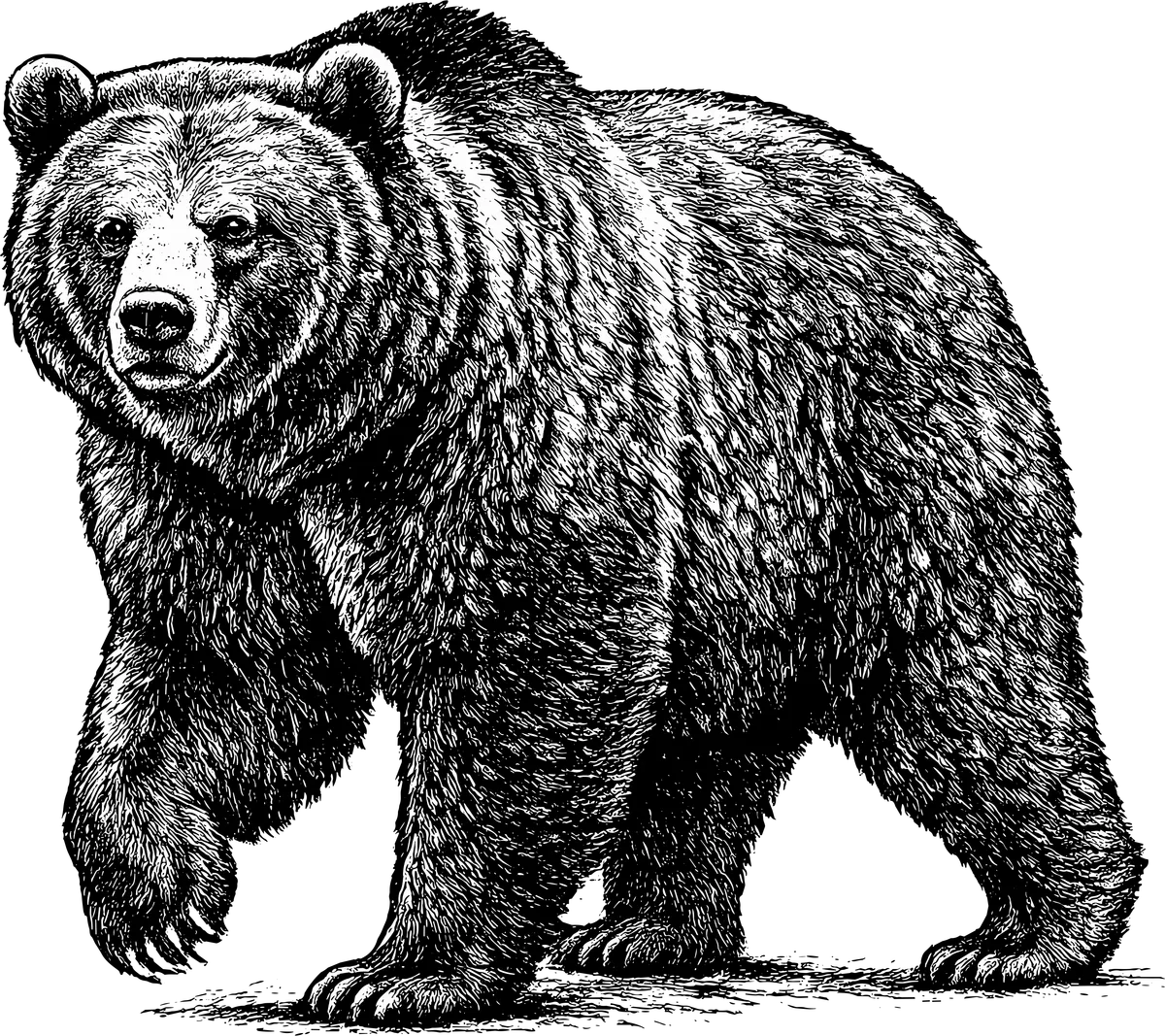
- Polar bears and grizzlies can interbreed and produce fertile offspring ('pizzly' or 'grolar' bears), and the two species diverged recently enough that some brown bear populations are more closely related to polar bears than to other brown bears.
- A polar bear can smell a seal nearly a kilometer away and through up to three feet of compacted snow.
Kin & neighbors
Common questions
Do polar bears hibernate?
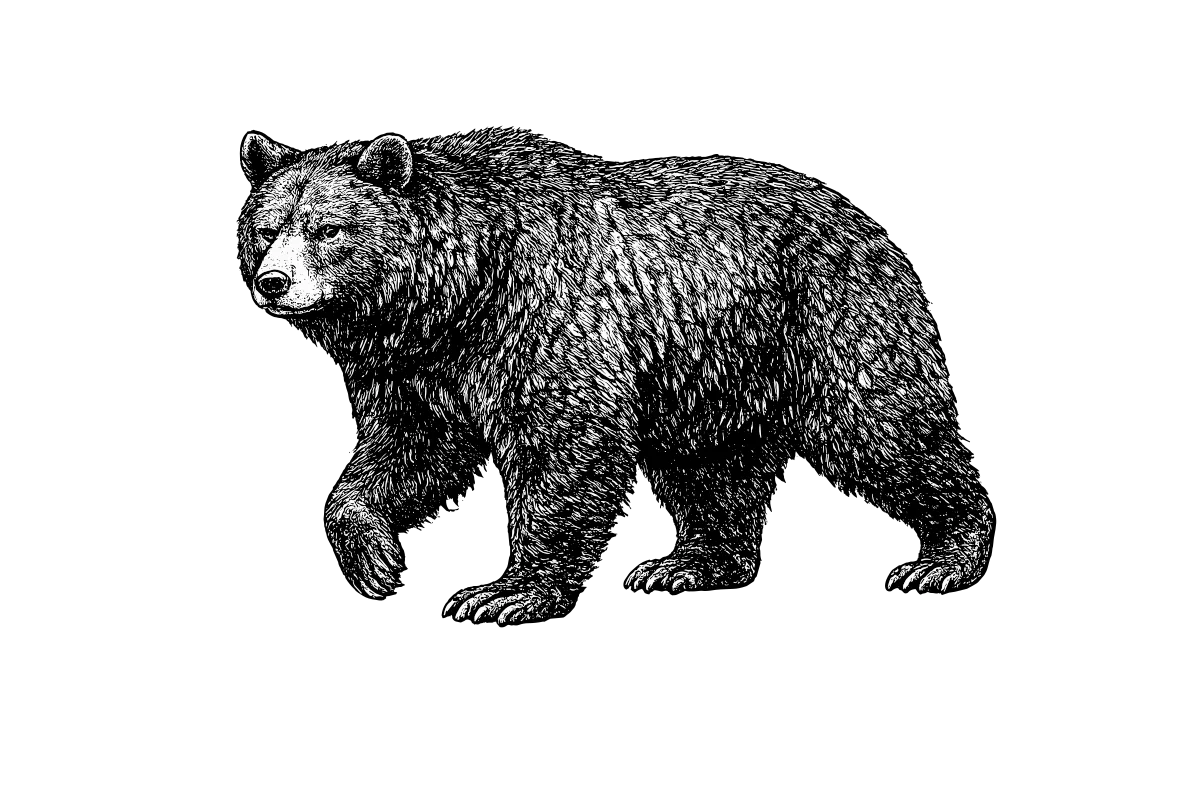
Not the way black and brown bears do. Most polar bears stay active and hunting through the winter, when the sea ice and the seals are at their best. Only pregnant females den — digging into a snowbank in autumn to give birth and nurse through the dark months — and even that is a maternity den, not a true population-wide hibernation.
Are polar bears dangerous to humans?
More than any other bear, yes. Unlike grizzlies, which usually attack defensively, a polar bear will occasionally hunt a person as food — it is one of the few animals that does. Encounters are rare because so few people live in their range, but Arctic towns post bear guards and keep deterrents on hand for good reason.
How long do polar bears live?
Around twenty-five years in the wild, with a few reaching their early thirties; captive bears have passed forty. Survival hinges on the first years of life and on body condition heading into the ice-free season — a bear that cannot store enough fat from spring seal hunting may not last the summer fast.
What does a baby polar bear look like?
Tiny and helpless — about the size of a guinea pig, blind, and covered in thin white fuzz, weighing barely more than a pound at birth. Cubs are born in the winter den and stay with the mother for roughly two and a half years, learning to hunt seals before they strike out alone.
Are polar bears left-handed?
No — that is a persistent myth with no evidence behind it. The story claims polar bears favor the left paw to hunt; studies of foraging bears find no such preference, and the tale appears to be folklore repeated until it sounded like fact.