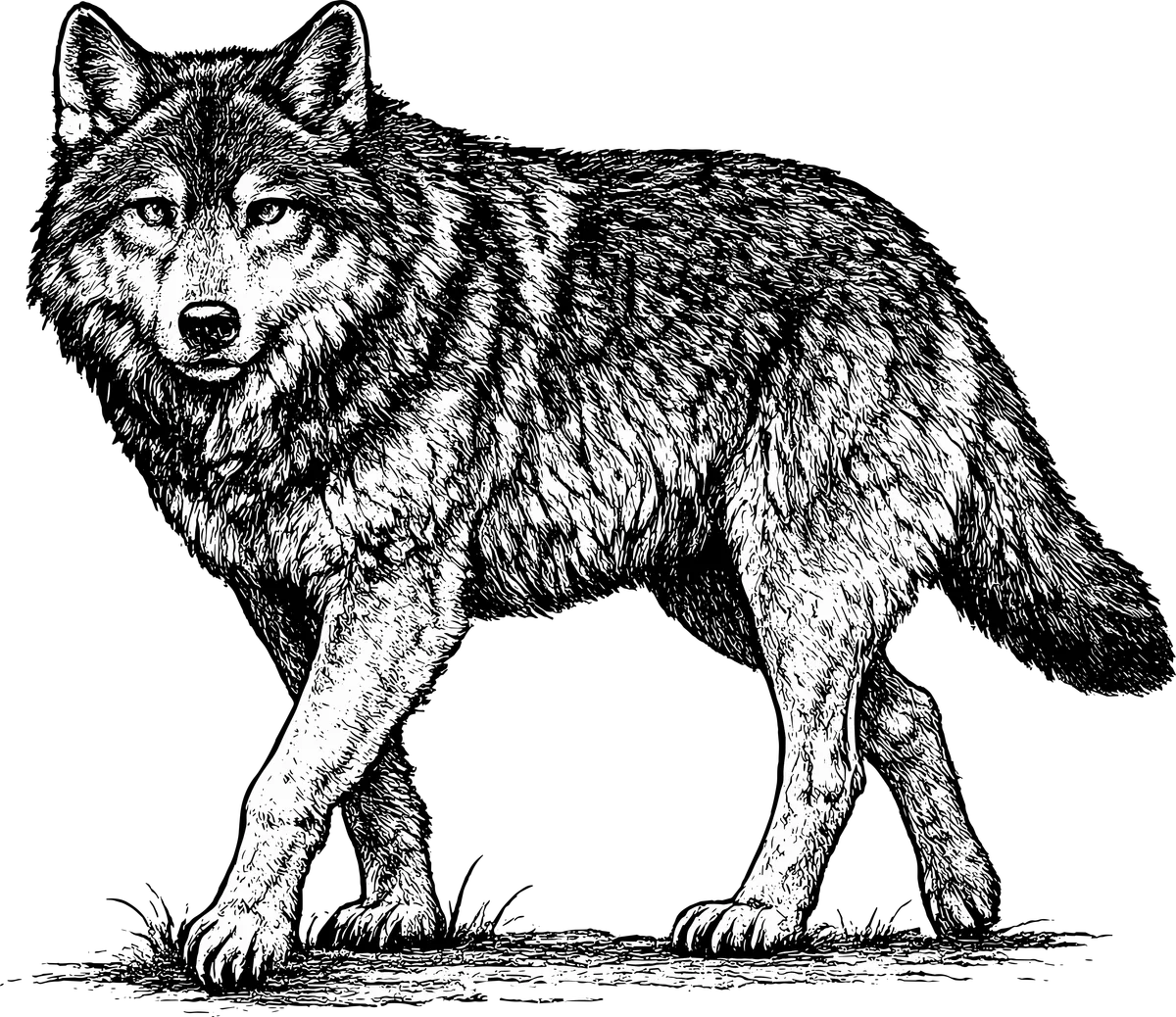
Gray Wolf
Canis lupus
A social, intelligent, long-distance hunter built around the pack. The gray wolf is the largest member of the dog family and the ancestor of every domestic dog.
Browse the Woodcut Wild shop →Habitat
Gray wolves are adaptable — they live in arctic tundra, boreal forest, temperate woodlands, mountain ranges, and high prairie. The single constant is large prey and enough space to roam.
Behavior
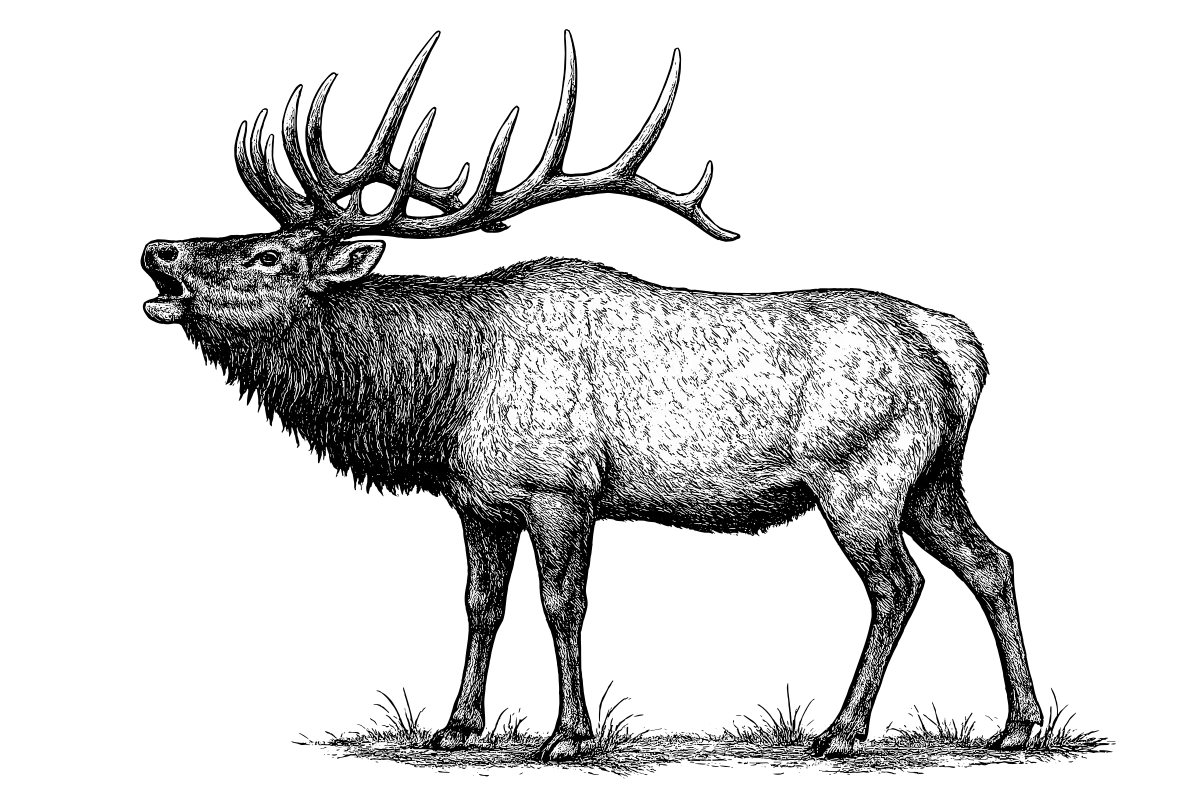
Wolves hunt cooperatively, primarily large ungulates: elk, deer, moose, caribou, and bison. A pack is usually a single breeding pair and their offspring of one or two years. Howling coordinates pack members, advertises territory, and reunites scattered animals after a hunt.
Marginalia
- A wolf's bite force is roughly 400 psi — about twice that of a large domestic dog.
- Yellowstone's 1995 reintroduction triggered measurable changes in river paths as elk browsing patterns shifted.
- Wolves can travel 30 miles or more in a single day when hunting.
- Pack hierarchy is largely about parentage and age, not perpetual fighting — the "alpha wolf" model from captive studies has been largely discarded by field biologists.