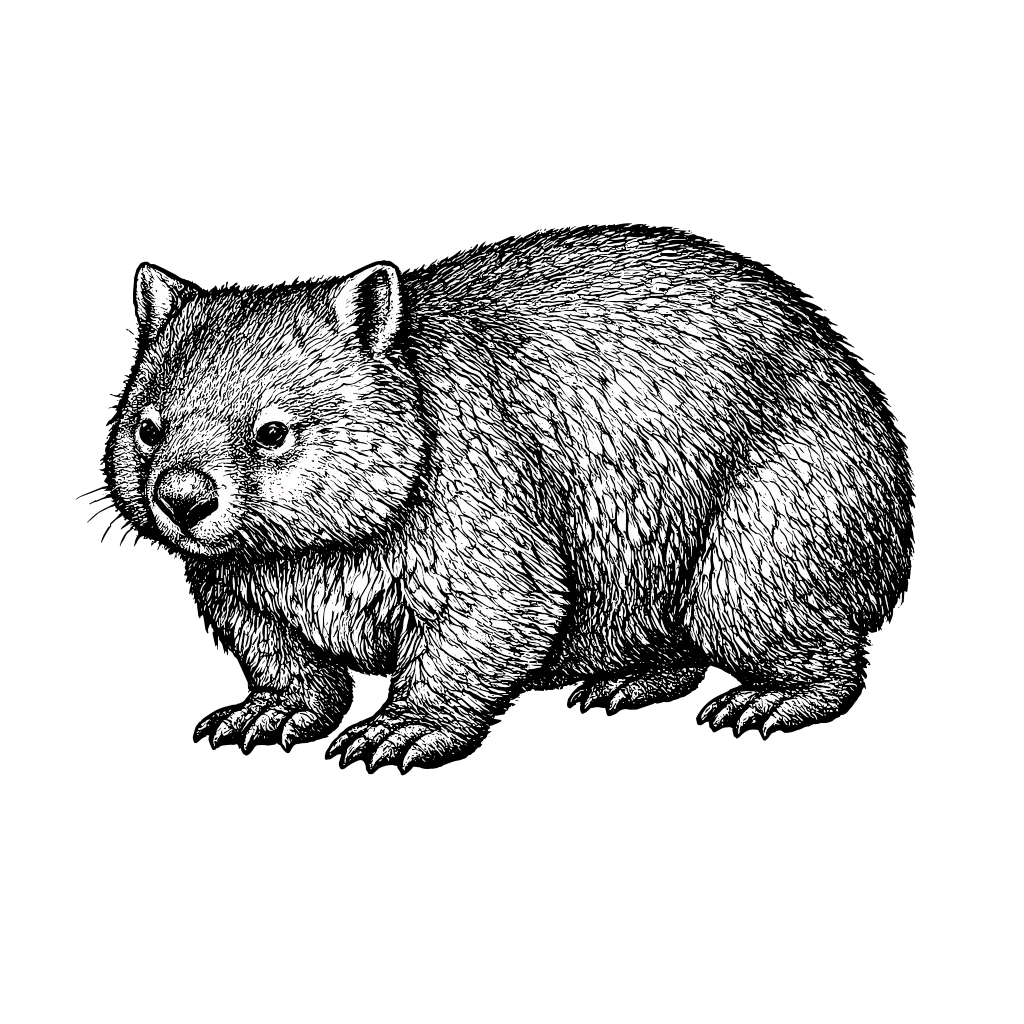
Common Wombat
Vombatus ursinus
A burrowing marsupial built like a small tank, and the only animal on Earth that produces cube-shaped droppings. The wombat digs extensive tunnel systems with a backward-facing pouch and a rump of reinforced cartilage it uses as a living shield.
Browse the Woodcut Wild shop →Habitat
Common wombats live in the forests, heathlands, and mountains of southeastern Australia and Tasmania, wherever the soil is suitable for digging. Each maintains a network of burrows within a home range, sheltering underground by day and emerging to graze at night.
Behavior
Wombats are nocturnal grazers that dig elaborate burrow systems up to 100 feet long. Their pouch faces backward so it doesn't fill with soil while digging. The rear of the body is armored with thick skin and cartilage over the rump; a wombat threatened in its burrow blocks the entrance with its backside and can crush a predator's skull against the tunnel roof. They are slow-metabolizing animals that take up to two weeks to digest a meal.
Marginalia
- Wombats produce cube-shaped droppings — the only known animal to do so — formed by varying elasticity along the intestinal wall; the flat-sided pellets don't roll away, which helps them mark territory on rocks and logs.
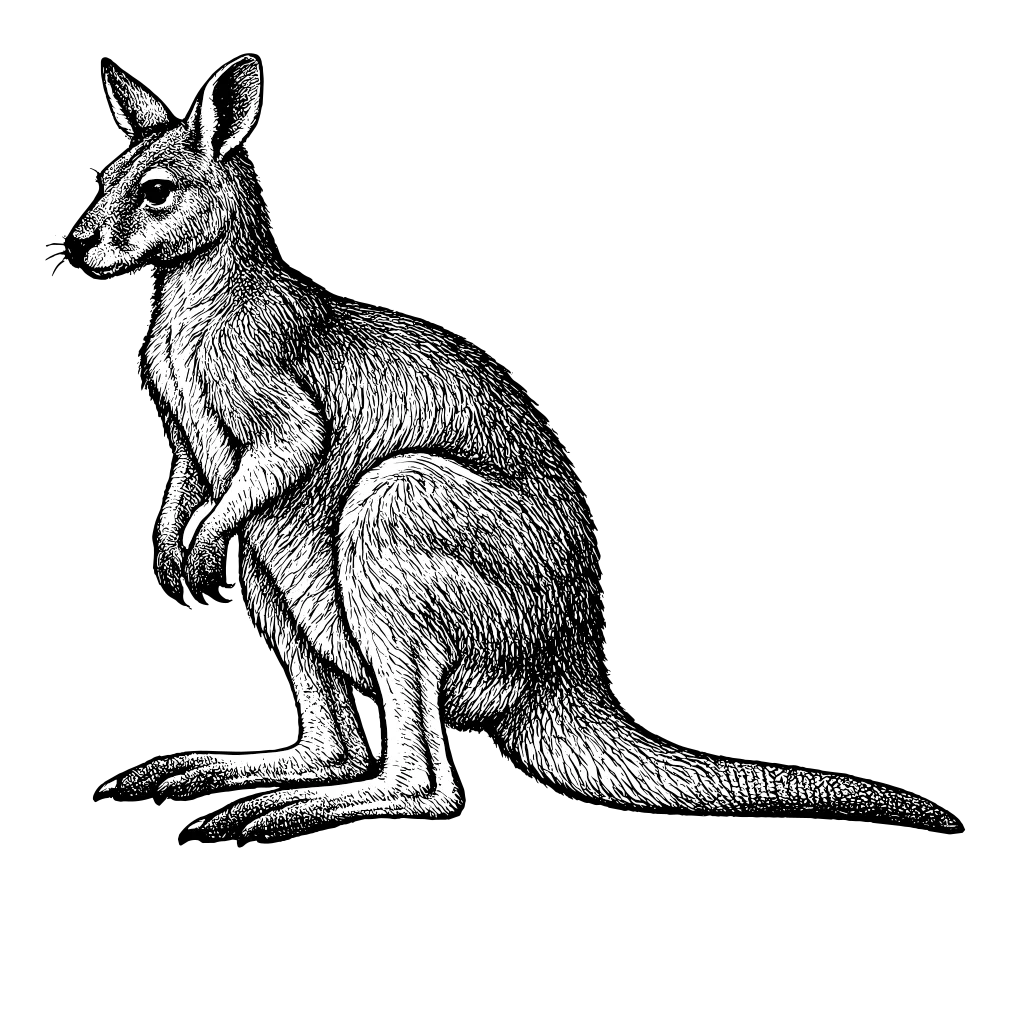
- Their pouch opens to the rear so that digging doesn't pack it with dirt — the opposite arrangement from a kangaroo's forward-opening pouch.
- A wombat's rump is a defensive weapon: reinforced with cartilage, it's used to block burrow entrances and to crush attacking predators against the tunnel ceiling.
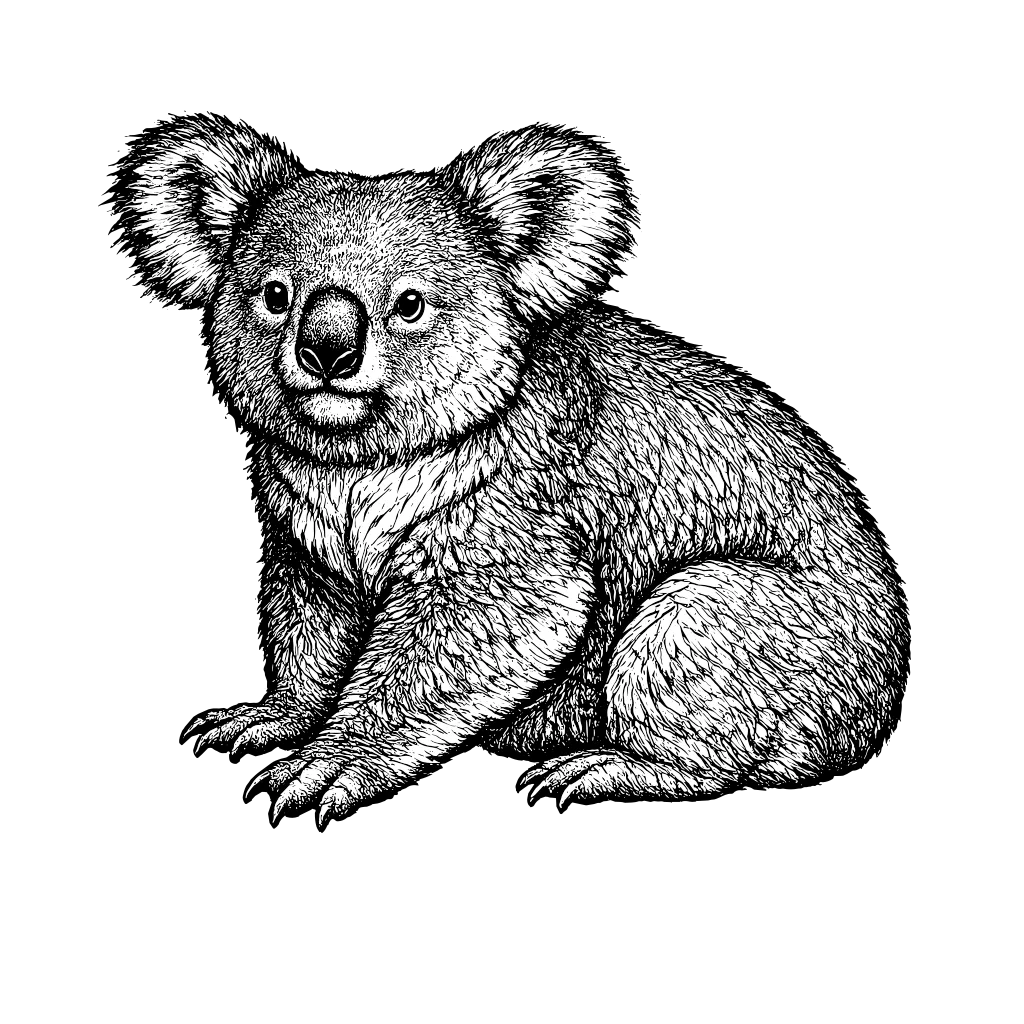
- Wombats can run up to 25 mph in short bursts despite their stocky build, and their closest living relative is the koala.
Kin & neighbors
Common questions
How long do wombats live?
Around 15 years in the wild and into their late twenties in captivity — long-lived for an animal their size. The slow pace suits their biology: they breed slowly, raise a single joey at a time, and run one of the lowest metabolic rates of any mammal, which is also why a meal can take two weeks to pass through.
Are wombats dangerous, and do they bite?
Mostly placid, but not a lap animal. A wombat will bite and scratch if cornered or handled, and a 70-pound body moving at speed can knock an adult off their feet. The real damage is structural — they undermine fences, roads, and paddocks with their burrows, which puts them at odds with farmers far more often than with anyone's shins.
What is a baby wombat called?
A joey, like every marsupial young. It is born after a gestation of barely three weeks — pink, blind, and the size of a jellybean — then crawls into the backward-facing pouch and stays there for six to seven months before riding alongside its mother. Hand-raised orphaned joeys are a fixture of Australian wildlife rescue.
Can you keep a wombat as a pet?
No — it is illegal across Australia, and for good reason. Wombats are protected native wildlife, and even hand-raised ones grow into powerful, burrowing, strong-willed adults that wreck a house and a yard. Licensed carers raise orphans only to release them; the cuddly internet wombat is almost always a wildlife rescue, not a pet.
Do wombats really shelter other animals in their burrows during bushfires?
No, despite a story that spread widely after Australia's fires. Wombats do not herd koalas or other animals to safety — that part is invention. What is true is duller and more useful: their deep, humid burrows hold a stable temperature, and other species do shelter in them, occupied or not, which can incidentally save lives during a fire.