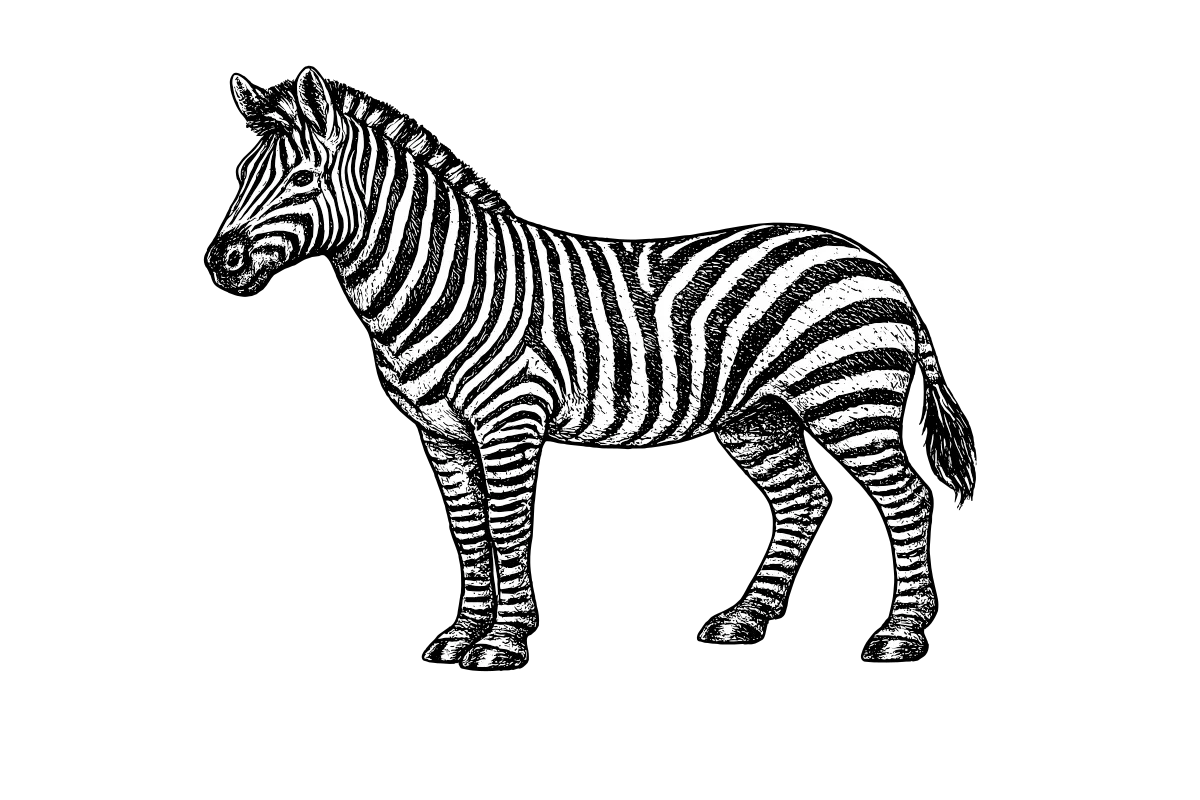
Plains Zebra
Equus quagga
A wild horse wearing a barcode no one has fully explained. The plains zebra is the most common and widespread of the three zebra species, and its stripes — long assumed to be camouflage or social signaling — appear to function mostly as insect repellent.
Browse the Woodcut Wild shop →Habitat
Plains zebras occupy the grasslands and savanna of eastern and southern Africa, following seasonal rains in large migratory herds. They are water-dependent grazers and rarely range more than a day's travel from a drinking source.
Behavior
Zebras live in small family groups — a stallion, several mares, and their foals — that aggregate into larger herds, sometimes mixing with wildebeest and other grazers for added vigilance against predators. They are among the participants in the great Serengeti migration. When attacked, a zebra herd will bunch and the stallion will turn to fight, delivering kicks powerful enough to break a lion's jaw.
Marginalia
- Recent experiments show that biting flies struggle to land on striped surfaces — horses dressed in striped coats are bitten far less than solid-colored ones, making insect deterrence the best-supported explanation for the stripes.
- Every zebra's stripe pattern is unique, and foals recognize their mothers by stripe pattern, voice, and scent within the first days of life.
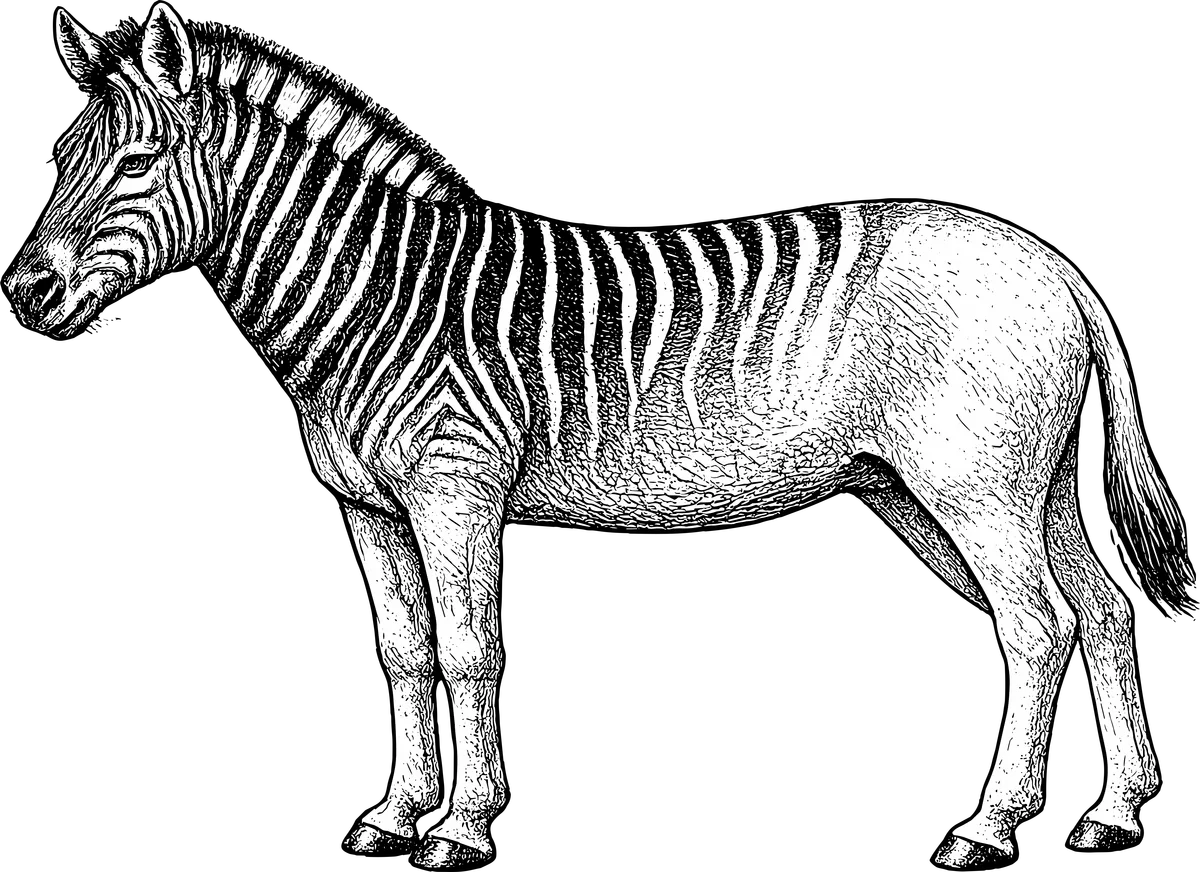
- The plains zebra shares its species name, quagga, with the extinct [quagga](/animals/quagga) — the quagga was a subspecies of plains zebra, not a separate animal, a fact only confirmed by DNA in the 1980s.
- Zebras have never been successfully domesticated despite repeated attempts; they panic more violently than horses and have a ducking reflex that makes them nearly impossible to lasso.
Kin & neighbors
Common questions
Are zebras black with white stripes or white with black stripes?
Black with white stripes. The default skin underneath is black, and the white is a pattern of unpigmented hair laid over it during development — embryos start dark and the pale stripes switch on later. So the old playground question has an answer, and it is the less intuitive one.
How long do zebras live?
About 20 to 25 years in the wild, and into their thirties in captivity. Foals are the vulnerable point — a newborn must be on its feet within an hour to keep up with the herd, and predation in the first year is heavy. Those that reach adulthood are durable animals, protected by numbers and a formidable kick.
What eats zebras?
Lions first, then everyone else. Lions are the main predator, with spotted hyenas, leopards, cheetahs, wild dogs, and crocodiles at the river crossings all taking a share — especially of foals and stragglers. A healthy adult is dangerous prey: a backward kick from a cornered zebra can shatter a predator's jaw, so most hunts target the young, old, or isolated.
What is the difference between a zebra and a horse?
Beyond the stripes, temperament and build. Zebras are smaller, with a stiff upright mane, no forelock, a tufted donkey-like tail, and a loud bark rather than a whinny. The deeper difference is behavioral — zebras evolved alongside lions and hyenas and never lost the panic and aggression that have defeated every attempt to tame them, where the horse was bred for cooperation over thousands of years.
Are zebras dangerous?
More than their cartoon image suggests. Zebras bite hard and hold on, and they kick with enough force to kill — wild ones have injured and killed keepers and tourists who approached too closely. They are prey animals built to fight when escape fails, not the docile striped ponies they resemble, which is a large part of why they were never domesticated.