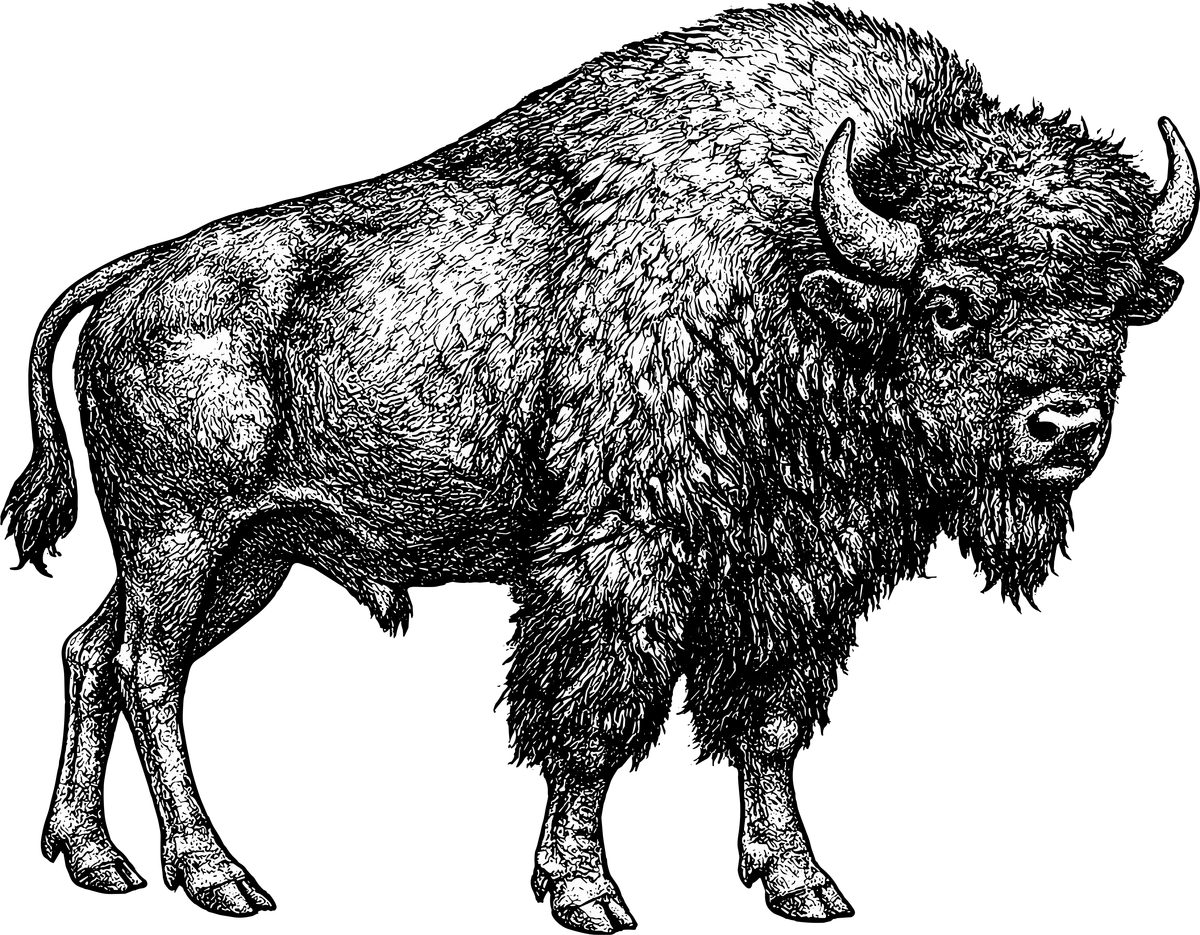
American Bison
Bison bison
The largest land mammal in North America and the national mammal of the United States. Brought back from the brink of extinction in one of the great conservation stories of the modern era.
Browse the Woodcut Wild shop →Habitat
Bison are creatures of open country — shortgrass and tallgrass prairie, sagebrush steppe, river valleys, and open meadows in mountain parks. The wood bison subspecies ranges further into boreal forest and aspen parkland. They need space: large herds historically migrated hundreds of miles a year following the grass.
Behavior
Bison are gregarious grazers, forming nursery herds of cows, calves, and young bulls year-round, with mature bulls living singly or in small bachelor groups outside the rut. During the July–September rut, bulls tend individual cows rather than holding harems, fighting head-to-head in massive contests of weight. They wallow in shallow dust depressions to shed insects and old hair, and use their enormous heads as plows to clear snow from winter forage.
Marginalia
- Designated the National Mammal of the United States in 2016, alongside the bald eagle as a national symbol.
- Pre-colonization estimates put the population at 30–60 million; by 1884, fewer than 325 wild bison remained in the United States.
- Despite their bulk, bison can run 35 mph and jump six feet vertically from a standing start.
- The shoulder hump is solid muscle — it anchors the head and lets the bison swing it like a plow to clear snow from buried grass.
- Often called 'buffalo' in American usage, though true buffalo (water buffalo and cape buffalo) live in Africa and Asia. The name stuck from early French traders calling them les bœufs.
Kin & neighbors
Common questions
Are bison dangerous to humans?
Yes, and they injure more visitors in places like Yellowstone than bears do. They look slow and placid, then close 30 yards in a heartbeat. The danger comes from people approaching for photographs and misreading a raised tail or a swinging head as curiosity rather than warning. The rule is simple — stay well back, especially during the summer rut and around calves.
How long do bison live?
About 15 to 20 years in the wild, and into their 20s in managed herds. Cows tend to outlive bulls, which take a hard physical toll fighting through repeated ruts. Both sexes keep their horns for life — unlike antlered animals, bison never shed them.
What does a baby bison look like?
Reddish-orange, which is why ranchers and park guides call them 'red dogs.' Calves are born that bright cinnamon color in spring, can stand and run within hours, and begin darkening to brown at two or three months as the shoulder hump and horns slowly develop.
What is the difference between a bison and a cow?
Bison are a separate wild species, not a breed of cattle, though the two are close enough to interbreed — the hybrid is sold as 'beefalo.' Next to a cow a bison carries a massive shoulder hump, a heavy beard and mane, shorter curved horns on both sexes, and far more muscle forward of the front legs. They are also faster, hardier in deep cold, and not truly domesticated.
What eats a bison?
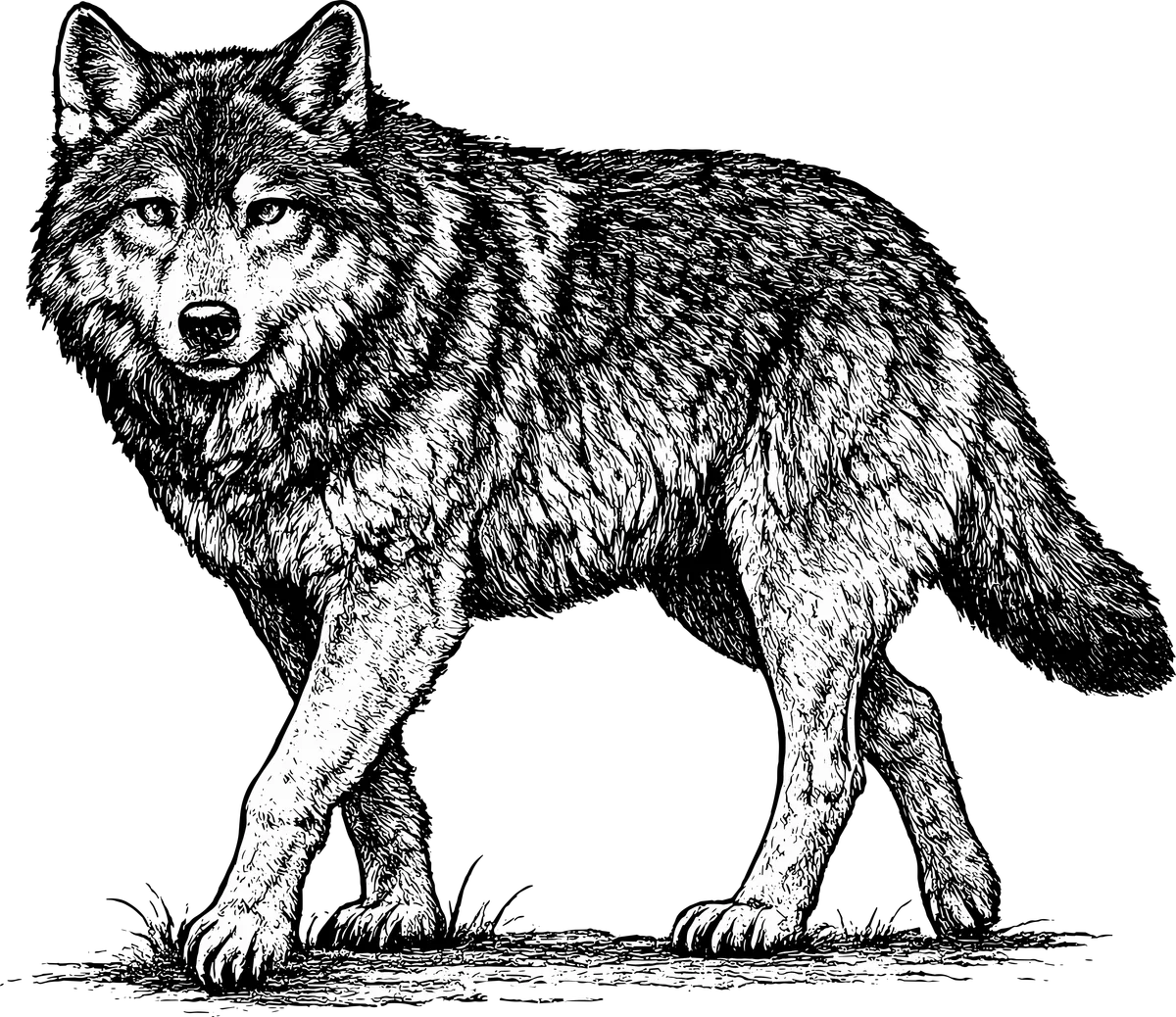
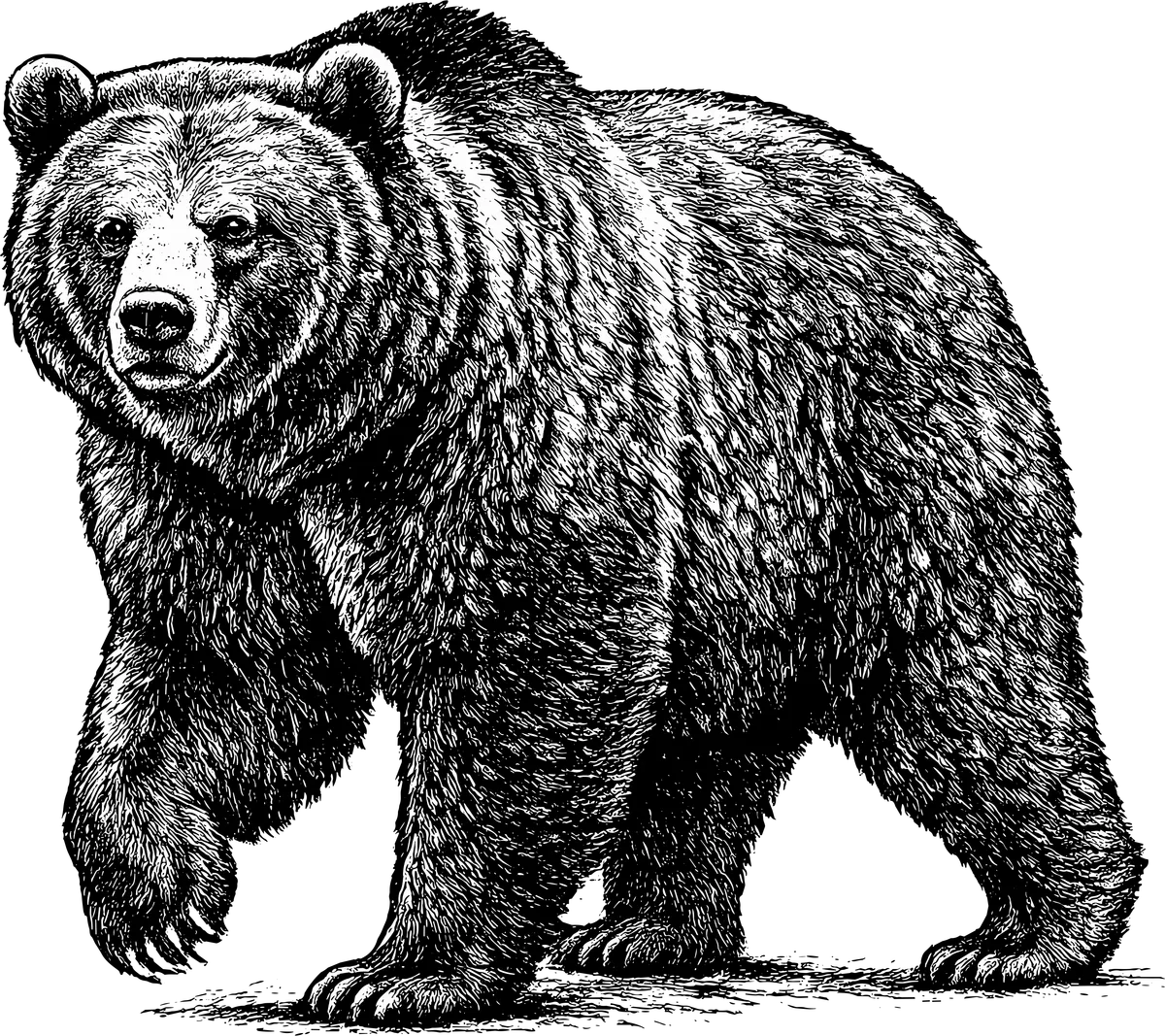
On the open plains, wolves are the historic predator, working in packs to cut a calf or an old or injured animal out of the herd; grizzly bears will take calves and scavenge carcasses. A healthy adult in a tight herd is a dangerous target, so predators almost always test for weakness first.