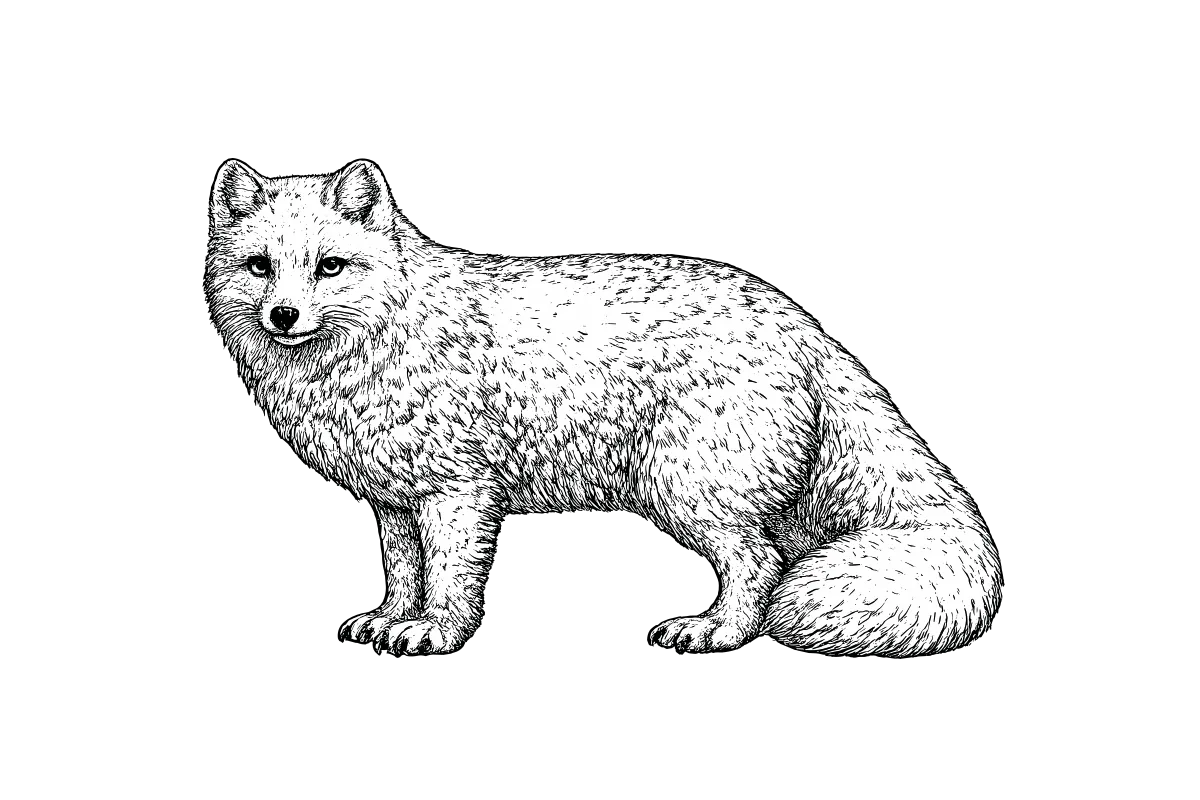
Arctic Fox
Vulpes lagopus
A small fox built for cold the way nothing else in the dog family is built. The arctic fox survives winters that kill polar bears' prey, hunting lemmings beneath the snow and following the bears across pack ice for scraps.
Browse the Woodcut Wild shop →Habitat
Arctic foxes live across the circumpolar tundra of North America, Eurasia, Greenland, Iceland, and Svalbard, plus the surrounding sea ice in winter. They den in eskers and low rises that have escaped permafrost, often using the same burrow systems for centuries, and they range out onto pack ice hundreds of miles from any coast.
Behavior
Foxes hunt lemmings, voles, ground-nesting birds, and eggs in summer, and shift in winter to scavenging behind polar bears or to caching food in good years for the bad ones to follow. Their population swings with the lemming cycle — boom litters of ten or more kits in a peak year, near-total reproductive failure in a crash. Pairs are usually monogamous within a season, and both parents feed and defend the kits.
Marginalia
- The winter coat insulates down to around -70°F before the fox even begins to shiver, the lowest threshold of any mammal.
- Arctic foxes can hear lemmings moving under three feet of snow and dive headfirst through the crust to catch them.
- A fox will follow a polar bear across the ice for days, scavenging seal scraps from each kill — the bear tolerates it the way a lion tolerates jackals.
- Pups in a peak lemming year can number eleven or more in a single litter, the largest litters of any wild canid.
Kin & neighbors
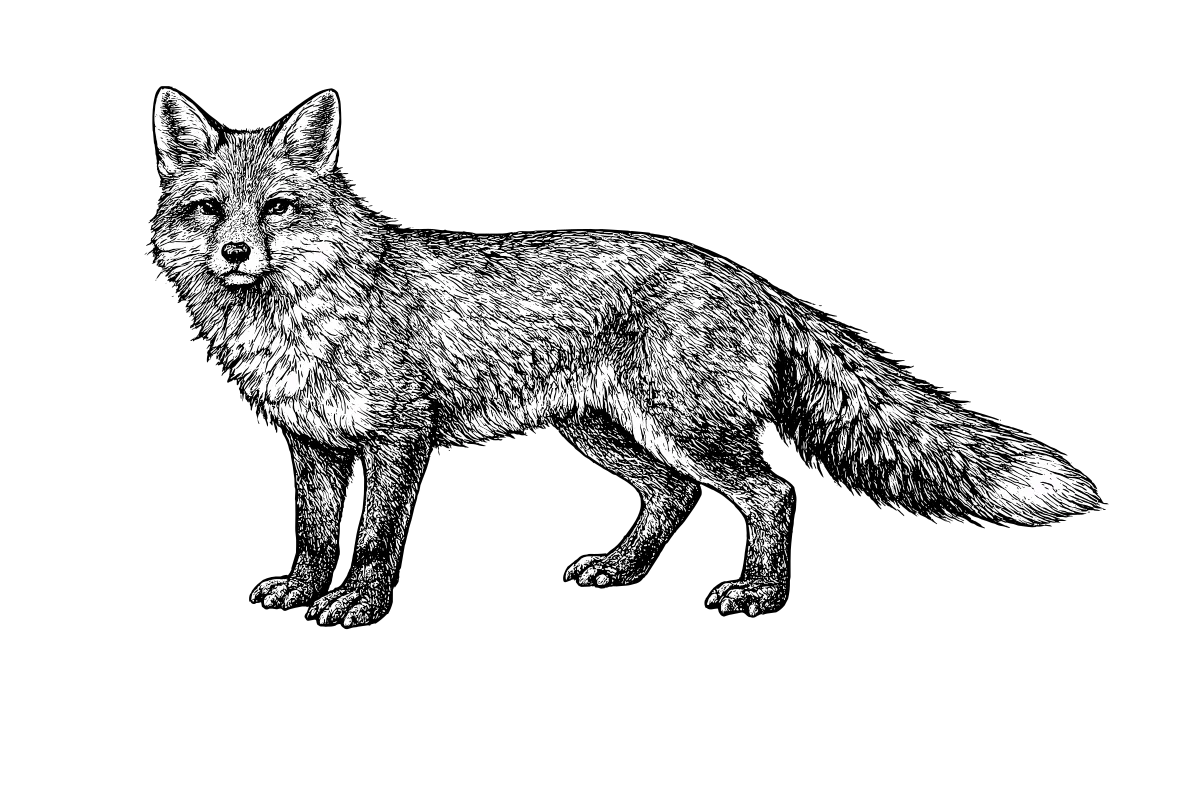
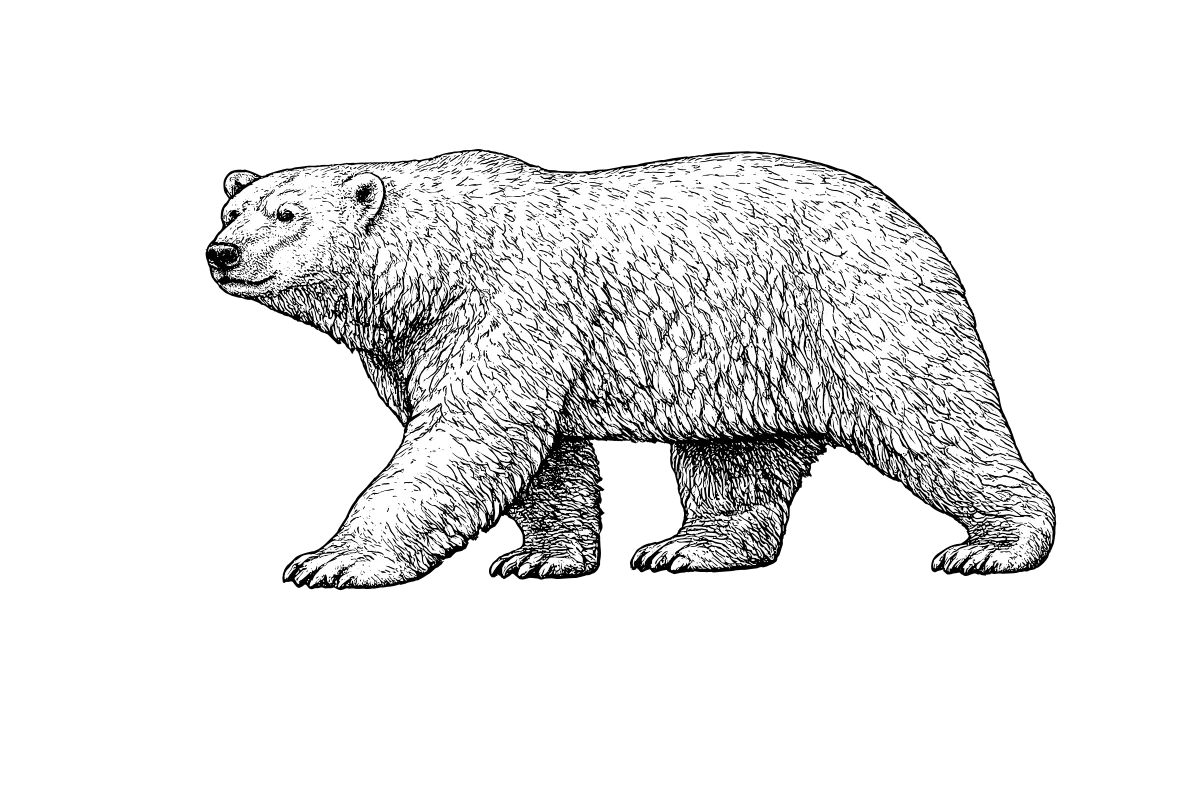
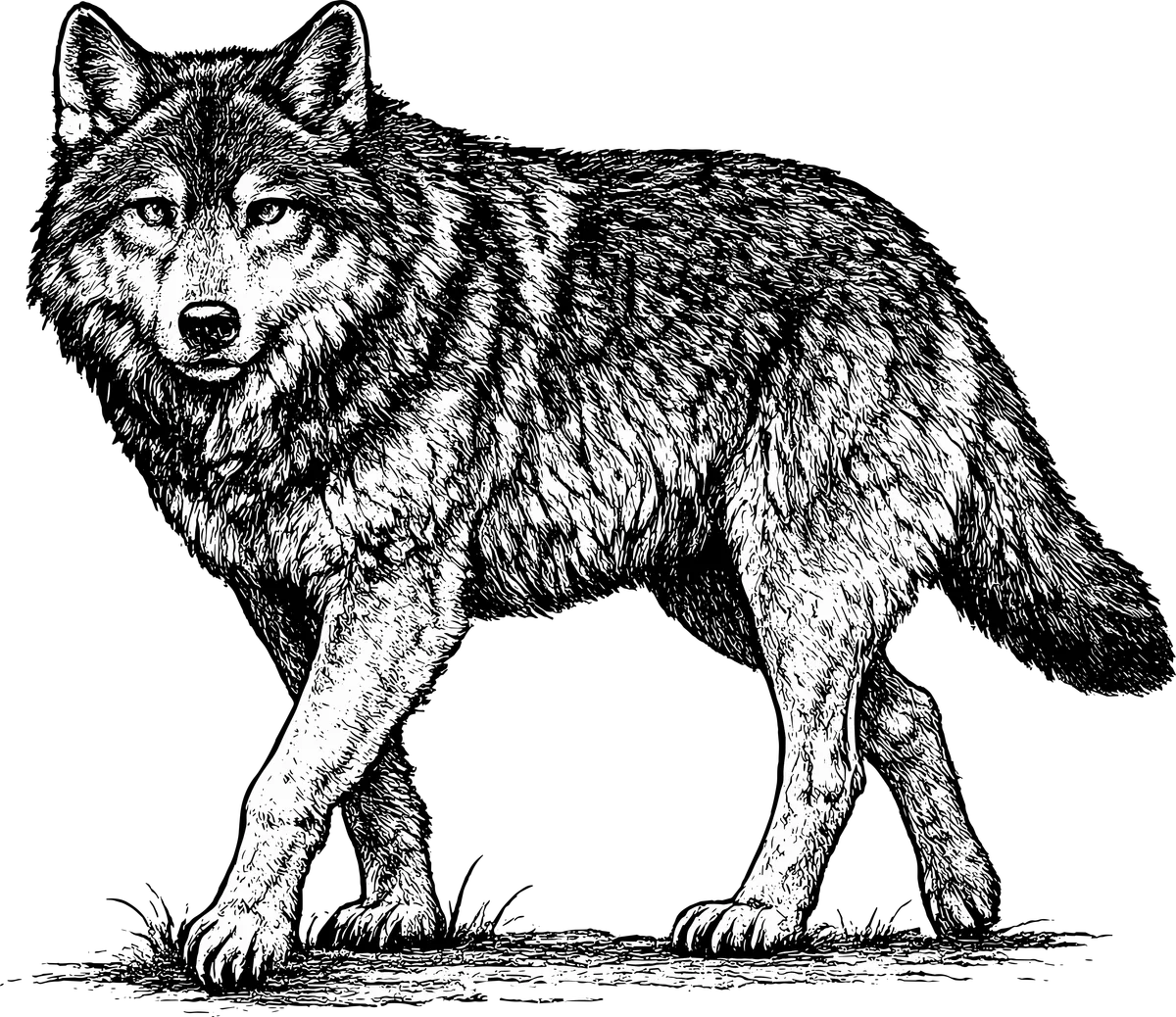
Common questions
Do arctic foxes really turn white in winter?
Yes, and the molt is dramatic. A summer arctic fox is brown-grey and almost unrecognizable; by deep winter the same animal is solid white from nose to tail. A second 'blue' morph stays dark slate-grey year-round and is more common on coasts where snow cover is unreliable — the camouflage that pays off depends on the ground.
What is the difference between an arctic fox and a red fox?
Different animals built for different climates. The red fox is larger, longer-legged, and a generalist found nearly everywhere; the arctic fox is small, compact, with short legs, short muzzle, and small rounded ears — all surface-area cuts to retain heat. Where the two overlap, red foxes outcompete and sometimes kill arctic foxes, and a warming Arctic is pushing the red fox further north each decade.
How do arctic foxes survive the winter?
By being almost over-engineered for it. The winter coat is the warmest fur of any mammal; the foot pads are furred for traction and insulation; the body is compact to minimize heat loss; and a counter-current blood flow in the legs keeps the core warm while the feet run cold. A fox curls into a ball with its tail wrapped over its nose and sleeps through storms most animals couldn't survive.
Can you keep an arctic fox as a pet?
No, and the few who try learn quickly. Arctic foxes are wild canids that mark territory with strong-smelling urine, dig destructively, and need cold most of the year — a heated house is genuinely unsafe for them above about 65°F. They are not domesticated, do not bond like dogs, and in most jurisdictions cannot legally be kept without a permit.
Are arctic foxes endangered?
Globally no — they are listed Least Concern across the circumpolar range. Locally, yes: the Scandinavian population was hunted nearly to extinction for fur in the early 20th century and has not recovered, and red foxes moving north under climate change are squeezing the species from the south. The Arctic itself is the larger threat.