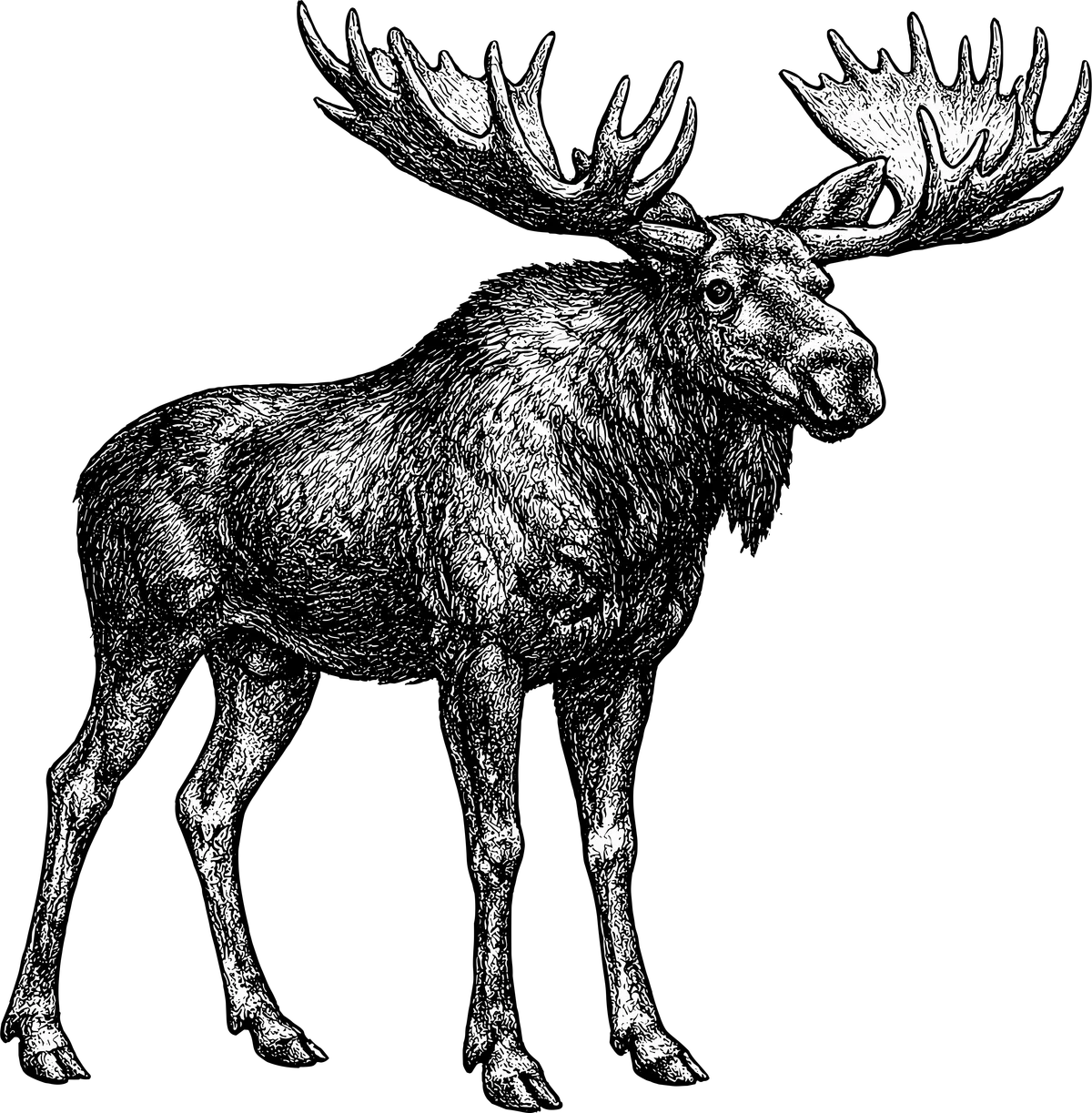
Moose
Alces alces
The largest member of the deer family on Earth. A long-legged silhouette against a boreal pond at dawn — bulls carry palmate antlers that can span six feet across.
Browse the Woodcut Wild shop →Habitat
Moose are creatures of the northern forest: spruce and fir taiga, mixed boreal woods, willow flats, and the margins of lakes, ponds, and slow rivers. Wetlands are essential — moose feed heavily on aquatic plants in summer to load up on sodium their winter diet of woody browse can't provide.
Behavior
Moose are solitary outside the September–October rut, when bulls roam in search of cows and call with deep, drawn-out grunts. Cows are fiercely protective of calves and will charge wolves, bears, or hikers that wander too close. Strong swimmers, moose can paddle six miles an hour and dive eighteen feet to reach underwater roots. They are most active at dawn and dusk; in summer they stand chest-deep in ponds to escape biting flies.
Marginalia
- Largest deer in the world — a big Alaskan bull can stand seven feet at the shoulder and weigh as much as a small horse.
- Bulls drop their antlers every winter and grow a fresh, larger set each spring; a mature rack can hold 80 pounds of bone.
- Excellent swimmers: moose dive eighteen feet down to feed on aquatic plants and can paddle steadily for miles.
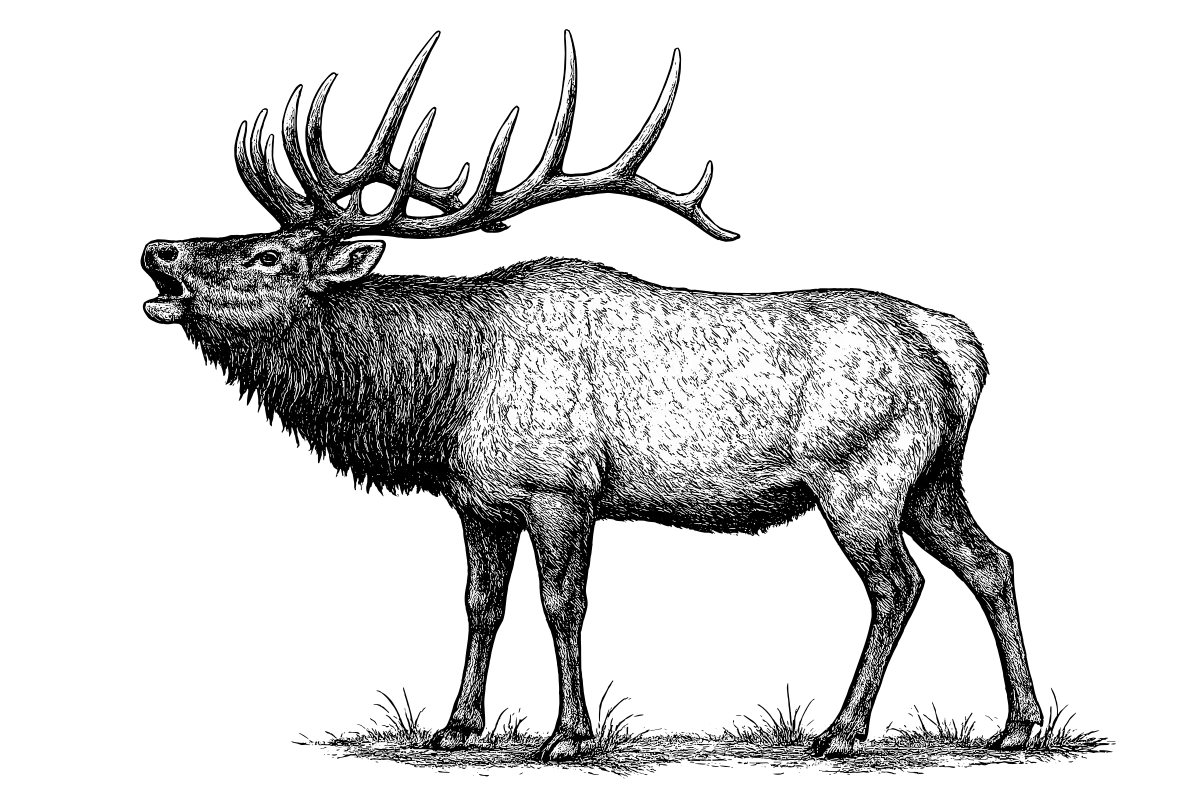
- In Europe, the same animal is called an elk — a name confusingly applied in North America to Cervus canadensis, known elsewhere as wapiti.
- Their long legs let them step over downed trees and deep snow that would stop other deer.
Kin & neighbors
Common questions
Are moose dangerous?
More than people expect. Moose injure more people in some northern regions than bears and wolves combined — not through predation but through sheer size and short temper. An agitated moose gives warnings: ears pinned back, hackles up, lip-licking. Heed them and retreat, because a charging half-ton animal that means to stomp you is not a threat you can wait out. On the road, a moose's high body crashes through the windshield rather than over the hood, which makes collisions disproportionately deadly.
What is the difference between a moose and an elk?
Size and shape, mainly. The North American elk (the wapiti) is a herd animal about half a moose's weight, tan-bodied with a pale rump and a tall, branching crown of antlers. A moose is far larger, near-black, solitary, long in the leg and nose, with a dangling throat 'bell' and broad, palmate antlers shaped like open hands. Confusingly, Europeans call the moose itself an 'elk.'
How long do moose live?
Usually 15 to 20 years in the wild. Lifespan is increasingly cut short in southern populations by warming winters, which favor the tick and parasite loads — notably the brainworm and massive winter-tick infestations — that now weigh heavily on moose health.
How fast can a moose run?
Up to about 35 miles an hour at a flat-out trot, faster than it looks capable of. Those long legs that let it wade swamps and step over deadfall also cover ground quickly, and a moose can keep a steady pace through terrain that would bog down a horse.
What eats a moose?
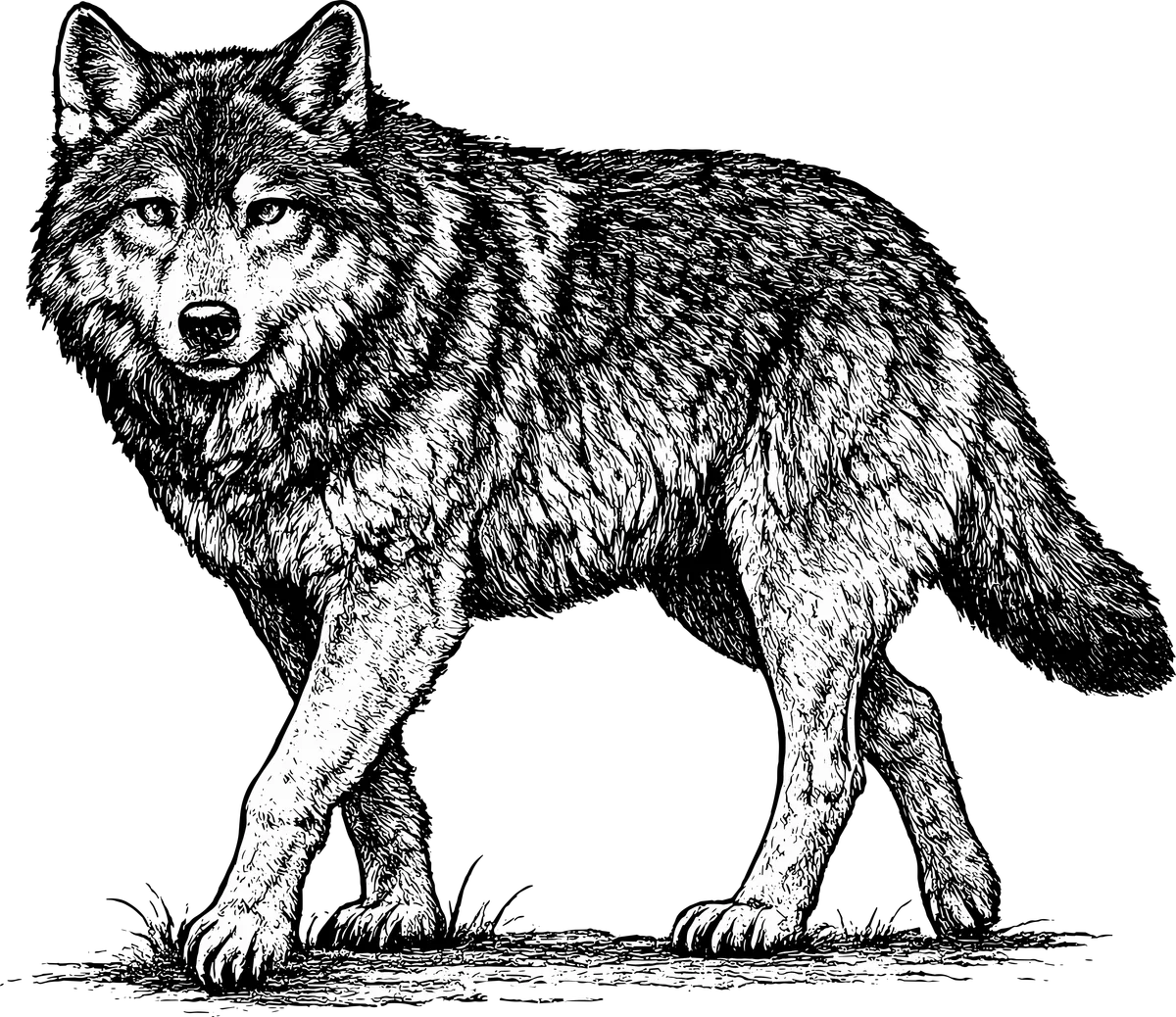
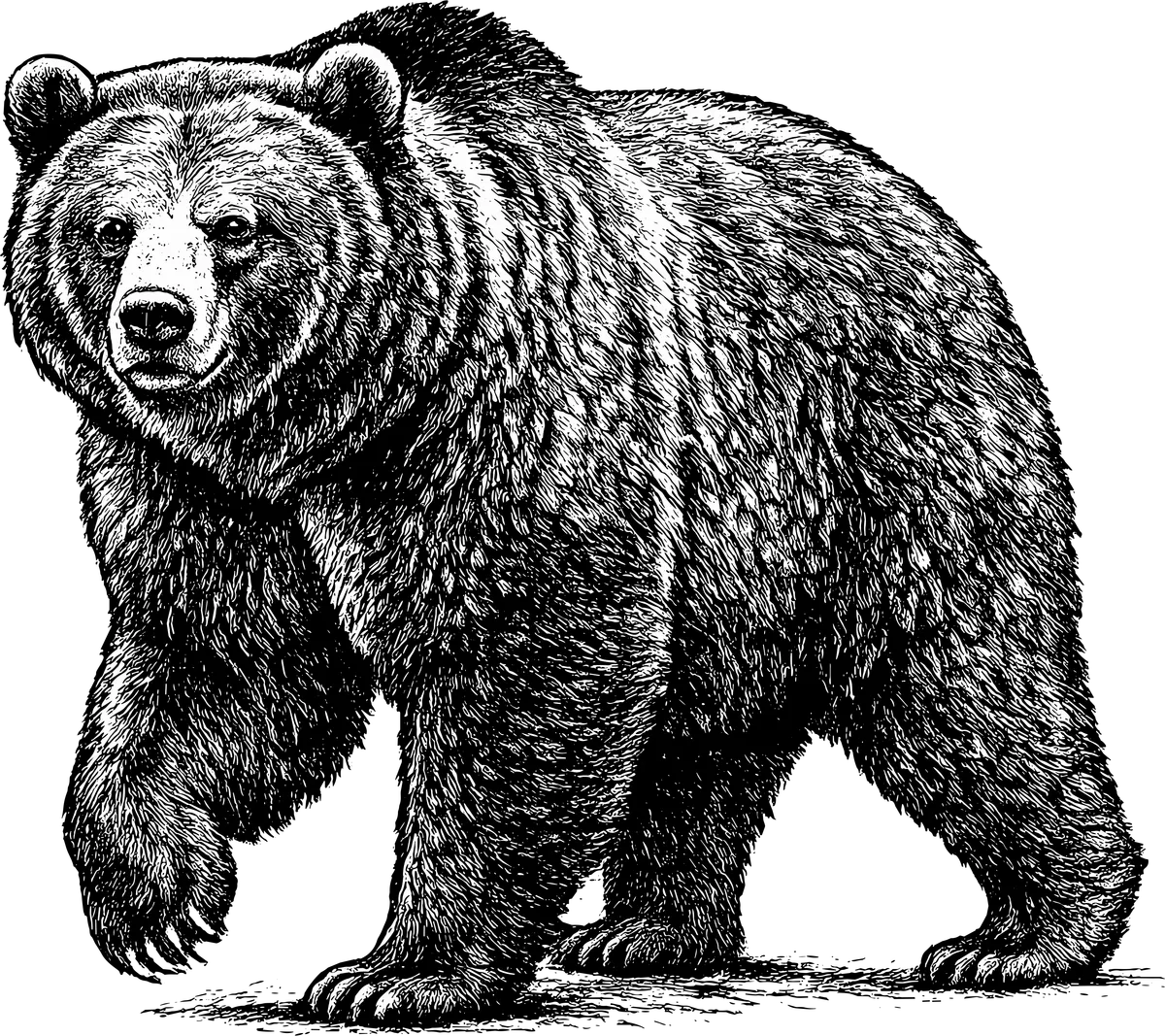
Wolves and bears, chiefly, and they concentrate on calves and on old or winter-weakened adults. A healthy bull or a defensive cow is a formidable target — a kick can kill a wolf — so packs tend to test many moose and commit only to the vulnerable ones. Humans are the other major predator across the moose's range.