Moose
Alces alces
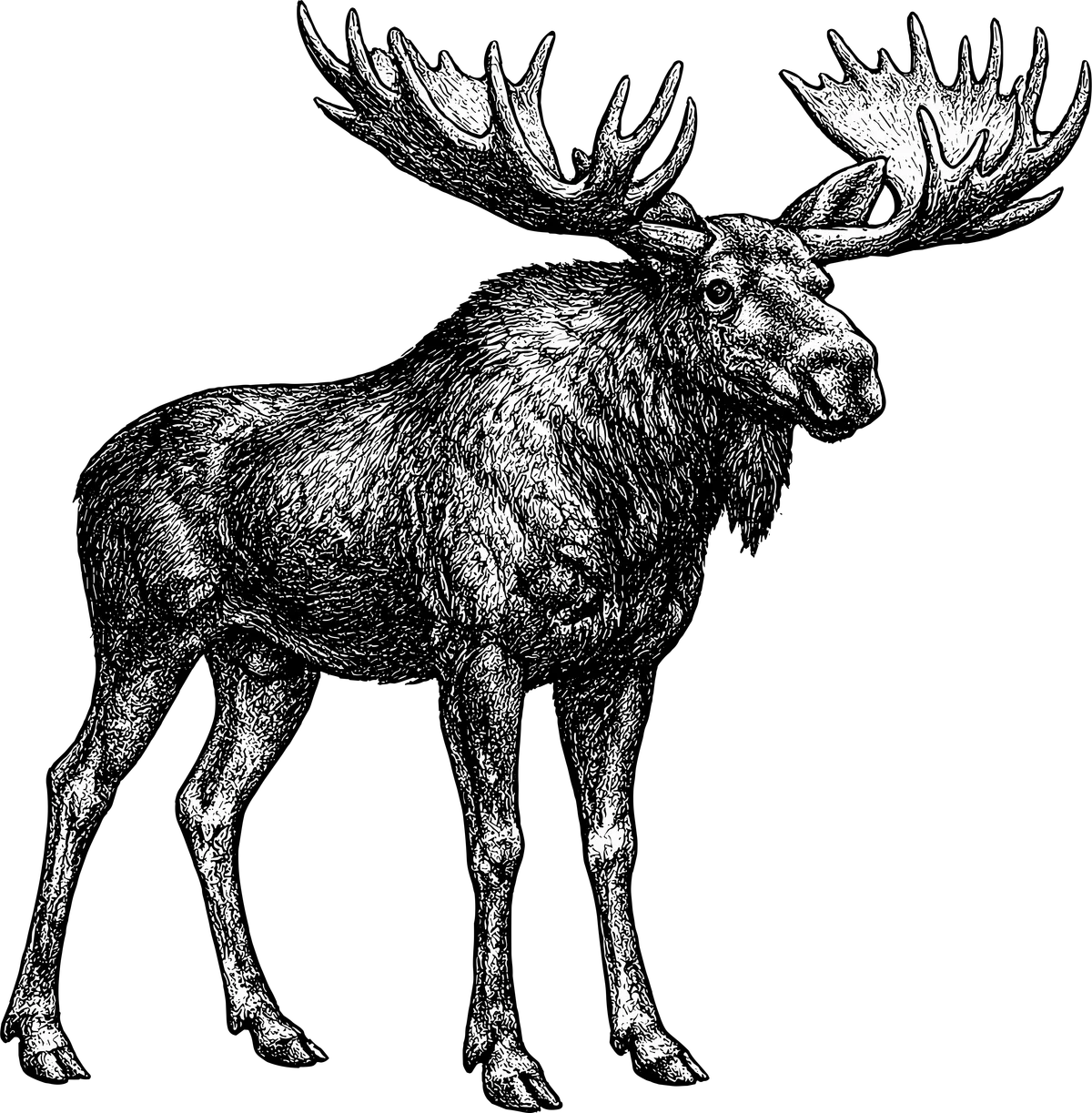
The largest member of the deer family on Earth. A long-legged silhouette against a boreal pond at dawn — bulls carry palmate antlers that can span six feet across.
Browse the Woodcut Wild shop →Habitat
Moose are creatures of the northern forest: spruce and fir taiga, mixed boreal woods, willow flats, and the margins of lakes, ponds, and slow rivers. Wetlands are essential — moose feed heavily on aquatic plants in summer to load up on sodium their winter diet of woody browse can't provide.
Behavior
Moose are solitary outside the September–October rut, when bulls roam in search of cows and call with deep, drawn-out grunts. Cows are fiercely protective of calves and will charge wolves, bears, or hikers that wander too close. Strong swimmers, moose can paddle six miles an hour and dive eighteen feet to reach underwater roots. They are most active at dawn and dusk; in summer they stand chest-deep in ponds to escape biting flies.
Marginalia
- Largest deer in the world — a big Alaskan bull can stand seven feet at the shoulder and weigh as much as a small horse.
- Bulls drop their antlers every winter and grow a fresh, larger set each spring; a mature rack can hold 80 pounds of bone.
- Excellent swimmers: moose dive eighteen feet down to feed on aquatic plants and can paddle steadily for miles.
- In Europe, the same animal is called an elk — a name confusingly applied in North America to Cervus canadensis, known elsewhere as wapiti.
- Their long legs let them step over downed trees and deep snow that would stop other deer.