White-tailed Deer
Odocoileus virginianus
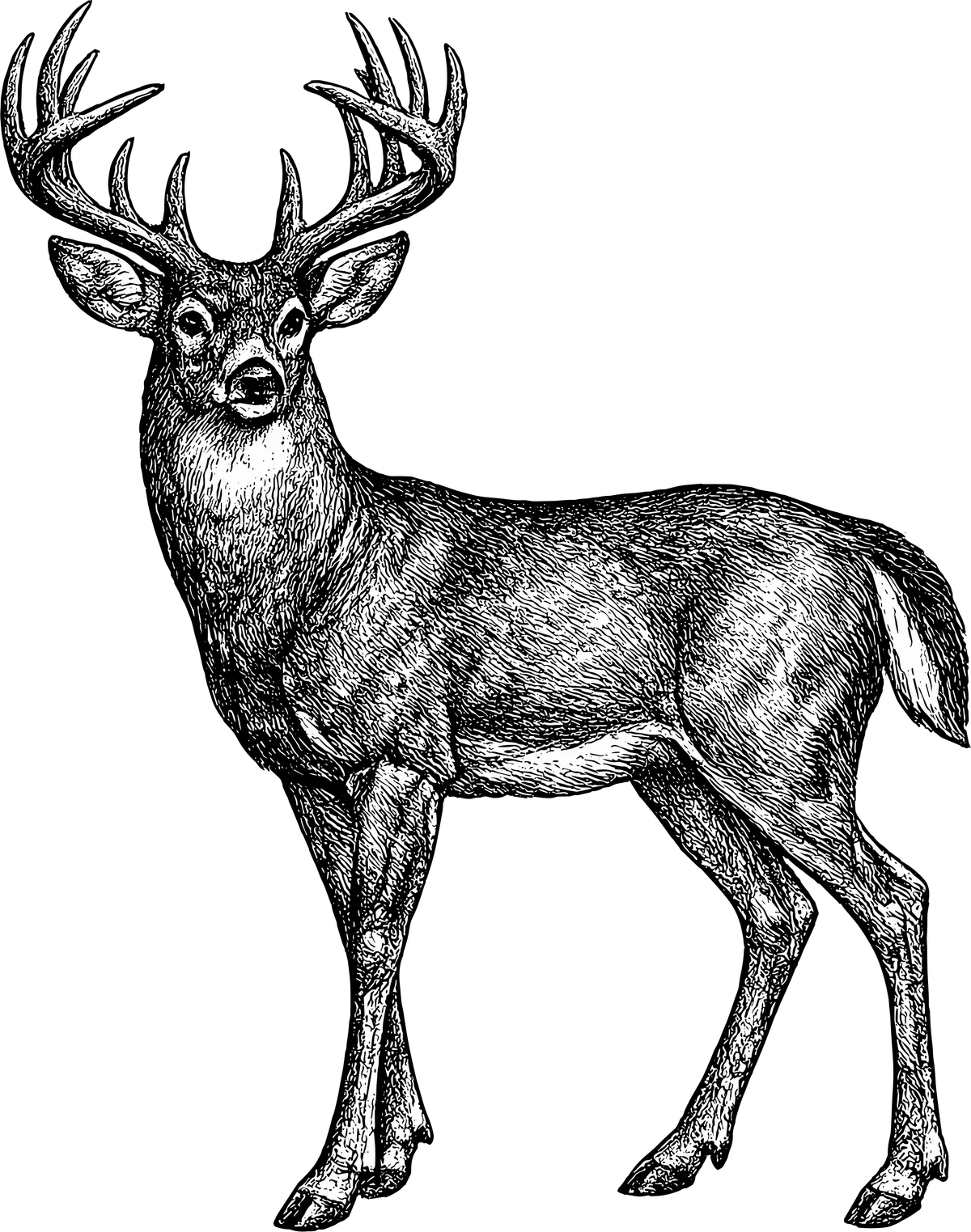
The most abundant and widespread large mammal in North America. A flash of white tail vanishing into the trees is the field mark — and the warning signal — of a species that has adapted to almost every landscape east of the Rockies.
Browse the Woodcut Wild shop →Habitat
White-tailed deer thrive in edge habitat: the seams between forest and field, the brush along creek bottoms, second-growth woods, swamps, suburban greenbelts. They want cover within a quick bound of open browse and have followed agriculture and exurban sprawl across the continent.
Behavior
Whitetails are crepuscular, most active at dawn and dusk. Does live in small matriarchal groups with their fawns; bucks are mostly solitary outside the autumn rut, when they spar with antlers, chase does, and lose much of their summer fat. The species takes its name from the bright white underside of the tail, flagged upward as an alarm when a deer bolts — a signal to other deer and a giveaway to hunters and predators alike. Whitetails are strong swimmers and can leap obstacles ten feet high or thirty feet across.
Marginalia
- The most-hunted big-game animal in North America, with population estimates north of 30 million.
- A startled whitetail can leap thirty feet horizontally and clear a ten-foot fence from a standing position.
- Bucks grow and shed antlers every year — covered in velvet through summer, hardened and rubbed clean for the autumn rut, dropped by late winter.
- Fawns are nearly scentless for their first weeks of life, hiding motionless in cover while their mother grazes nearby.
- The genus name Odocoileus comes from a 19th-century misreading of 'hollow-toothed' — a quirk of dental anatomy that gave the genus its taxonomic name.